
Trump Sends Witkoff and Kushner to Pakistan for Talks With Iran Foreign Minister Abbas Araghchi
Key Takeaways
- Trump sends Steve Witkoff and Jared Kushner to Pakistan for talks with Abbas Araghchi.
- The mission aims to restart direct talks with Iran on the war and ceasefire.
- White House says Iranians want talks; Vice President JD Vance on standby.
Envoys to Islamabad
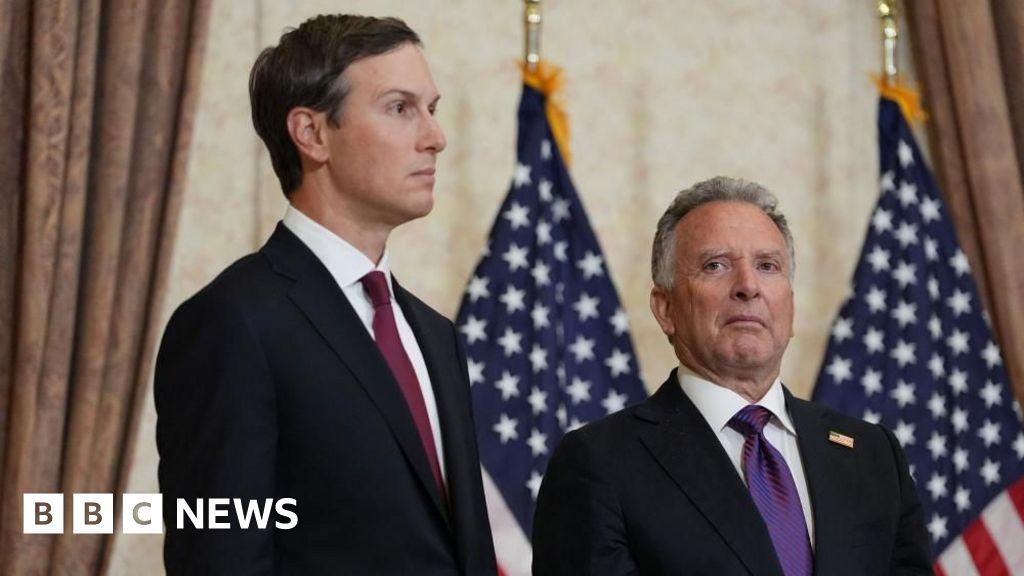
President Donald Trump is sending his envoys Steve Witkoff and Jared Kushner to Pakistan for new talks with Iran’s foreign minister, Abbas Araghchi, the White House said Friday, with the planned talks set for Saturday.
The AP reported that Araghchi arrived in Islamabad late Friday and had written on social media that his trip focused on “bilateral matters and regional developments.”

AP also said Iran’s government made clear there would be no direct negotiations with American government representatives during the visit, with foreign ministry spokesman Esmael Baqaei saying, “No meeting is planned to take place between Iran and the U.S.”
Instead, Baqaei said Pakistani officials would convey messages between the delegations and thanked Pakistan for its “ongoing mediation & good offices for ending American imposed war of aggression.”
White House press secretary Karoline Leavitt told reporters on Fox News Channel that Witkoff and Kushner would meet with Araghchi and that, “We’re hopeful that it will be a productive conversation and hopefully move the ball forward to a deal.”
AP added that Vice President JD Vance would not travel but remains “deeply involved,” and would be willing to go to Pakistan “if we feel it’s a necessary use of his time.”
The AP also noted that Araghchi and the two Trump envoys held hours of indirect talks in Geneva on Feb. 27 over Tehran’s nuclear program, but “walked away without a deal,” and that the next day “Israel and the United States started the war against Iran.”
Mixed signals and mediation
Multiple outlets described the same trip as a test of competing messages between Washington and Tehran, with Pakistan positioned as the intermediary.
CNN said Iran’s Abbas Araghchi was in Pakistan to meet with mediators, but Iran’s ministry denied a direct meeting was planned with the US, quoting Esmaeil Baghaei on X: “No meeting is planned to take place between Iran and the US,” and adding that “Iran’s observations would be conveyed to Pakistan.”
CNN also said the mixed messaging followed Vice President JD Vance canceling his trip to Islamabad on Tuesday, and it described White House press secretary Karoline Leavitt confirming that Witkoff and Kushner “will be off to Pakistan again tomorrow morning to engage in talks,” while Iran’s Baghaei denied those plans.
The Hill similarly reported that Leavitt told Fox News that Witkoff and Kushner would engage in “direct talks, intermediated by the Pakistanis,” and said the Iranians asked for the in-person talks in Islamabad.
Yet The Hill also said Iran’s Tasnim news agency disputed that account, reporting that Iranian officials never asked for talks with the U.S. and had made no decision on whether to meet with U.S. officials in Islamabad.
The Guardian framed the same diplomatic push as a restart of negotiations, saying Leavitt confirmed the travel and that Araghchi announced a tour of Pakistan, Russia and Oman to see if there could be a basis to reopen peace talks.
In the Guardian’s account, the vice president, JD Vance, would remain on “standby,” with Leavitt saying, “The president, the vice-president, the secretary of state, will be waiting here in the United States for updates.”
Pressure, blockade, and threats
While the diplomatic channel opened in Pakistan, the same reporting tied the talks to a hard-edged pressure campaign centered on the Strait of Hormuz and the U.S. blockade of Iranian ports.
“Trump dispatches Witkoff and Kushner to Pakistan for new talks with Iran’s foreign minister Trump dispatches Witkoff and Kushner to Pakistan for new talks with Iran’s foreign minister ISLAMABAD (AP) — President Donald Trump is sending his envoys Steve Witkoff and Jared Kushner to Pakistan to meet with Iran’s foreign minister, the White House said Friday, as officials in the South Asian nation pushed to revive ceasefire talks between the U”
AP said the talks were planned “as much of the world is on edge over a war that has snarled crucial energy exports through the Strait of Hormuz,” and it described Iran attacking three ships earlier this week while “the U.S. is maintaining a blockade on Iranian ports.”
AP also quoted Trump’s order that the military “shoot and kill” small boats that could be placing mines, and it reported that Defense Secretary Pete Hegseth told reporters on Friday, “Iran has an important choice, a chance to make a deal, a good deal, a wise deal.”
In CNN’s account, Hegseth warned that if Tehran did not make a deal, its economy would “collapse under the unrelenting pressure” of a U.S. naval blockade that would remain in place for “as long as it takes.”
The Guardian added that Hegseth said the U.S. “had all the time in the world and we are not anxious for a deal,” and it quoted him saying, “No one sails from the strait of Hormuz to anywhere in the world without the permission of the United States navy.”
The Guardian also included Hegseth’s threat that “The US navy would without hesitation shoot and kill anyone in boats laying mines,” comparing it to “the targeting of drug boats in the Caribbean.”
CBS News described the same pressure logic in its live updates, saying Defense Secretary Iran still has time to “choose wisely,” but warned that if Tehran doesn’t make a deal, its economy would “collapse under the unrelenting pressure” of the blockade.
Sanctions and energy bottlenecks
Beyond the diplomatic messaging, the reporting tied the Iran talks to a broader economic squeeze that included shipping costs, sanctions, and energy-market disruptions.
CBS News said that “Some businesses are paying $4 million to cross the Panama Canal amid the near-total closure of the Strait of Hormuz,” describing how companies without reservations can cross by paying an additional fee in an auction for slots awarded to the highest bidder.
CBS News also said the U.S. froze $344 million in cryptocurrency over alleged ties to Iran, quoting Treasury Secretary Scott Bessent that the Treasury’s Office of Foreign Assets Control was “sanctioning multiple wallets tied to Iran” and that, “We will follow the money that Tehran is desperately attempting to move outside of the country and target all financial lifelines tied to the regime.”
In the same CBS live update, the outlet said the U.S. Treasury Department imposed sanctions on “more than a dozen tankers” accused of transporting “billions of dollars' worth of Iranian crude oil and other petroleum products,” and it said the Office of Foreign Assets Control described the 19 tankers as belonging to a “shadow fleet.”
CNN and AP both described the blockade and energy squeeze as part of the same pressure environment, with AP saying the squeeze on shipments through the strait rippled through global maritime trade flows, “including through the Panama Canal nearly halfway around the world.”
AP also reported that the White House said Trump issued a 90-day extension to the Jones Act waiver, making it easier for non-American vessels to transport oil and natural gas, and it said the White House post attributed the change to “New data compiled since the initial waiver was issued” showing “significantly more supply was able to reach U.S. ports faster.”
AP and CBS both connected the energy disruption to oil prices, with AP reporting Brent crude vacillating between $103 a barrel and more than $107, and CBS News saying as of midday Friday Brent was trading at $105 a barrel, up 44% since before the war started.
What happens next
The sources also laid out how the talks might proceed and what conditions were being discussed, while emphasizing that the diplomatic window was uncertain.
Politico reported that Witkoff and Kushner would travel to Pakistan on Saturday to restart negotiations to end the war with Iran, and it said Leavitt told reporters, “Steve and Jared will be heading to Pakistan tomorrow to hear the Iranians out.”

Politico also said Vance would not travel but would be “on standby,” and it quoted Leavitt saying the president, the vice president, the secretary of State, and the national security team would be waiting in the United States for updates.
The Guardian added that Araghchi was likely to discuss “a potential permanent new arrangement on governing the strait of Hormuz with Oman,” and it said Iran had said it would not restart talks until the U.S. lifted its blockade of Iranian ports while the U.S. demanded verifiable assurances that Tehran would end its nuclear programme and lift its own crippling blockade of the strait.
The Guardian further described a specific idea being canvassed: Iran considering “parcelling up its 400kg stockpile of highly enriched uranium,” and agreeing to dilute sequentially the enrichment level of each parcel in return for the lifting of specific sanctions.
The Guardian also quoted Iran’s foreign ministry spokesperson Esmail Baghaei saying the main subject in negotiations was no longer the nuclear issue but “ending the war in a way that secures the country’s interests,” and it included Baghaei’s statement, “We accept the ceasefire only if it is the first step to bringing the war to an end on all fronts.”
At the same time, the Guardian reported that Hegseth said the blockade had gone global and that “No one sails from the strait of Hormuz to anywhere in the world without the permission of the United States navy,” reinforcing that any diplomatic outcome would be constrained by ongoing enforcement.
More on Iran
Trump Orders U.S. Forces To Board Iranian Ships Amid Hormuz Blockade
17 sources compared

Ahmad Vahidi and the IRGC Control Iran, Jerusalem Post Says Mojtaba Khamenei Not Leading
20 sources compared

Trump Administration Sanctions Hengli Petrochemical And 40 Shippers Over Iranian Oil
16 sources compared

Pentagon Considers Suspending Spain From NATO Over Iran War Support Dispute
16 sources compared