Trump Thanks Iran for Reopening Strait of Hormuz, Says U.S. Blockade Remains in Force
Key Takeaways
- Iran declares Strait of Hormuz fully open to commercial shipping.
- Trump says the U.S. naval blockade remains in full force.
- Aligned with Lebanon ceasefire; open for remainder of ceasefire period.
Hormuz reopens, blockade stays
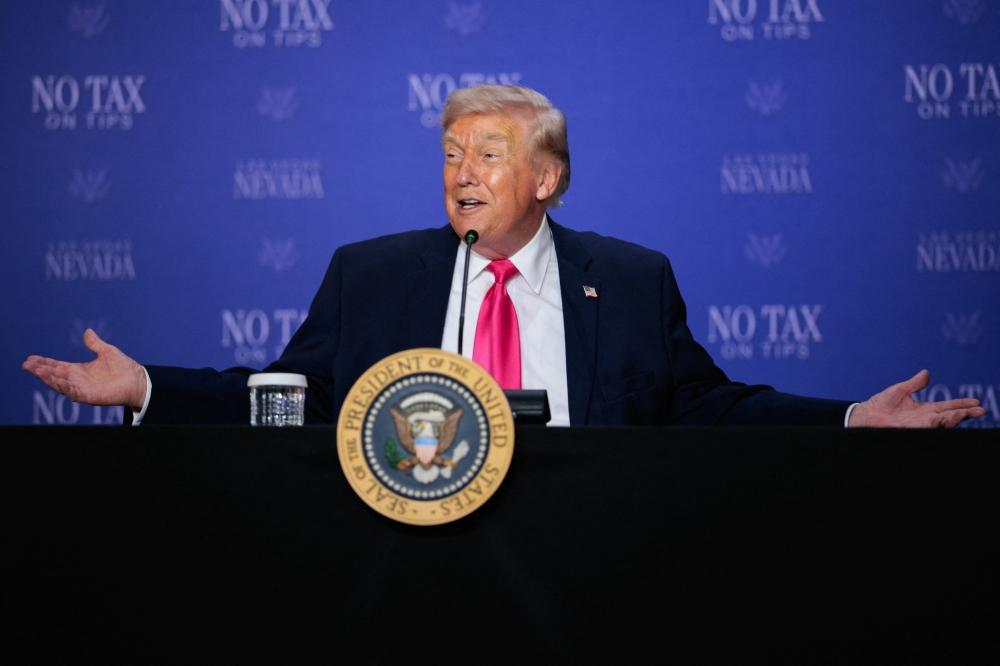
Iran announced that the Strait of Hormuz is “completely open” for commercial vessels, and U.S. President Donald Trump publicly thanked Tehran for the reopening while insisting the U.S. blockade would remain in force.
“Trump thanks Iran for fully reopening Strait of Hormuz [](https://subscribe”
In a post attributed to Iranian Foreign Minister Seyed Abbas Araghchi, the passage for all commercial vessels through the Strait of Hormuz is declared “completely open” for the remaining period of the ceasefire in Lebanon, according to Global Times/Xinhua.

Trump’s response on Truth Social came after that announcement, with Global Times quoting Trump saying the U.S. naval blockade on Iran will remain in full force until Washington’s transaction with Tehran is “100 percent complete.”
NBC News similarly reported that Araghchi said the crucial trade route “is declared completely open” for commercial vessels for the remaining period of the ceasefire, and that Trump said the U.S. blockade of Iranian ports “will remain in full force” until the two sides reach a peace deal.
Politico described Trump welcoming Iran’s reopening by declaring the waterway “COMPLETELY OPEN AND READY FOR BUSINESS,” while adding that a U.S. naval blockade there remains in effect for Iranian ships.
PBS (via AP) likewise said Iran “fully reopened the Strait of Hormuz to commercial vessels,” but Trump said the American blockade on Iranian ships and ports “will remain in full force” until Tehran reaches a deal with the U.S., including on its nuclear program.
Across the coverage, the reopening is tied to the Israel-Lebanon ceasefire, with NBC News saying the move was made in line with the Israel-Lebanon ceasefire and Politico saying Iran agreed to open the strait Friday, a day after Trump secured a 10-day ceasefire between Israel and Lebanon.
Ceasefire link and routes
Multiple reports framed the reopening as conditional on the Lebanon ceasefire and on coordinated routing through the strait.
NBC News said Araghchi declared that passage for all commercial vessels through the Strait of Hormuz is “declared completely open” for the remaining period of the ceasefire in Lebanon, and that “Ships will have to use a coordinated route.”
CBC (via Reuters) similarly reported that Araghchi said the strait is “completely open and ready for business and full passage,” and that the passage would be open “for the remainder of the Israel-Lebanon ceasefire,” with ships needing to follow the route announced by Iran’s Ports and Maritime Organization.
PBS (via AP) stated that Araghchi posted on X that the waterway through which about 20% of the world’s oil is shipped was “now fully open to commercial vessels,” and that the reopening was accompanied by Trump saying Iran, with help from the U.S., is working to remove all mines from the strait.
Politico added that the reopening came after a 10-day ceasefire was called between Israel and Lebanon, and that Trump’s blockade began this week as an effort to negate Iran’s leverage in negotiations over the future of its nuclear program.
Global Times/Xinhua and Vreme both tied the reopening to the ceasefire in Lebanon, with Vreme quoting Araghchi’s X post: “In accordance with the cease-fire in Lebanon, passage for all commercial ships through Strait of Hormuz has been declared fully open for the remainder of the ceasefire period, along the coordinated route as already announced by the Ports and Maritime Organization of the Islamic Republic of Iran.”
The same reports also emphasized that the reopening did not eliminate the broader security concerns, with NBC News noting it was not immediately clear what it would mean for concerns about mines in the key waterway.
In parallel, Politico described how traffic had fallen to a crawl during the conflict because Iran threatened the passage of commercial ships with missiles and drones, making the question of safe transit central even after the announcement.
European leaders and mission planning
While Trump and Iranian officials declared the strait open, European leaders emphasized that freedom of navigation must be restored on a lasting basis and that planning for maritime security would continue.
“Anthony Zurcher North America correspondent Donald Trump’s Truth Social account has seemed almost like a news wire service feed over the past hour”
AP reported that President Emmanuel Macron and Prime Minister Keir Starmer welcomed the announcement but said freedom of navigation must be permanently restored to the key oil route “choked by the U.S.-Israeli war on Iran.”
AP said Macron and Starmer would keep planning an international mission to restore maritime security, with Starmer saying it will be deployed “as soon as conditions allow,” and that military planners will meet in London next week.
AP quoted Macron saying “we all demand the full, immediate and unconditional reopening of the Strait of Hormuz by all parties,” and it described the Paris meeting as attended by leaders of some 50 countries and international organizations.
CBC likewise said Starmer told reporters that more than a dozen countries were ready to contribute assets to a defensive mission aimed at restoring freedom of navigation, and that “We will take this forward with a military plan conference in London next week.”
Politico described the Paris discussions as an attempt by leaders of Britain, France, Germany and Italy to discuss a potential international effort to secure the strait once hostilities sufficiently subsided, with more than two dozen other world leaders participating via videoconference.
The same Politico report quoted Trump’s Truth Social post lambasting NATO as a “Paper Tiger,” while also describing how Macron’s office said roles for members of the coalition could include “intelligence, mine-clearing capabilities, military escorts (and) communication procedures with coastal states.”
AP also included a quote from Starmer that the mission will be “strictly peaceful and defensive,” with mine clearance and reassurance for commercial shipping rather than an escorting posture.
Markets react and shipping uncertainty
The reopening announcement triggered immediate market reactions in multiple reports, while shipping executives and analysts pointed to lingering uncertainties about mines and practical transit conditions.
NBC News said “Stocks surged higher and the price of oil dropped on the news,” and it added that it was “not immediately clear what it would mean for concerns about mines in the key waterway.”

The Independent reported that “Oil prices immediately drop” and provided specific figures, saying Brent crude futures dropped by 11.2 per cent to £88.27 a barrel and U.S. West Texas Intermediate crude fell $11.40, or 12 per cent, to $83.29 a barrel.
Politico described U.S. crude oil futures prices tumbled on the news, sinking nearly $10 a barrel to about $81.50 a barrel, which it said was the lowest level since early March, and it also described how traffic had fallen to a crawl during the conflict.
Politico quoted oil market analyst June Goh of Sparta Commodities saying, “There will still be hesitation from the shipowners as the matter of risk and insurance is still a sticky one,” and that “They will probably want to see some ships pass through safely before we see a bigger flow.”
CBC reported that a spokesperson for the German shipping giant Hapag-Lloyd said its crisis committee was currently in session and that its vessels would “probably” pass through the strait soon, while noting it was “too early” to confirm.
CBC also said the head of the Norwegian Shipowners' Association, Knut Arild Hareide, said companies still had “many questions,” and he warned that the situation remains “unresolved,” including “questions related to the presence of sea mines, applicable Iranian conditions and practical implementation.”
PBS (via AP) added that oil prices fell on hopes of a deal and that the International Energy Agency’s head had warned energy shocks could get worse if the strait did not reopen.
War context, casualties, and next steps
The reopening of the Strait of Hormuz was reported as occurring amid an ongoing U.S.-Israeli war against Iran and a separate 10-day ceasefire between Israel and Lebanon, with casualty figures and negotiation uncertainty continuing to shape the outlook.
“Iran on Friday declared the Strait of Hormuz completely open to commercial traffic during the ceasefire between Israel and Lebanon”
NBC News said Iran’s forensics chief reported more than 3,300 people had been killed in Iran since U.S.-Israeli strikes began Feb. 28, and it listed additional death tolls including more than 2,100 in Lebanon, 32 in Gulf states, and 23 in Israel, alongside “Thirteen U.S. service members” killed and “two more” dying of noncombat causes.

PBS (via AP) similarly said the fighting has killed at least 3,000 people in Iran, more than 2,100 in Lebanon, 23 in Israel and more than a dozen in Gulf Arab states, and it said “Thirteen U.S. service members have also been killed.”
Politico described the strait as having been effectively closed since the beginning of the U.S.-Iran conflict and said the closure was linked to the Israel-Lebanon ceasefire, which Trump announced Thursday after talks between the two countries.
CBC said the war started on Feb. 28 and that the U.S. military blockade of Iran’s ports followed after talks last weekend in Pakistan ended without agreement, and it also said the 10-day pause in fighting between Israel and Lebanon was separate from the ceasefire in the U.S. and Israeli war against Iran due to expire next week.
PBS reported that direct talks between the U.S. and Iran last weekend were inconclusive, with the two nations differing over Iran’s nuclear program and other sticking points, and it said the truce in Lebanon offered a pause that could clear one major obstacle to a deal.
In the midst of the diplomatic push, Trump said Iran has agreed to “never close the Strait of Hormuz again,” according to NBC News, and he also posted that “Iran has agreed to never close the Strait of Hormuz again” and that it “will no longer be used as a weapon against the World!”
Meanwhile, AP reported that Macron and Starmer welcomed the announcement but insisted on permanent navigation security, and AP said military planners will meet in London next week.
More on Iran

Iran Declares Strait Of Hormuz Completely Open As Trump Says U.S. Blockade Continues
11 sources compared

Iran Declares Strait of Hormuz Completely Open as Trump Keeps U.S. Blockade
24 sources compared

Iran’s Abbas Araghchi Declares Strait of Hormuz Completely Open as Trump Keeps U.S. Blockade
38 sources compared

Iran Declares Strait Of Hormuz Completely Open; Trump Says U.S. Blockade Remains Active
56 sources compared