Britain17 October, 20253 min read
UK Police Face Backlash for Banning Israeli Football Fans Amid Global Protests Against Israel’s Genocide of Palestinians
This article is an automated aggregation of coverage from news outlets. Our editorials offer in-depth analysis curated by the NewsCord team.
West Midlands Police banned Maccabi Tel Aviv fans from Aston Villa match citing security risks. UK government and Prime Minister Keir Starmer are actively seeking to overturn the fan ban.

23 outlets told this the same way.
Outlets did split on UK Police Charge Teddy Young With Spying For Foreign Power, Royal Navy Member →
Daily Mail was read line by line by the Watchdog: 4.2. See the score →
Fan Ban Sparks Controversy
West Midlands Police faced heavy criticism after banning supporters of Maccabi Tel Aviv from attending their Europa League match at Aston Villa. The police cited safety concerns linked to recent protests and previous violent clashes as the reason for the ban. The force stated that fans of the Israeli club were banned due to public safety concerns following past violent incidents and the possibility of demonstrations.
“West Midlands Police banned fans of Israeli club Maccabi Tel Aviv from attending their Europa League match against Aston Villa on November 6 due to public safety concerns following past violent clashes between pro-Palestinian demonstrators and Israeli supporters.”
The match was classified as high risk amid the ongoing Israel–Gaza conflict. Political pressure quickly increased, with Prime Minister Keir Starmer calling the decision wrong and urging authorities to allow safe attendance. Government officials held meetings to consider lifting the restriction on the fans.

UEFA also encouraged British authorities to permit Maccabi supporters to attend in a safe and welcoming environment. The situation sparked a debate over whether the ban was necessary for public safety or if it unfairly singled out one group of supporters.
Security Concerns Around Football Matches
Authorities justified the restriction with a litany of security concerns. These concerns included previous violent confrontations tied to Maccabi’s fixtures and antisemitic hate crimes around earlier games. There were also limits on police resources.
Reports cite violent clashes at a previous match in Amsterdam and clashes at Villa Park involving water cannons and tear gas. Local intelligence mentioned hate crimes at a previous game that led to over 60 arrests and prison sentences.
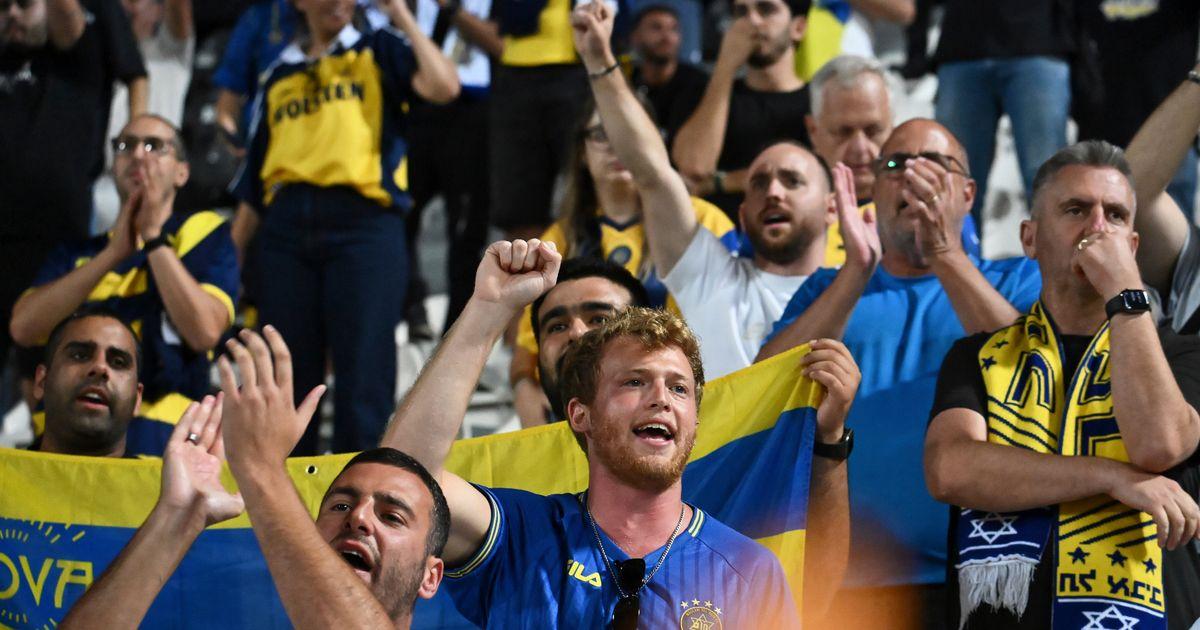
Police and safety bodies warned of intimidation risks linked to prior Ajax–Maccabi tensions and recent antisemitic attacks in the UK. Broader context pieces note that match-related violence is an entrenched challenge authorities try to manage with bans, heavy policing, and other controls.
Reactions to Sports Ban
Political and diplomatic pushback was swift and multi-directional. Starmer condemned the ban as wrong, with ministers scheduling meetings to lift it. The BBC reported the government was already working to overturn the move pending updated police assessments.
“UK Prime Minister Sir Keir Starmer condemned the ban as wrong, stressing zero tolerance for antisemitism and calling for police to protect fans.”
Internationally, Israel’s foreign minister Gideon Sa’ar condemned the decision and called it shameful, according to France 24. UEFA pressed UK authorities to facilitate safe attendance at the events. Jewish organizations criticized the policy and proposed playing behind closed doors instead.
At the same time, some local voices supported the restriction. Activist groups used the moment to argue for excluding Israeli teams from competitions.
Responses to Antisemitism Concerns
Debate over antisemitism and community safety shaped the response. British‑Israeli leaders and Maccabi’s CEO described the ban as potentially antisemitic and divisive, expressing concerns that it punishes Jewish supporters rather than deterring bigotry. Local reporting detailed safety risks for Jewish communities and recent hate‑crime convictions tied to football events.
National outlets highlighted Starmer’s insistence that Jewish people must feel safe and welcome, alongside the government’s broader efforts to address rising antisemitism after a deadly synagogue attack in Manchester. Police arguments emphasized capacity constraints and the need to prevent intimidation around the stadium.

International Sports and Political Tensions
The dispute unfolds amid wider international political and sporting pressures. West Asian coverage points to growing hurdles facing Israeli teams. Al Jazeera notes Indonesia refused visas to Israeli gymnasts and that an Israel-affiliated cycling team planned to drop overt associations following protests.
“Indonesia has refused visas to Israeli gymnasts for the World Championships, and the Israel-Premier Tech cycling team plans to drop Israeli affiliations following protests.”
1News reports UEFA had considered suspending Israeli teams before postponing the decision after a ceasefire. Sky Sports adds that figures such as Spain’s prime minister and UN experts have called to suspend Israel from international football. France 24 underscores the UK government’s eventual commitment to work with police so all fans can attend safely.

Activist pressure is visible across outlets, with GB News citing demands to exclude Israeli teams for alleged rights abuses. Adjacent legal battles reported by beritasriwijaya show heightened contention around pro-Palestinian activism in the UK.