Full story
UN backs Equal Earth
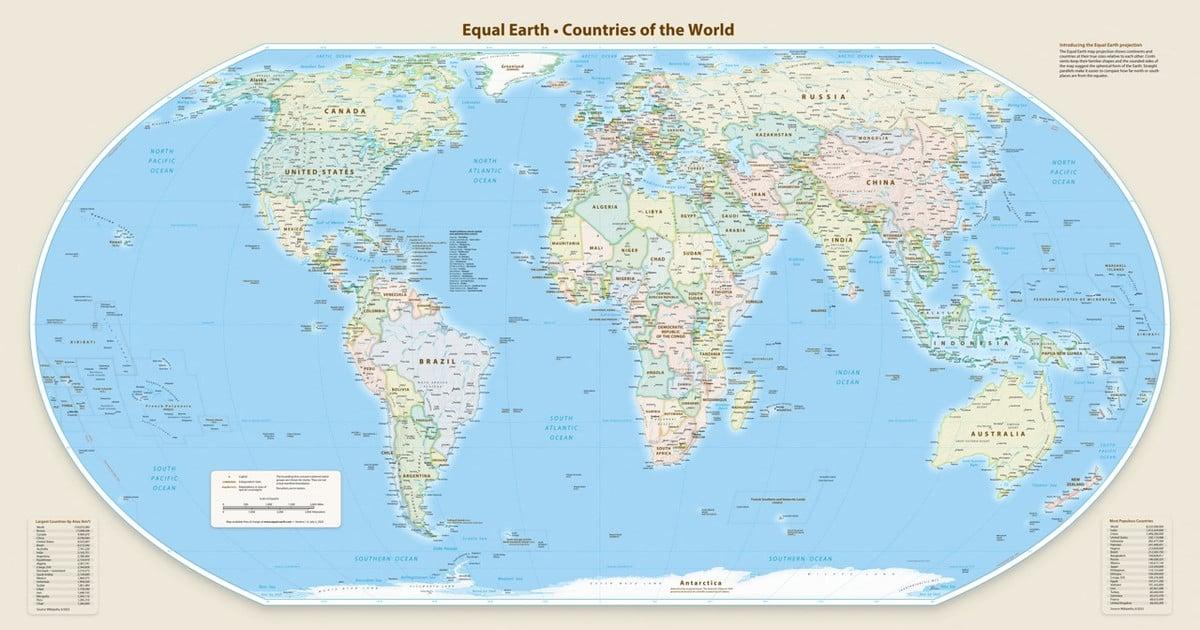
The United Nations General Assembly voted on Friday to shift away from the 16th-century Mercator global map toward the Equal Earth cartographic projection, with the resolution sponsored by African states and led by Togo.
“The resolution passed in the UN General Assembly on Friday (US time) by a vote of 164 to 1, with 6 abstentions.”
Reuters reported that the resolution passed by a vote of 164 to 1 with 6 abstentions, while the United States was the only country to vote against it and said it promoted an "ideological agenda".
The BBC said the UN vote would replace the traditional world map with one that more accurately reflects the size of Africa, and noted that the Mercator map shows Africa as similar in size to Greenland even though it is 14 times larger.
The resolution is not legally binding, and the Togolese ministry said it "in no way challenges the use of the Mercator projection for maritime and aerial navigation, for which it remains fully suited".
Dussey, US clash
Ahead of the vote, Togo’s foreign minister Robert Dussey told Reuters, "A fair world begins with a fair map," as he argued the Mercator projection distorts the relative size of land masses by expanding those nearer the poles.
The BBC also quoted Dussey telling a UN briefing that "A map is never neutral. It shapes perceptions, influences how the place of peoples and continents in the world is understood."

The United States rejected the resolution, with Reuters saying it was a distraction from the "genuine problems of international peace, prosperity or good relations".
In the BBC account, Lerato Mogoatlhe from Africa No Filter said Africa’s misrepresentation on world maps is "not just a cartographic error - it's a narrative issue," linking the campaign to stopping the "world's longest misinformation and disinformation" about Africa.
Adoption push and fallout
Reuters said Togo planned to change its school geography materials by the end of the year, with Dussey telling Reuters, "Togo will be the first country to change our own geography books."
“"Togo will be the first country to change our own geography books," Dussey said.”
The BBC reported that the AU’s 54 member states adopted the Equal Earth projection in February, and said the resolution passed with the support of 164 nations including France and the UK.
France announced it would abandon the Mercator projection, and France 24 quoted Foreign Minister Jean-Noel Barrot saying, "The United States, Russia and China take on a disproportionate visual prominence compared to Africa, Latin America or southeast Asia."
AP reported that the resolution encourages governments and institutions to replace the traditional Mercator map with the Equal Earth projection, while also quoting Mark Monmonier of Syracuse University saying, "Outside of that very narrow navigation application, there is no point in using it," as the vote culminated a campaign led by African countries and advocacy groups.