Gaza Genocide07 April, 20268 min read
UN Human Rights Office Urges Israel To Halt Extrajudicial Executions In West Bank
UN rights office urges Israel to halt extrajudicial executions in West Bank. Elderly Palestinian woman killed during Israeli raid near Qalqilya in West Bank.
Haaretz was read line by line by the Watchdog: 1.5. See the score →
UN denounces executions
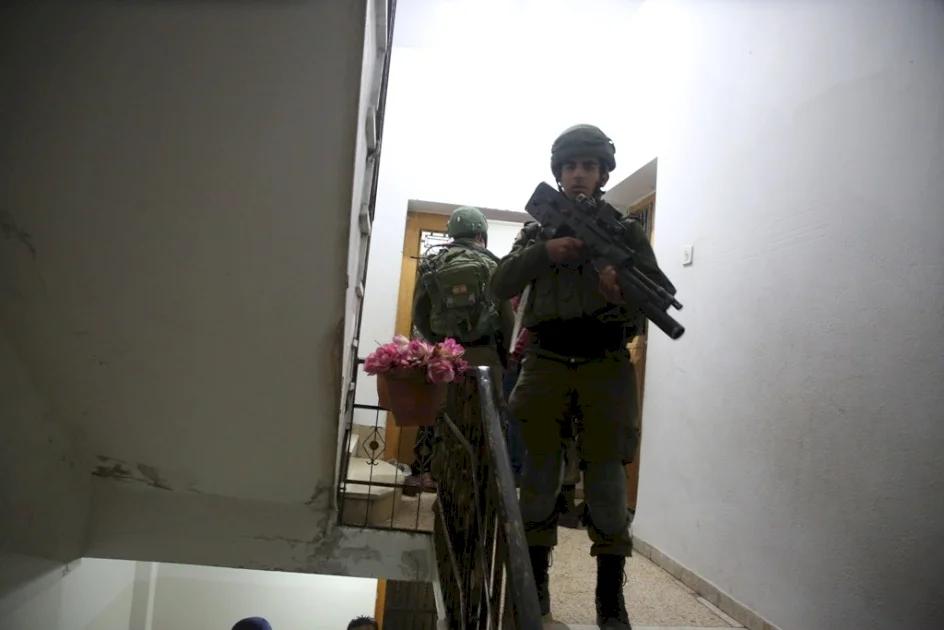
In the occupied West Bank, the UN Human Rights Office urged Israeli authorities to halt what it called extrajudicial executions, saying Gaza is not the only Palestinian territory suffering deadly violence as Israel’s military operations intensified in recent days. In a press release, the UN High Commissioner for Human Rights denounced a series of “planned extrajudicial executions” by Israeli security forces in the occupied Palestinian territory and insisted, “We must put an end to these senseless massacres,” while also calling on Israel to bring to justice “all those responsible.” The UN said that over the past two weeks, nine Palestinians were killed in circumstances that raised “serious concerns,” including two described as victims of planned executions and seven killed during operations in which the use of force appeared “unnecessary or disproportionate.”
On May 8, the UN said a 30-year-old Palestinian wanted by Israeli authorities was shot dead in the Old City of Nablus by an undercover unit, and that surveillance video footage reviewed by UN staff shows “an undercover agent [who] killed the man as he tried to surrender, then shot him again as he lay on the ground, apparently to 'confirm the murder'.” The UN added that the video does not corroborate Israeli claims that the man was armed or posed a threat to the police.

The UN also described another case on May 2 at the Balata refugee camp in Nablus, saying that although Israeli security forces said they found a weapon and cartridges in his car, they “did not indicate that he posed a threat to life at the moment he was shot.” In a separate incident near the Qalandiya refugee camp in Jerusalem, the UN said a young Palestinian who had been shot and wounded was beaten on the head by two Israeli soldiers, and that “The soldiers then moved away, without arresting him or providing medical care to the man,” according to the release.
Gaza doctor family
In Gaza, the Gaza Strip Civil Defense announced on Saturday, May 24, the death of nine children from a Palestinian doctor couple, Dr. Hamdi Al‑Najjar and Dr. Alaa Al‑Najjar, killed in an Israeli airstrike in the southern part of the besieged territory.
The Civil Defense said earlier that at least 15 people, including children, had died in new bombardments, and it later said its teams transferred the bodies of nine “martyr children” from the home of the doctors, with some burned, on Friday, May 23.
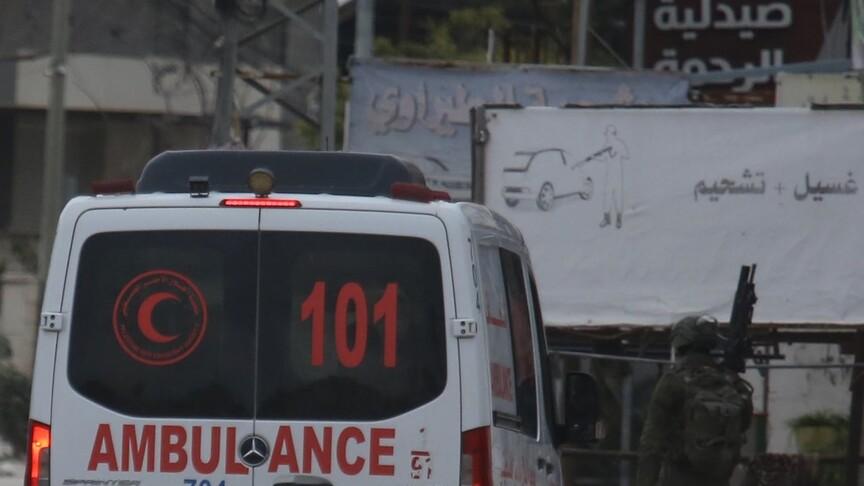
Mahmoud Bassal, spokesman for the Gaza Civil Defense, told AFP that “Yesterday, Friday May 23, 2025, our teams transferred (to the hospital) the bodies of nine martyr children, some of whom were burned, from the home of Dr. Hamdi Al‑Najjar and his wife, Dr. Alaa Al‑Najjar,” and he said the Israeli occupation targeted their home in the Gizan Al‑Najjar neighborhood in Khan Younis.
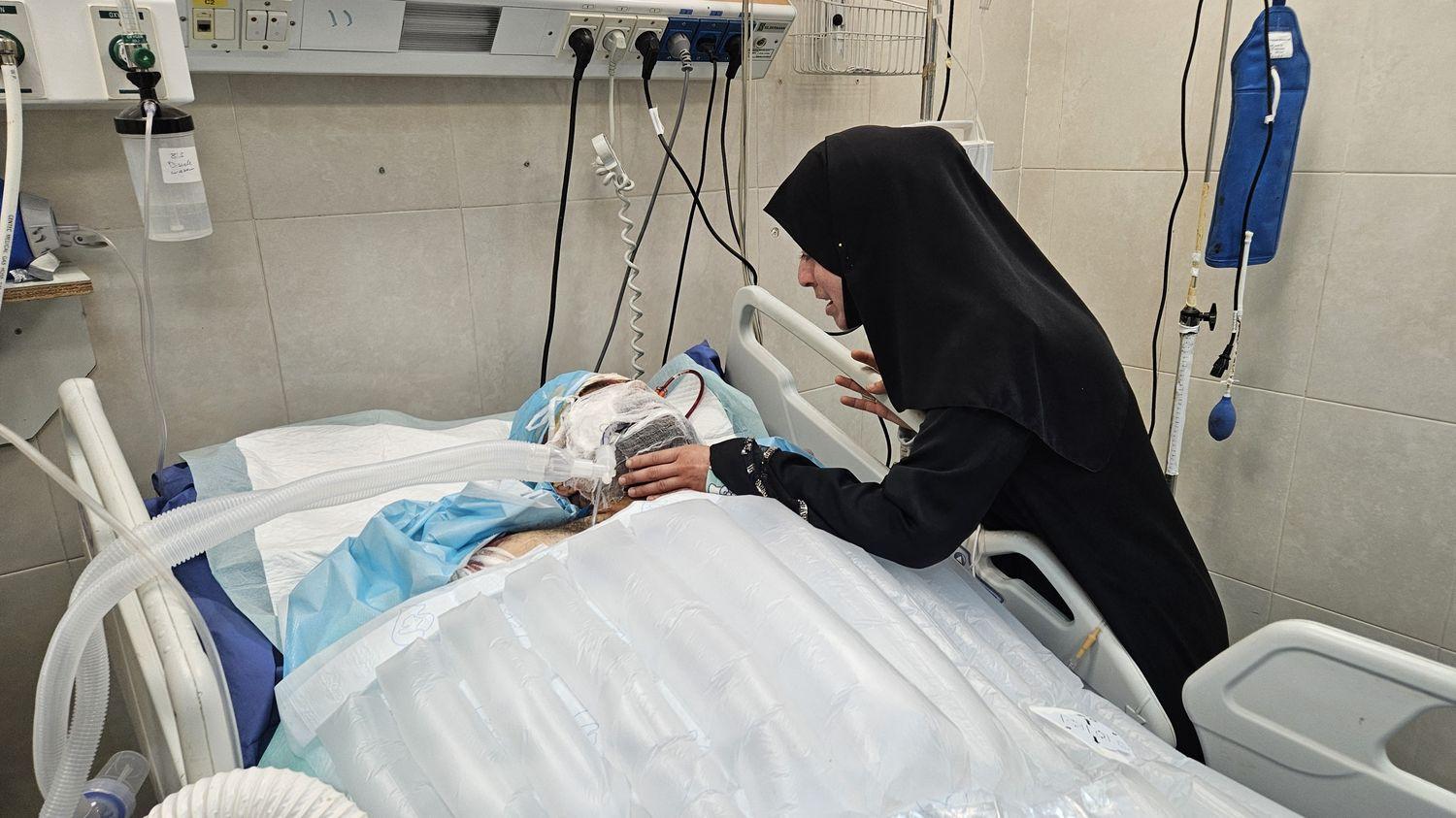
Bassal clarified that Dr. Hamdi al‑Najjar and their tenth child, Adam, were “severely” injured, while Khan Younis’ al‑Nasser Hospital said the only surviving child of the siblings is 10 years old.
The Israeli army told AFP that one of its aircraft had “struck several individuals suspected of operating from an adjacent structure” and added, “The claim regarding the damage caused to civilians not involved is under review.”
Mounir Albourche, director-general of the Health Ministry of the Hamas government for the Gaza Strip, said on X that the strike occurred shortly after Dr. Hamdi Al‑Najjar had taken his wife to work, recounting, “A few minutes after his return, a missile struck their home,” and adding that the doctor was “currently in intensive care.”
Franceinfo and Le HuffPost both described the family’s home being hit by two missile strikes and said the nine children were killed in the bombardment, with the rescuers searching the rubble after the strike and dousing a fire before recovering charred bodies.
Ceasefire talks stall
The wider Gaza conflict context in the reporting includes renewed strikes and stalled indirect negotiations between Israel and Hamas, with the two parties accusing each other of blocking talks.
Le Monde reported that civil defense in the Gaza Strip reported at least 43 deaths on Sunday, July 13, due to renewed Israeli strikes, and it said indirect negotiations between Israel and Hamas stall as talks began on July 6 in Doha with mediation by Qatar, Egypt, and the United States to end the violence in the enclave.
The same report said that on Sunday, U.S. President Donald Trump said he hoped the Gaza issue would be “settled” next week.
Le Monde also tied the violence to humanitarian and energy pressures, reporting that seven UN agencies warned on Saturday in a joint statement that the fuel shortage had reached a “critical level” and posed a “new unbearable burden” for “a population on the brink of famine.”
It described specific casualty reports from civil defense, saying pre-dawn and early-morning bombardments killed ten Palestinians, including women and children, in the city of Gaza, and that twenty more people were killed at the Nuseirat refugee camp in the center of the enclave.
The report said ten died in the morning near a potable water distribution point in the same camp, and three more perished in a raid on the Al-Mawassi displaced persons camp in the south.
In response, the Israeli army, questioned by AFP, said it was examining the reports but stated that in the last twenty-four hours its air force had “struck more than 150 terrorist targets in Gaza, including terrorists, booby-trapped structures, weapons depots, and missile sites.”
Aid, water, and shortages
The Gaza reporting also centers on shortages and the struggle to restore basic services amid the war, with multiple outlets quoting UN officials and local authorities about the scale of need.
France 24 reported that roughly 2.4 million inhabitants face severe shortages of water, food, and medicines, and it said Israel began allowing aid to pass through little by little on Monday, May 19, one truck at a time after a ban on the entry of humanitarian aid since March 2.
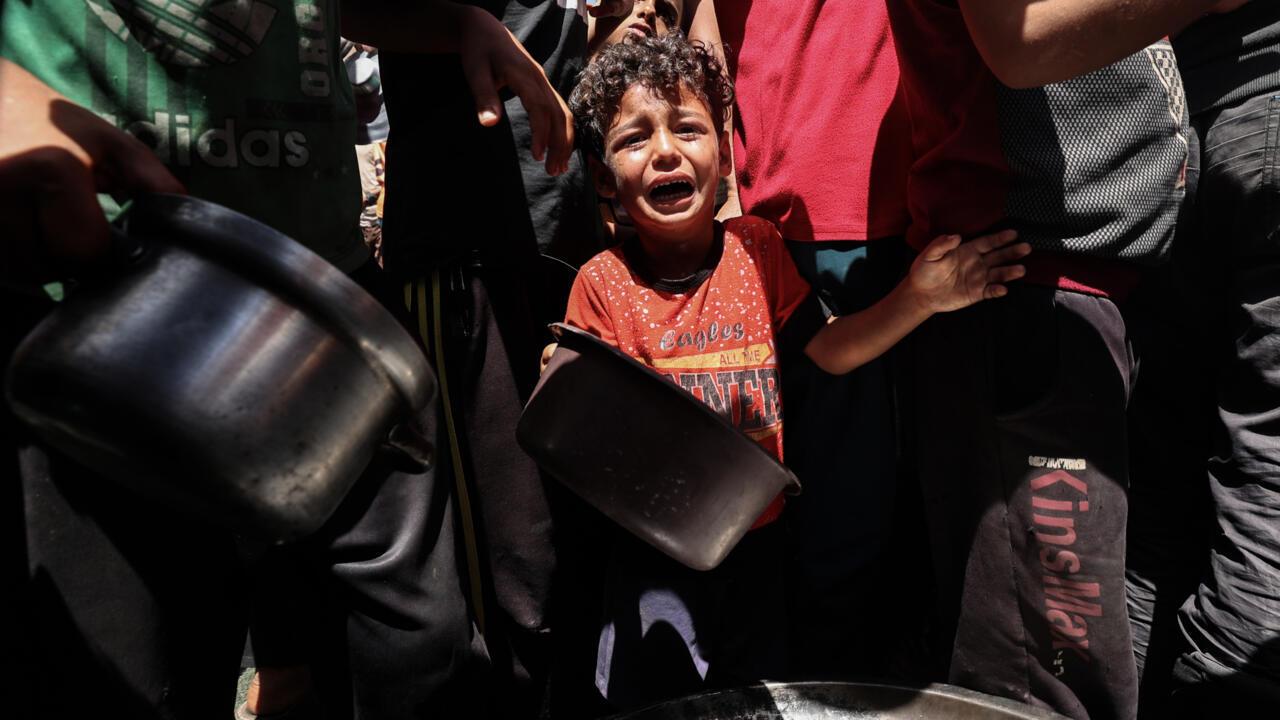
In that context, Antonio Guterres, the UN secretary-general, said the trucks authorized by Israel represent “only a pinch of aid while a flood is needed,” and the report described a Gaza City municipality call for help to repair and rehabilitate “the destroyed water facilities,” noting “a major water crisis” as summer approaches.
The same report included a direct appeal from Nady Nasrallah, a displaced person in Gaza City, saying, “I am appealing to the world to help us. We need drinking water and food. My daughter has been asking for bread since this morning and we have nothing to give her,” and it linked the humanitarian situation to the broader siege.
Le HuffPost similarly described the humanitarian aid blockade imposed by Israel since March 2 as exposing people of Gaza “to an increasing risk of famine, disease and death,” quoting Catherine Russell, UNICEF’s executive director, earlier in May.
Le HuffPost also repeated Guterres’s assessment that the aid trucks represent “only a drop of aid when a flood is needed,” and it reported the Gaza City Municipality launching a call for help to repair and rehabilitate “destroyed water facilities,” reporting “a major water crisis.”
In the same France 24 report, the Israeli army said that in the last 24 hours it “eliminated terrorists and dismantled terrorist infrastructures including underground ones” and that the air force “struck more than 100 terrorist targets.”
Competing casualty narratives
Across the Gaza war coverage, different outlets and sources present competing casualty tallies and different framings of Israeli strikes, including disputes over whether civilians were hit and whether militants were the intended targets.
In one Reuters-based report carried by swissinfo.ch, paramedics said an Israeli airstrike and tank shelling killed six Palestinians, including two women and a girl, in Gaza City, and it quoted Mohammed Abu Salmiya, head of Shifa Hospital, saying three of the dead were killed in an airstrike near Al-Azhar University, including medic Mohammed Hamdouna.
That Reuters report also included a statement that the Israeli army “killed two Hamas members who were preparing to attack Israeli soldiers, without providing evidence,” and it said the Israeli army declined to comment on Reuters’ request for evidence linking the two men to a possible attack.
The same Reuters account described tank shelling in the Nuseirat refugee camp that killed two women, one of them a local journalist, and a girl, and it quoted Nasrin Abu Shalouf saying, “We’re sitting in our tents; we haven’t seen anything except something that sweeps over us like the red fire once, twice, and three times, and we started running, not knowing.”
In contrast, Le Monde’s report on July 13 said the Israeli army was examining civil defense reports but stated that it had “struck more than 150 terrorist targets in Gaza, including terrorists, booby-trapped structures, weapons depots, and missile sites.”
France 24’s Gaza doctor-family account similarly included the Israeli army’s claim that an aircraft “struck several individuals suspected of operating from an adjacent structure,” while adding, “The claim regarding the damage caused to civilians not involved is under review.”
The stakes of these competing narratives are reflected in the scale of reported deaths and injuries across different sources, including Le Monde’s reference to “At least 57,882 Palestinians, mostly civilians, have been killed in Gaza by Israel’s military retaliation” and Anadolu Ajansı’s separate tally that “Gaza.. 23 Palestinians killed in Israeli airstrikes and shooting over 48 hours.”