Full story
Attack Halts Evacuation
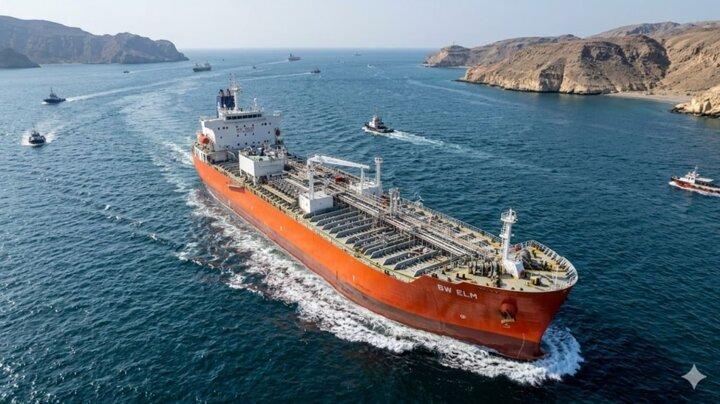
A cargo ship was hit by a projectile in the Strait of Hormuz, prompting the UN International Maritime Organization to pause its evacuation initiative for stranded ships and mariners.
“Skip to navigationSkip to contentSkip to footerHelp using this website - Accessibility statement Today's Paper Advertisement World Middle East Middle East conflict Print article Julian Lee and Alex Longley Jun 26, 2026 – 8”
The attack was reported by UK Maritime Trade Operations as occurring 7.5 nautical miles southeast of Oman's port of Dahit, with the ship struck on its starboard side and sustaining damage to its bridge.

IMO Secretary-General Arsenio Dominguez said, "I have decided to temporarily pause [the evacuation plan’s] implementation" after being informed of the attack in the Gulf of Oman.
The BBC reported that the IMO wanted to ensure "necessary safety guarantees" would continue to be in place for the ships on its evacuation list and all those in the region.
The incident came hours after Iran told vessels to stop using the route through the strait without Tehran’s permission, and after the IMO had begun evacuating 600 ships and around 11,000 mariners stranded by the closure of the Strait of Hormuz during the US-Israeli war on Iran.
Who Fired and Where
Multiple outlets tied the attack to Iran’s Islamic Revolutionary Guard Corps, with Reuters-cited reporting saying the vessel was likely targeted by a drone and that the ship was Singapore-flagged Ever Lovely.
Al Jazeera said the ship reported being struck on its starboard side by a projectile 14km (7.5 nautical miles) southeast of Oman’s port of Dahit, and it added that another maritime security source told Reuters the vessel was likely targeted by a drone.
The Persian Gulf Strait Authority said transit outside its designated routes would not be covered by safe passage guarantees, warning that consequences would fall on the owner, operator, and vessel commander.
The BBC quoted the PGSA on X: "Any consequences arising from the use of unauthorised routes shall be the responsibility of the vessel's owner, operator and master".
In parallel, the BBC said the vessel "did not transit under IMO's evacuation framework," while MarineTraffic reported the Ever Lovely entered the Strait using the southern route and exited on the east side at around 15:30 local time (16:30 BST).
Fees, Routing, and Risk
The attack sharpened the dispute over how ships should transit the Strait of Hormuz, with Iran pressing for permission-based routing while the US and its partners reject tolls or fees.
Euronews reported that Iran’s IRGC warned vessels transiting without Iranian permission were doing so "illegally" and said, "Transit only with IRGC permission, on designated routes. No permission, AIS off, or off-route, and you carry the consequences," as a video of an IRGC radio broadcast circulated online.
The BBC said the plan was fiercely opposed by the US, with Secretary of State Marco Rubio warning on Tuesday that no country is allowed to impose tolls on the Strait of Hormuz, which he called "an international waterway."
The BBC also noted that Tehran has repeatedly said it plans to charge what it calls maritime service fees for crossing the strait, and it described how the cost of crude had been moving sharply lower since a Memorandum of Understanding signed on 17 June.
With the IMO evacuation paused, the sources also pointed to the immediate operational stakes for shipping and the fragile US-Iran framework, including the BBC’s account that the UN evacuation effort was announced on Tuesday following the reopening of the strait and that the evacuation plan would remain on hold until further clarity is obtained.