Gaza Genocide19 June, 20263 min read
UN Security Council Session: Tom Fletcher Says Gaza Crisis Deepens Despite Ceasefire
This article is an automated aggregation of coverage from news outlets. Our editorials offer in-depth analysis curated by the NewsCord team.
Gaza humanitarian crisis deepens despite ceasefire, prompting calls for unrestricted aid access. UN humanitarian chief Tom Fletcher urges dignity for Gaza residents and urgent relief.
The National was read line by line by the Watchdog: 5.9. See the score →
Ceasefire, deeper crisis
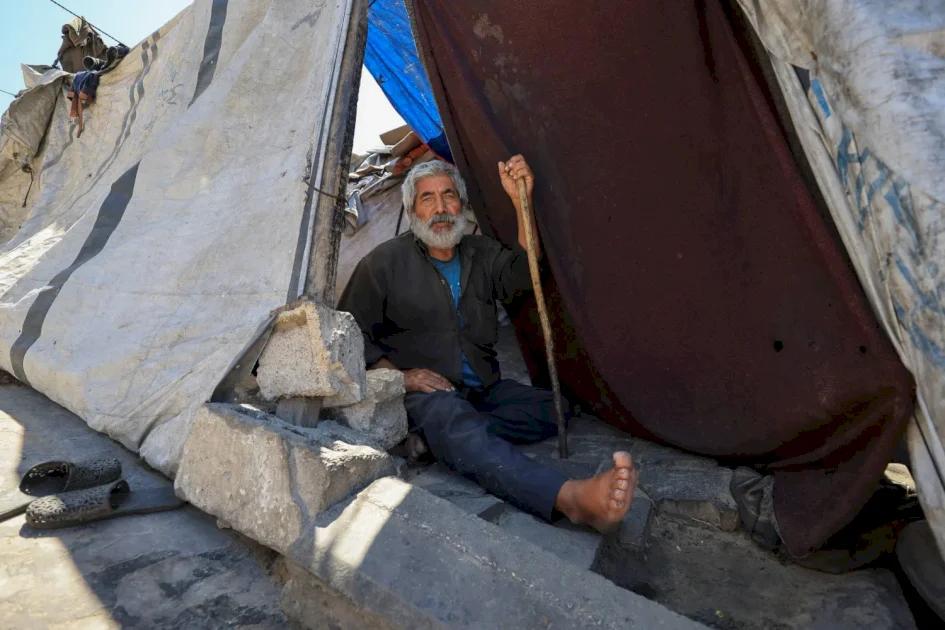
At a UN Security Council session on Palestine on June 19, 2026, Tom Fletcher warned that Gaza’s humanitarian crisis continues to deepen despite a ceasefire agreement, saying “Gaza is no longer currently classified as being in famine, IPC Phase 5, though remains in severe crisis, IPC Phase 4.” Fletcher said that “Since the ceasefire, nearly 1,000 Palestinians have been killed according to the Ministry of Health, including, our colleagues at UNICEF report, more than 250 children,” while also stressing that civilians are still being killed and maimed in daily airstrikes, shelling and gunfire. Pakistan’s UN envoy Asim Iftikhar Ahmad told the Council that “ceasefire violations continue, and the humanitarian crisis in Gaza remains acute,” and he said civilians face “immense hardship marked by killings, deprivation, displacement and an uncertain future.”
“Gaza is no longer currently classified as being in famine, IPC Phase 5, though remains in severe crisis, IPC Phase 4.”
Ahmad argued that “the core issue is the arbitrary denial and delay of humanitarian access,” and he said the blockade has been “an instrument of occupation and collective punishment for years now.” China’s UN envoy Fu Cong said “death and suffering remain the daily reality in Gaza,” adding that “Since the conclusion of the ceasefire deal, Israeli military operations have claimed nearly 1,000 lives.”

Competing blame, urgent access
In the same Security Council session, UK Charge d’Affaires James Kariuki said the humanitarian situation in Gaza “remains dire,” and he urged Israel to “immediately remove unjustifiable restrictions on humanitarian access.” Kariuki also said the UK was “horrified by footage of Israeli forces killing a seven-month-old baby in Hebron on the fifth of June” and called for accountability. US deputy UN envoy Tammy Bruce argued that the root cause of Gaza’s suffering is political rather than logistical, saying “The problem is a terrorist group that is holding the population of Gaza hostage,” and she referred to Hamas.
Russia’s Deputy Permanent Representative for Political Affairs Anna Evstigneeva described Gaza as a “deteriorating humanitarian catastrophe” and warned that Israeli plans to take control of large parts of Gaza could jeopardize future peace efforts. Evstigneeva stressed that humanitarian aid “must not be made contingent on the fulfillment of political demands,” while calling for urgent action to avoid “irrevocable consequences.”

What comes next
Fletcher told the Security Council that the gains since Security Council resolution 2803 are “the minimum that Palestinians need,” and he said Gaza “is holding together thanks to temporary humanitarian solutions and the resilience of the Palestinian people, and this is an unsustainable situation.” He said residents remain deprived of “safety, shelter, clean water, health care, and education,” and he warned that civilians cannot wait for diplomacy while they remain “hungry, facing rat bites, homeless, and out of school.” Fletcher also said the UN is still constrained by ongoing restrictions on humanitarian work, including limited crossings and restrictions on some materials, and he noted that these restrictions have sometimes affected prosthetic limbs.
“WHO reports that no hospital is fully operational.”
The UN official closed with three main demands: protect civilians and humanitarian workers, ensure safe, secure, and unobstructed delivery of aid, and provide adequate funding. In parallel, the UN Relief Chief said the share of households reporting going to bed hungry dropped from 92 per cent to 36 per cent, but he warned that “Essential services are on the brink” and that “WHO reports that no hospital is fully operational.”