UN Warns Israeli Attacks on Lebanon, Hezbollah Rocket Fire May Breach Humanitarian Law
Key Takeaways
- UN OHCHR warns Israeli strikes in Lebanon and Hezbollah rocket fire may breach international law.
- The report covers the first three weeks of the latest escalation.
- It documents patterns of attacks on civilians in populated areas and residential buildings.
UN flags possible IHL breaches
The United Nations human rights office warned that recent deadly Israeli attacks on Lebanon and Hezbollah rocket fire into Israel may amount to serious violations of international humanitarian law.
“Recent deadly Israeli attacks on Lebanon and Hezbollah rocket fire into Israel may amount to serious violations of international humanitarian law, the United Nations human rights office (OHCHR) says”
The findings come from a UN report released on Friday that focuses on the first three weeks of the latest escalation between Israel and Hezbollah, which began on March 2.

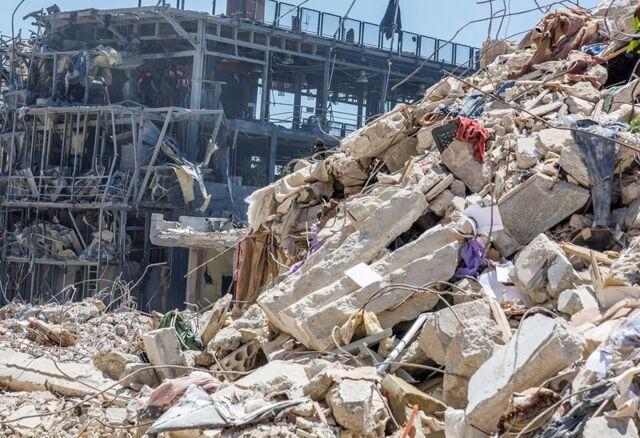
OHCHR spokesperson Thameen Al-Kheetan said the report documented cases in which Israeli strikes hit, and in some instances destroyed, multi-storey residential buildings in Lebanon, killing entire families, which “may constitute serious violations of international humanitarian law.”
The report cited an Israeli strike on March 8 that hit a multi-storey residential building in the town of Sir el-Gharbiyeh, in the Nabatieh governorate, killing at least 13 civilians inside the building, including five women, five men, two boys and a girl.
The UN also said it identified incidents in which Israeli forces had given ineffective warnings, or no warnings at all, that strikes were going to take place in Lebanon.
In parallel, the UN found that Hezbollah fired unguided rockets that lacked the precision needed to hit desired military targets, instead damaging buildings and other civilian infrastructure in Israel, which the UN said likely violated international humanitarian law.
The UN report also said there was no immediate comment from the Israeli military or Hezbollah on the UN report, as the assessment circulated through international capitals.
Escalation timeline and numbers
The UN report’s assessment is tied to the first three weeks of the latest escalation between Hezbollah and Israeli forces, which began on March 2.
Multiple outlets anchored the death toll to that period, with Reuters reporting that “nearly 2,500 people have been killed in Lebanon, according to Lebanese authorities,” and the National saying “Since March 2, nearly 2,500 people have been killed in Lebanon, according to Lebanese authorities.”

Al Jazeera reported that “More than 2,400 people have been killed in Lebanon since Israel launched its bombardment and subsequent invasion of southern Lebanon,” while Anadolu Ajansı put the figure at “2,475 dead, 7,696 wounded, in addition to more than one million displaced” using “the latest official data.”
The UN report also described displacement and the legal character of evacuation orders, with the OHCHR saying Israel’s “vaguely communicated blanket evacuation warnings and displacement orders – covering almost 14 per cent of Lebanon’s territory – have led to the displacement of over a million people, according to the Lebanese authorities.”
The OHCHR further said that “Given the breadth and circumstances of these orders, they may amount to forced displacement, prohibited under international humanitarian law,” and it added that “Fifty-five localities in southern Lebanon, near the border with Israel, remain under such orders today.”
The ceasefire context also appeared in the reporting: Al Jazeera said “there is currently a fragile ceasefire in place,” with US President Donald Trump announcing on Thursday that the truce would be extended for another three weeks, while Reuters said Trump announced a “three-week extension to a ceasefire” on Thursday.
Anadolu Ajansı, meanwhile, described a “10-day ceasefire in Lebanon, renewable,” announced by Trump, and said “Israel continues to violate it daily, causing deaths, injuries and widespread destruction.”
Journalists, rescue obstruction, war-crime risk
The UN report also warned that attacks on journalists could amount to war crimes if they were deliberate, and it tied that warning to specific incidents in southern Lebanon.
“The UN has raised concerns over potential breaches of international law by Israeli strikes in Lebanon and Hezbollah rockets into Israel”
OHCHR said that on Wednesday, an Israeli strike killed Lebanese journalist Amal Khalil and injured photographer Zeinab Faraj in the south, and that rescue teams including the Lebanese Red Cross faced obstruction by the Israeli military when trying to reach them.
Reuters reported that “This included the use of a sound grenade and live fire targeting an ambulance, delaying access to the site,” quoting Al-Kheetan, while the OHCHR briefing said “This included the use of a sound grenade and live fire targeting an ambulance, delaying access to the site.”
The OHCHR spokesperson added that “Deliberately targeting them would amount to a war crime,” and the UN briefing stated that “Medical personnel, whether military or civilian, and other civilians, including journalists, are protected, under international humanitarian law.”
In the same reporting thread, the Israeli military said its troops struck a vehicle and a structure after two vehicles in southern Lebanon were identified as leaving a Hezbollah military site and crossing the Forward Defence Line, which posed an immediate threat, and it said the incident was under review.
Reuters also said the army “does not deliberately target journalists or medical teams and the incident is under review, it added,” while the National quoted the UN report’s language that “Medical personnel and journalists are protected under international humanitarian law. Deliberately targeting them would amount to a war crime,” and described rescue teams accusing Israeli forces of obstructing them.
Beyond the UN’s legal framing, CPJ figures were cited by El País, which said “The death of Amal Khalil, 43, a Lebanese reporter for the media outlet Al Akhbar” brought “up to nine the number of journalists killed by the Israeli army in seven weeks ofoffensive in Lebanon, according to the Committee to Protect Journalists (CPJ).”
Lebanon urges UN action
Lebanon’s government and its diplomats framed the journalist issue as an urgent matter for UN intervention, building on the same incident involving Amal Khalil and Zeinab Faraj.
Anadolu Ajansı reported that Lebanon urged UN High Commissioner for Human Rights Volker Turk to act to stop Israel’s targeting of Lebanese journalists after it killed “28 of them since October 2023.”

In a letter sent by Lebanon’s Permanent Representative to the UN and International Organizations in Geneva, Ambassador Caroline Ziada, the report said Ziada told Turk that she had sent a letter regarding Israel’s targeting of journalists in Lebanon and their killing.
The Anadolu Ajansı account said Ziada noted that the Lebanese Ministry of Information documented Israeli attacks targeting journalists since March 2, 2026, including “the Lebanese journalist and radio host Ghada Dayeh from Radio Voice of Joy” and “journalist Susan Khalil from Radio Al-Nour and the Al-Manar channel.”
It also said Ziada explained that Israeli military operations since October 13, 2023 resulted in “the martyrdom of 28 Lebanese journalists, including reporters and photographers, with accountability so far,” and she stressed that these acts constitute “serious violations of international humanitarian law.”
The letter also referenced the Wednesday killing of Amal Khalil and the wounding of her colleague Zainab Faraj after an Israeli airstrike targeted a house in the town of al-Tiri in southern Lebanon.
Anadolu Ajansı further said that “The Israeli army surrounded the two journalists and prevented the Red Cross and the Lebanese army from reaching them,” and it added that the Israeli army “also attacked the main road linking the towns of al-Tiri and Hadatha to prevent rescue teams from reaching them.”
Different frames, same UN report
While the UN report’s core allegations were consistent across outlets, the surrounding framing differed, especially on how the report’s legal warnings were translated into policy or accountability narratives.
“By Olivia Le Poidevin GENEVA, April 24 (Reuters) - The U”
Al Jazeera emphasized the UN’s documentation of attacks on populated areas and residential buildings and quoted OHCHR spokesperson Thameen Al-Kheetan on the legal threshold, saying strikes “may constitute serious violations of international humanitarian law.”
The National highlighted the same UN report but foregrounded the policy implications, quoting UN High Commissioner for Human Rights Volker Turk urging states to “cease the sale, transfer and diversion to any party of arms, munitions and other military equipment” where there is a “clear risk” they could be used to commit serious violations.
The OHCHR briefing itself expanded the scope beyond strikes to include rights impacts, stating the UN report documents “the significant, ongoing impact on a wide range of human rights” including “rights to life, health, education, food, housing, work, a safe environment, freedom of movement, and freedom of religion or belief.”
It also described continuing incidents “even after the present ceasefire was announced,” and it warned that “Civilian objects, including health facilities, schools and religious sites have been entirely destroyed or severely damaged.”
In contrast, the Guardian’s story shifted away from the UN report’s content and toward the UK government’s internal capacity to track potential breaches, saying a Foreign Office unit tracking potential breaches “has been closed because of cuts within the department.”
The Guardian reported that the decision shut an “international humanitarian law cell” and ended funding for the Conflict and Security Monitoring Project run by the Centre for information Resilience, which it said provided “the world’s largest open-source monitoring of incidents across Israel, Palestine and Lebanon.”
More on Lebanon
Israeli Forces Kill Six Hezbollah Fighters in Bint Jbeil Clash
14 sources compared
Israeli Forces Kill Six Hezbollah Fighters in Bint Jbeil Clash
13 sources compared

Trump Says Israel And Lebanon Extend Israel-Hezbollah Ceasefire By Three Weeks
18 sources compared
Hezbollah Drone Attack Injures Israeli Reservist as Israel Strikes Southern Lebanon
11 sources compared