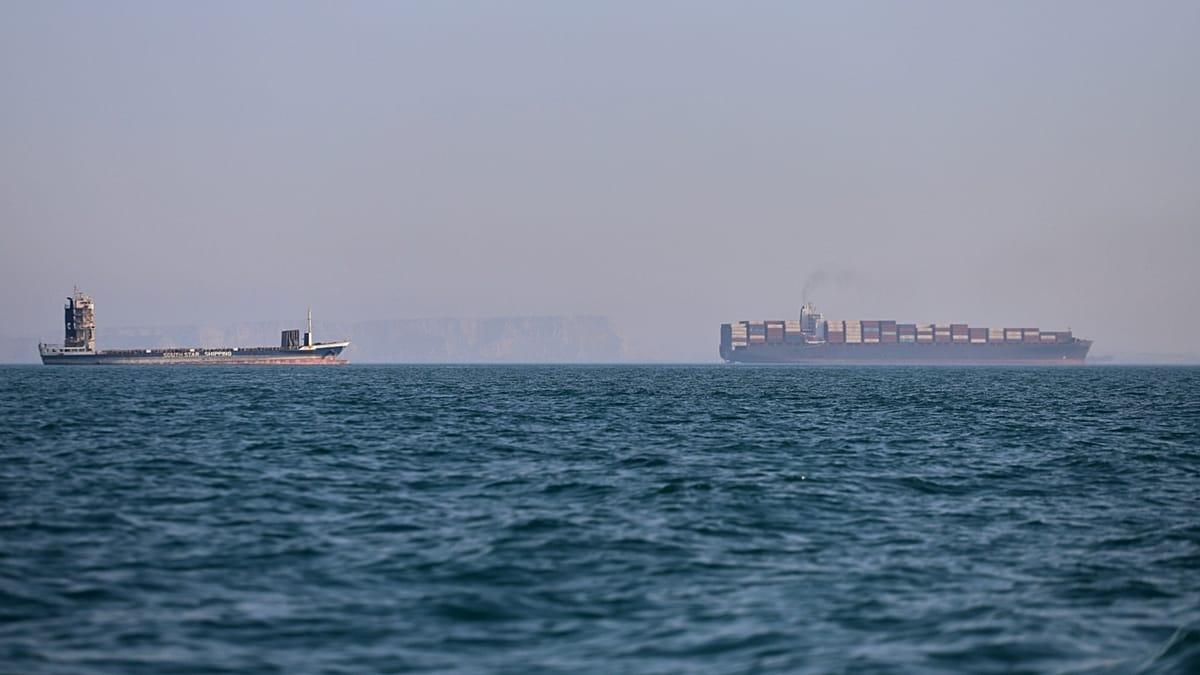
United States Launches Strikes On Iran After Attacks On Three Commercial Vessels In Strait Of Hormuz
Key Takeaways
- U.S. launches new strikes on Iran after three ships attacked near Strait of Hormuz.
- CENTCOM says strikes target Iran's air defenses, coastal surveillance, missiles and drones.
- Iran condemns strikes, warns decisive retaliation, says U.S. violated Memorandum of Understanding.
Strikes after ship attacks
The United States launched a series of “powerful strikes” on Iran after attacks on three commercial vessels in the Strait of Hormuz, with CENTCOM saying the goal was to impose heavy costs for targeting and attacking commercial shipping crewed by innocent civilians.
Brent rose as much as 2.8% to exceed $76 per barrel while West Texas Intermediate traded above $72 a barrel, as the U.S. Treasury revoked an exemption that had allowed Iran to sell oil.

Iran’s Mehr News Agency reported explosions heard on a nearby island near the strait, and Deputy Foreign Minister Kazem Gharibabadi said Tehran would respond.
The AP said the strikes came hours after three merchant ships were struck in the Strait of Hormuz, in an exchange of fire that threatened the interim deal to end fighting between the two countries.
The BBC reported that Iranian state media said strikes hit Qeshm island, Bandar Abbas and Sirik, where people were injured by shrapnel, with no deaths reported.
Competing claims and threats
In a statement posted to social media, U.S. Central Command said American forces launched the strikes “to impose heavy costs for targeting and attacking commercial shipping crewed by innocent civilians in an international waterway.”
Iran’s deputy foreign minister Kazem Gharibabadi said in a post on X that the attacks by the U.S. violated the interim agreement, while the BBC reported he warned Tehran would “take decisive measures.”

CNN quoted a U.S. official saying, “This is punishment,” and added that it “won’t be over for a bit.”
The Guardian reported that a US military statement said “Iran’s demonstrated aggression was unwarranted, dangerous, and a clear violation of the ceasefire,” as Iranian officials accused the U.S. of breaching the memorandum of understanding.
The BBC also reported that Qatar’s foreign ministry spokesperson Majed Al Ansari said he held Iran “fully responsible” for an apparent targeted attack on the vessel called Al-Rekayyat.
Oil, negotiations, and leverage
The U.S. revocation of a sanctions waiver and license allowing Iranian oil sales was described as a reversal of a key element of the temporary peace agreement, with the BBC saying the licence authorised Iran to sell oil and petrol products as part of the memorandum of understanding signed last month.
The Al-Sharq report said the U.S. Office of Foreign Assets Control canceled General License No. GL X and that no new transactions would be allowed as of July 7 or after, while also noting the previous license had allowed transactions for 60 days until August 21.
The الشرق بلومبرغ report said the removal of the Iranian oil exemption threatens traffic through the Strait of Hormuz and could deter shipowners and regional producers from attempting to pass through the waterway.
The BBC said the 14-point agreement would put an end to all conflict “on all fronts,” and that Iran will never have a nuclear weapon, while also committing a $300bn (£220bn) fund for “reconstruction and economic development.”
The Guardian added that control of the strait gives Tehran immense leverage in negotiations, effectively allowing it to force a stalemate with the world’s most powerful military, as the fight over Hormuz catalyzed continued retaliatory actions.
More on Iran

Viral AI Fakes Spread as Millions Attend Ayatollah Ali Khamenei’s Funeral in Tehran
18 sources compared
Ahmed al-Sharaa Urges France To Halt Israeli Attacks During Macron Visit To Damascus
32 sources compared
U.S. Launches New Strikes Against Iran After Three Merchant Ships Hit in Strait of Hormuz
21 sources compared

Ali Khamenei’s Body Arrives in Najaf as Iraqi Prime Minister Ali al-Zaidi Receives It
18 sources compared