Technology and Science05 June, 20263 min read
University of Cambridge Completes First Human Trial Of AI-Designed Universal Coronavirus Vaccine
This article is an automated aggregation of coverage from news outlets. Our editorials offer in-depth analysis curated by the NewsCord team.
Phase 1 dose-escalation trial in 39 healthy volunteers in Cambridge and Southampton. AI-designed antigen used in the vaccine targets multiple coronaviruses.
AI vaccine first trial
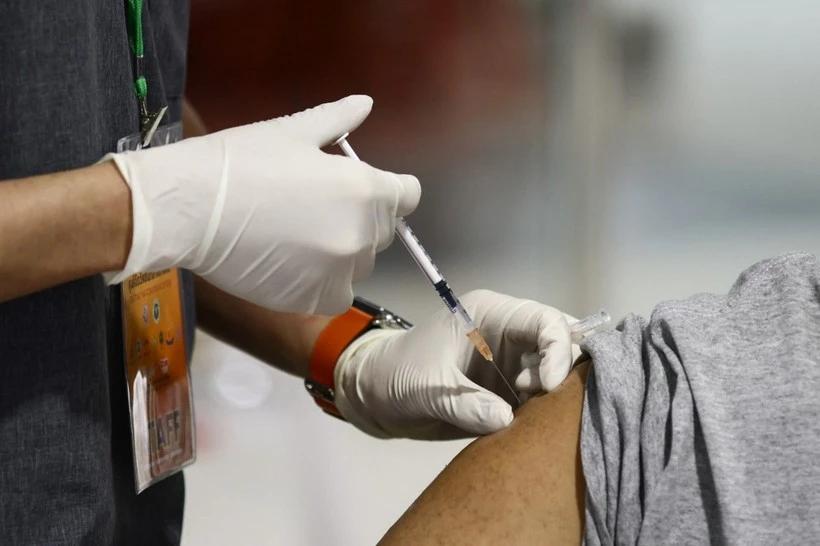
Researchers at the University of Cambridge and the spinout company DIOSynVax (DVX) Ltd have completed the first human clinical trial of an AI-designed universal coronavirus vaccine, with the trial involving 39 healthy volunteers and finding the vaccine to be safe with no major side effects reported. The vaccine is designed to safeguard against multiple members of the Sarbeco coronavirus family, which includes SARS-CoV-2, SARS, and additional bat coronaviruses, and the trial results were published in the Journal of Infection. Professor Jonathan Heeney of the University of Cambridge’s Lab of Viral Zoonotics said, "This trial proves the safety of an entirely new way of designing vaccines."
“The vaccine, tested on 39 healthy volunteers, was found to be safe, with no major side effects reported.”
The trial used volunteers aged between 18 and 50 at National Institute for Health and Care Research (NIHR) Clinical Research Facilities located in Southampton and Cambridge, and the vaccine was administered as a DNA format using a microfluidic jet system. The project also described the approach as the first instance where a vaccine with an active ingredient entirely designed through computer simulations was tested in human subjects, with AI and machine learning used to create a "super-antigen."
Voices and trial framing
Punch Newspapers said the early-stage trial involved 39 healthy volunteers and described the work as a step toward vaccines that could protect against entire families of viruses, including future threats that have not yet emerged. The report quoted Professor Jonathan Heeney saying, "We've converted vaccine development from being reactive to being future proof," and it added that the approach uses AI to design a "super-antigen" built from common genetic features shared across many viruses. ScienceDaily, citing the University of Cambridge, said the study marked "the first time a vaccine whose active ingredient was created entirely through computer simulations was tested in people," and it described the AI system as analyzing genetic information from Sarbeco coronaviruses gathered through surveillance programs worldwide.
Euronews framed the same trial as a shift away from the "reactive" vaccine system, quoting Professor Saul Faust that "the current “reactive” vaccine system struggles to keep pace," and it described the vaccine as designed to offer lasting protection against a broad range of viruses even as they mutate. Across the coverage, the vaccine was described as needle-free, delivered via a microfluidic jet, and the next step was described as a more extensive Phase 2 study to evaluate immune responses in a broader and more diverse participant pool.

What’s next and what’s at risk
The sources tied the trial’s stakes to the need for broader vaccine protection as viruses evolve, with the project describing SARS-CoV-2 and other Sarbeco coronaviruses as continuing public health risks. Professor Saul Faust, the trial’s chief investigator, said, "The current reactive vaccine system struggles to keep pace, making this new class of universal vaccines essential," and he argued that timely development could save millions of lives, avoid lockdowns, and preserve economic stability. The trial’s design and delivery were also presented as part of what comes next, with the vaccine administered using a microfluidic jet system and described as avoiding needles, which the sources said may appeal to those averse to injections.
“Professor Saul Faust from the University of Southampton, the trialâs chief investigator, stated, 'The current reactive vaccine system struggles to keep pace, making this new class of universal vaccines essential.'”
The University of Cambridge coverage said a larger Phase 2 study is planned to evaluate immune responses among a diverse participant pool, while Open Access Government described the Phase 1 trial as a dose-escalation study with participants receiving 0.2 mg, 0.4 mg, 0.8 mg, or 1.2 mg at day zero and day 28. Researchers and sponsors also positioned the work as an early step toward applying the same AI-designed "super-antigen" strategy to other virus families, including Ebola and influenza, while emphasizing that further testing is necessary before the vaccine can be made available for public distribution.