
U.S. and Israel Strike Iran - What Comes Next?
Key Takeaways
- U.S. and Israel conducted joint strikes against Iran, decapitating regime leadership including the supreme leader.
- Strikes hit a wide array of targets across Iran.
- Iran retaliated with missile and drone strikes.
Initial strikes and casualties
Over the weekend, the United States and Israel launched joint strikes against Iran, decapitating regime leadership, including the supreme leader, and hitting a wide array of targets across Iran.
Iran has retaliated with missile and drone strikes against Israel and nine Arab countries, and as far afield as Cyprus.
Four U.S. servicemembers have also been killed and three U.S. fighter jets were downed in a friendly fire incident over Kuwait.
As the conflict widens, what can we expect in the coming days and weeks?
Early momentum and impact questions
It’s been less than 74 hours since this war began, and there’s so much to go over.
Seth, as of yesterday a U.S. official said that the U.S. and Israel have hit 2,000 targets in Iran so far.
Military assessment and regime-change viability
Seth G. Jones: Well, thanks for the question.
And great to be on.
I mean, first, probably critical to raise the specter of what Carl von Clausewitz, the Prussian general, calls “the fog of war.”
So I think anybody who could give you a very confident answer about the effect would be lying.
So with that caveat, I mean, what we have seen is the U.S. and the Israelis already, in the span of two days or so, gain air dominance, or largely gain air dominance in Iran.
That is an enormous feat.
It’s something that the Russians, over four years in Ukraine do not have.
So there’s a remarkable speed with which they have gained air dominance, can fly not just stealth aircraft, F-35s or F-22s, but also some F-16s that are not fifth-generation aircraft.
We’ve seen a number of different targets struck across Iran.
So, you know, that’s partial effectiveness.
They’ve struck missile compounds, command and control structures, obviously senior leaders, including the supreme leader.
I think what is less clear is, for example, to what degree has the regime been weakened.
The Islamic Revolutionary Guard force or the Basij, for example?
And how will that impact the future strength of the Iranian government?
That is a big open question.
And frankly, it’s going to be very difficult, I think, to do major damage to the Iranian regime largely from air and naval assets, and that we can come back to.
Intelligence assessments and Iran leadership dynamics
Emily Harding: Right.
So I’m going to try to lay out both sides of this very, very thorny argument, because it is very thorny.
The people who are in favor of this as a preemptive strike or as a self-defense strike are going to say that Iran had been developing capabilities to attack the United States for 40 years or more, and that in recent years that capability had accelerated.
So they’re going to point to things like the advances in their ballistic missile program.
They’re going to point to advances in their nuclear program.
When Operation Midnight Hammer happened, there was discussion about Iran having a breakout capacity to a nuclear weapon very quickly, and then also having the capability to deliver those weapons perhaps by ballistic missile – at least Israel and Europe, and then stretching towards the U.S.
All of those are valid.
You add in that there is a threat always from Iran against our forces in the region – our forces in the Gulf, our forces in Iraq.
They have proven over and over again that they’re willing to go after those troops, and sometimes with devastating effect.
So all of that is what people are going to point to as this was an imminent threat.
The other side, however, is going to say it’s no more imminent today than it was three weeks ago, a month ago; why are we doing this today?
And I think that is – also has some validity to it.
I’m not sure there was anything that was saying that the Iranian regime was looking to attack those forces in the region or to attack the United States today in a way they weren’t going to, you know, a month ago or six months ago.
So, if you look at Iran posing a threat to the United States, the answer is clearly yes.
This is a terrorist regime with proxy networks all over the world who has attempted to assassinate the president, to carry out terrorist attacks in the U.S.
They have engaged on cyberattacks against critical infrastructure in the U.S.
I mean, this is not a friendly government.
But was it an existential threat to the U.S.?
Absolutely not.
Was it an imminent threat to the U.S.
I think that’s going to be debated.
And the intelligence community, you know, they have been at the center of this political football before.
And they’re going to be very precise, very careful about how they explain that threat.
And anytime their assessment of that threat changes, they’re going to be very careful in trying to sort of shade the nuances and describe what has actually changed.
I used to joke that some of the most boring intel briefings I ever sat through were about the Iranian threat because it was so precisely calibrated to be exact and specific.
You’ve got to sort of, like, work your way through the changes.
Energy disruption and market implications
Clayton Seigle: Hi, Mona.
I think where we are is at a critical inflection point for global energy security and affordability.
What strikes me most of all this morning is the stark disparity between, at face value, the risks that are facing global energy security because of this war in the Mideast Gulf, and apparently the expectations of both the Trump administration and a lot of market participants, traders, that seem to be so far pretty sanguine about the risk of a major supply disruption – even in the face, as you said, from earlier today and overnight some of the biggest energy export facilities in the world have come under fire now.
So in the scenarios that we talked about a couple of weeks ago we were looking at two major vectors for supply disruptions.
One of them was to shipping, exporting all the cargoes of oil and natural gas out of the gulf to world markets.
And the other one was the potential disabling or even destroying of infrastructure and assets in the gulf that are needed to load the ships.
So far already in this war that started a couple days ago we have seen both.
We’ve seen five small tankers, not supertankers but small tankers, come under fire or otherwise get damaged from combat in the Gulf.
But the bigger effect for shipping has been almost on the technical side.
It’s those insurers that have get the right premium for war risk who want to cancel contracts, declare force majeure, and get a higher premium for continuing to operate in the area.
That’s caused a lot of the ships in the Gulf to just drop anchor and wait for further instructions.
Another really technical, important obstacle for continuing those exports has been the disruption of navigation systems.
So just think of it as all the ships’ GPS is being jammed in the area.
It’s actually dangerous to transit those narrow straits until that’s cleared up.
So that’s without the fleets that are exporting these cargoes actually coming under significant fire from drones, from antiship missiles, from submerged explosive mines, and some of the other threats that they might be facing.
And then, as we said, we saw this attack on Ras Tanura – 550,000 barrels per day of capacity; that’s Saudi Arabia’s largest – and the Ras Laffan LNG export terminal in Qatar, which exports 10 billion cubic feet per day – about 20 percent of global needs – through the Strait of Hormuz.
So I say that there’s a really interesting discrepancy between what looks like the setup for triple-digit oil prices and very high natural gas prices and the disposition of both President Trump, who has a long track record of expressing sensitivity to high oil prices and high fuel prices here at home, has recognized the connection to the fight against inflation and economic prosperity.
And then I also have to ask about my friends on the trading side, on the trading desks.
You know, when we were thinking about just 5 million barrels per day – just 5 million barrels per day of Russian supply going offline in 2022 – we ran up to $130 in crude, $5 a gallon for U.S. gasoline prices.
At this time, oil is up maybe $7 or $8.
So either the traders and the administration know something that we don’t on the analyst side that the situation is more benign than we’re expecting or we could be sleepwalking into triple-digit oil prices pretty soon.
Ms. Yacoubian: So help us understand
More on Iran
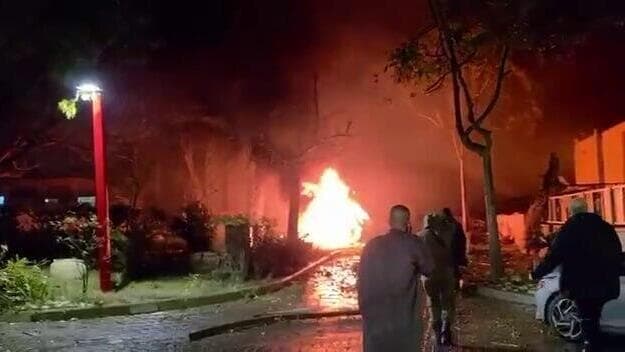
Iranian missiles strike Dimona and Arad, injuring over 100.
47 sources compared
Iran Attacks Dimona in Retaliation for Natanz Strike
44 sources compared

Iran Attacks Diego Garcia with Long-Range Missiles, Targeting U.S.-UK Base
82 sources compared
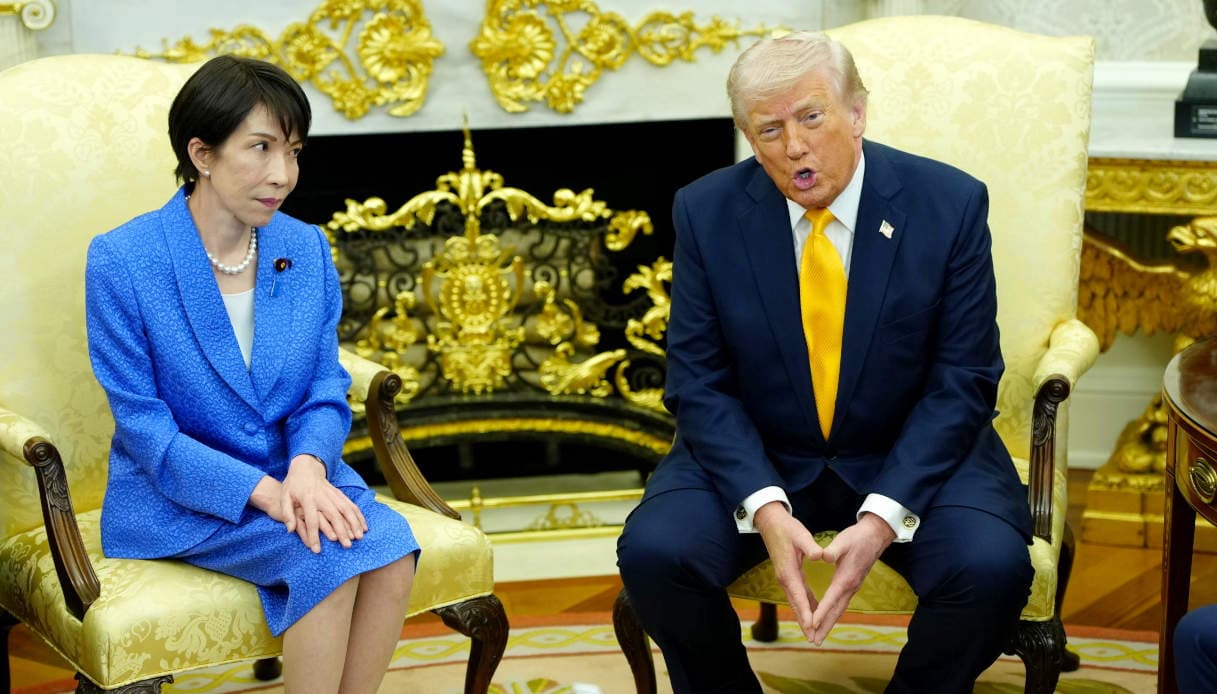
Trump Defends Iran War by Citing Pearl Harbor
12 sources compared