Full story
Deal signed, enrichment pathway
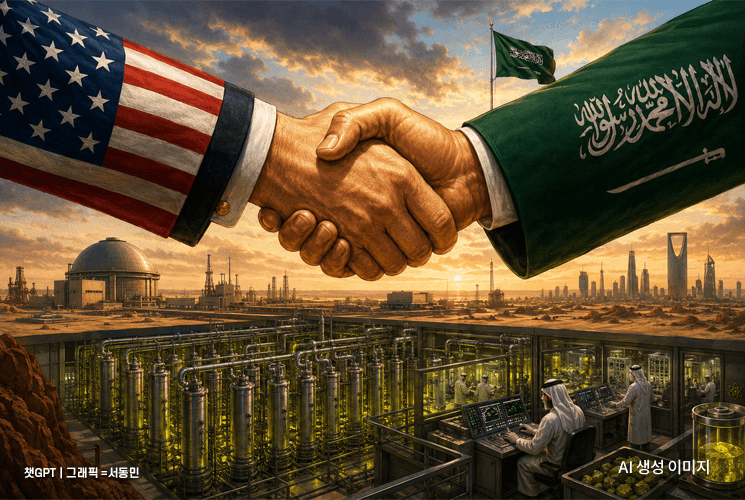
The United States signed a “peaceful nuclear co-operation agreement” with Saudi Arabia on Wednesday, with the U.S. Energy Department saying U.S. Secretary of Energy Chris Wright and Saudi Energy Minister His Royal Highness (HRH) Prince Abdulaziz bin Salman signed a “123 agreement” alongside an accompanying bilateral safeguards agreement.
The deal is described by the U.S. Department of Energy as laying “the legal foundation for a decades-long, multi-billion-dollar partnership,” and the BBC reports that earlier media reports suggested it could allow Saudi Arabia to enrich uranium on its soil after a joint study.
NBC News reported that the pact would allow U.S. companies to build a uranium enrichment facility in Saudi Arabia pending a joint U.S.-Saudi study examining whether such a step would be feasible, and it said the text of the deal has not been released.
The BBC also said the agreement comes as fighting escalates between the US and Iran, and it noted that Saudi Arabia hosts several US bases that have been targeted by Iranian attacks.
In Washington, the U.S. Department of Energy said the agreements uphold “the highest standards of nuclear safety and nonproliferation,” while the BBC warned that enrichment could be used as fuel for power plants but also to make nuclear bombs.
Opposition and competing frames
In Congress and beyond, opposition focused on whether the agreement includes enrichment or other safeguards, with the BBC reporting that Rosemary Kelanic said it would be “quite shocking” if the deal includes the US allowing Saudi Arabia to have facilities to enrich uranium on their own soil.
Kelanic added that “if you can produce your own nuclear fuel, you become a much bigger risk” for building nuclear weapons, and the BBC said the agreement will now be sent to Congress for review.
The BBC also quoted Massachusetts Democratic Senator Edward Markey condemning the deal, saying “They are allowing Saudi Arabia, a belligerent and authoritarian nation, to develop nuclear weapons technologies while starting a war with Iran under the guise of preventing an Iranian nuclear bomb.”
In contrast, NBC News quoted Secretary of State Marco Rubio saying the U.S. would not “reach any agreement with any country in the world that leads to the risk of proliferation,” and it described a debate over whether the pact would include a ban on uranium enrichment or reprocessing of spent nuclear fuel.
NBC News further reported that the deal is not expected to require the most rigorous level of U.N. inspections or include a ban on uranium enrichment or reprocessing, while the text has not been publicly outlined by the administration.
What happens next
The agreement is expected to be submitted to the U.S. Congress in the coming days, and Reuters-based reporting in BFM said lawmakers have 90 days of session to block its entry into force.
BFM reported that blocking would require “the two-thirds majority needed to override a possible presidential veto,” while the BBC said the deal will be sent to Congress for review.
NBC News said Congress will be required to vote on the agreement but would need a veto-proof majority to actually block it, and it warned that this could pave the way for the kingdom to pursue its own uranium enrichment.
The BBC also said the deal includes a “bilateral safeguards agreement,” and it quoted the U.S. Department of Energy statement that the agreements advance “US and regional security” and will uphold “high standards of nuclear safety, security, and nonproliferation.”
Meanwhile, the BBC tied the timing to regional escalation, noting that the announcement comes as fighting escalates between the US and Iran and that two days earlier the Houthis announced a “maritime blockade” against the kingdom.