Ukraine War17 February, 20263 min read
US Envoy Witkoff Says Trump's Diplomacy Delivered 'Meaningful Progress' as Geneva Talks Continue After 'Very Tense' Six‑Hour Session Yields No Breakthrough
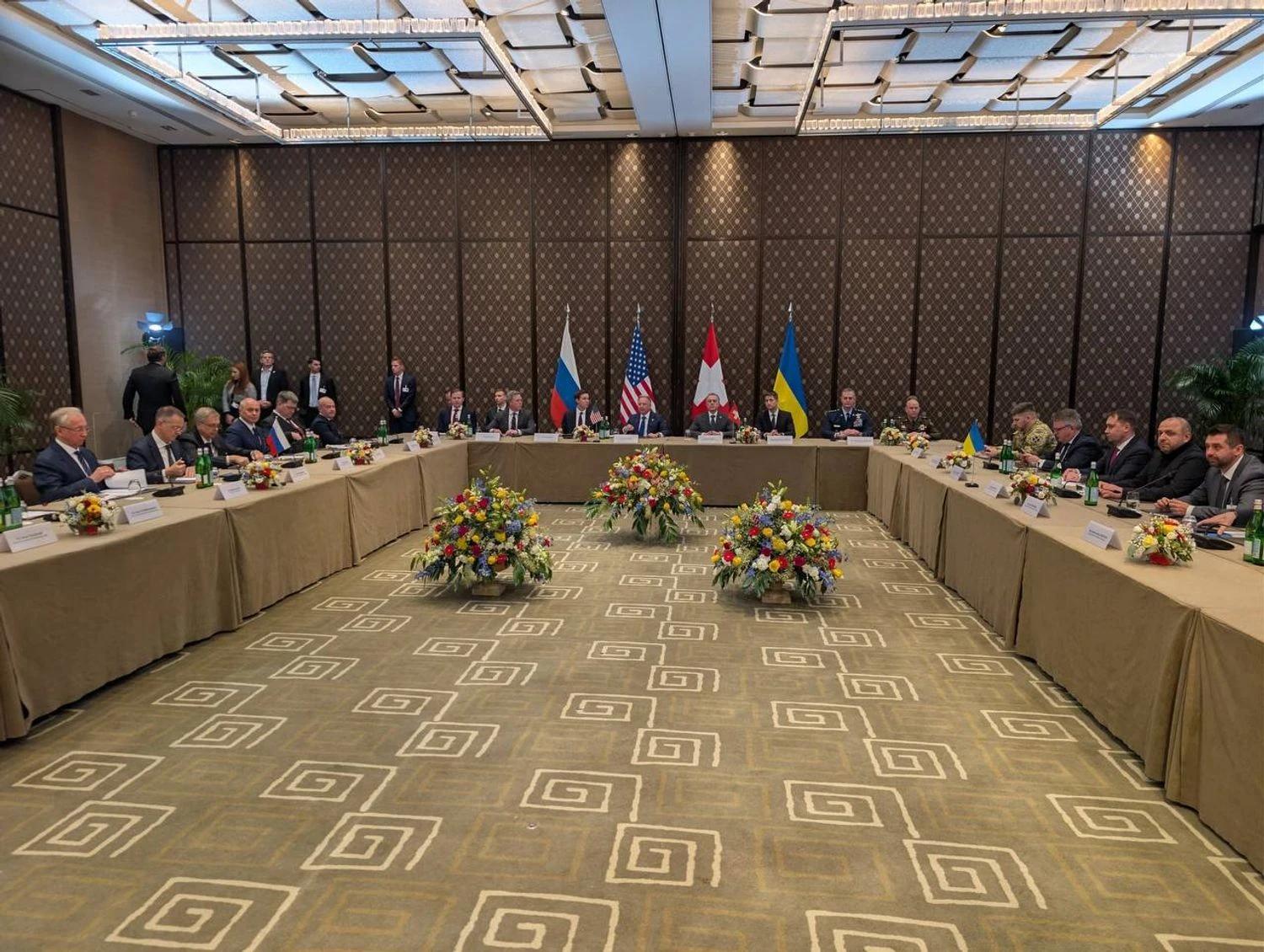
Witkoff said 'meaningful progress', while other reports called talks tense and without breakthrough U.S.-mediated trilateral talks resumed in Geneva amid ongoing Russian strikes on Ukrainian infrastructure
39 outlets told this the same way.
Outlets did split on Russian Attack Kills At Least 33 On Two Buses In Kramatorsk →
Geneva talks update
U.S. special envoy Steve Witkoff said the Geneva talks between Ukraine and Russia brought about meaningful progress. Witkoff explicitly credited President Trump's leadership for bringing the parties together. He said both sides agreed to update their leaders and continue negotiating.
“US‑mediated trilateral talks in Geneva between Russian, Ukrainian and U.S. delegations produced little progress as expectations stayed low.”
Diplomats acknowledged there was no immediate breakthrough. Le Monde reported Witkoff's claim and credited President Trump's leadership, and TRT World and LIGA.net likewise quoted him saying the meetings produced meaningful or significant progress and credited Trump. Outlets warned that the sessions had not resolved core issues and would continue into a subsequent day of talks.

Reports on negotiation talks
Multiple sources described the negotiating sessions as tense and protracted. The Independent and TRT World reported the prior session was "very tense" and lasted about six hours. Some Russian state outlets and Reuters‑style reporting characterised the meetings as difficult and fractious.
CNN reported that Ukraine’s political negotiators had "paused for the day while military teams are still meeting," signalling that talks were proceeding in separate political and military tracks rather than producing a single political settlement. Several outlets stressed that even where negotiations continued, neither side signalled an imminent end to the war.

Summit delegations and agenda
Delegations and mediators were consistent across reports. U.S. envoys Steve Witkoff and Jared Kushner represented the United States. Ukraine’s team was led by Rustem Umerov and included Kyrylo Budanov.
“Umerov said the agenda was pre-agreed and the team is prepared for constructive, substantive discussions on security and humanitarian issues aimed at a dignified, lasting peace.”
Russia’s delegation was led by Vladimir Medinsky, whom some Ukrainian negotiators say "lectured them about history" and thus lowered expectations. RBC‑Ukraine and BBC laid out the roster and agenda priorities. RBC‑Ukraine reported Umerov said the agenda was "pre‑agreed".
RBC‑Ukraine reported Kyiv would press for an "energy ceasefire" to protect civilian power infrastructure. Multiple outlets flagged that Medinsky’s presence and Russia’s insistence on territorial issues reduced hopes of a quick deal.
Conflicting attack reports
The diplomatic push took place alongside intense battlefield activity that different outlets quantified in divergent ways. BBC reported a large combined aerial attack "roughly 400 drones and nearly 30 missiles" across multiple regions, while El Mundo described a nighttime strike of "126 long‑range drones (roughly 80 identified as Russian‑Iranian Shaheds)," and kurdistan24.net cited Ukrainian claims of "29 missiles and 396 drones overnight."
Russian‑linked or Kremlin‑citing reports noted that Russia said its defences "repelled more than 150 drones." Those discrepancies in numbers and framing — shot‑down totals, what landed, and geographic impact — appear across sources and underscore both the fog of war and divergent reporting emphases.

Diplomatic talks outlook
Witkoff and several outlets (Le Monde, TRT World, France 24) said both sides agreed to brief their leaders and keep negotiating, presenting cautious optimism that talks could continue. Le Monde quoted Witkoff urging follow-up. By contrast, the Kremlin and some analysts warned no immediate results were expected.
“US envoy Steve Witkoff said on Wednesday, Feb. 18 that talks between Ukraine and Russia in Geneva had ‘brought about meaningful progress’ and said both parties agreed to update their leaders and continue negotiating toward a deal.”
Al Jazeera highlighted Russian demands for Kyiv to cede further Donetsk territory, a demand Ukraine rejects. The Independent reported Ukrainian President Zelensky expressing concern that President Trump's public pressure for Kyiv to 'come to the table' might be a tactic rather than a settled policy.

Other outlets (France 24, The Independent) noted critics who questioned the U.S. choice to dispatch Kushner and Witkoff, warning Washington may be stretched by parallel Iran talks and regional tensions. The combined reporting shows a split between officials emphasising procedural progress and commentators and some reporters warning that core territorial issues and ongoing strikes make a deal unlikely in the near term.