US Forces Directed 31 Vessels To Turn Back In Iran Port Blockade
Key Takeaways
- CENTCOM says 31 vessels were directed to turn around or return to port.
- Some ships have continued transiting the Strait of Hormuz despite the blockade.
- Most intercepted vessels were oil tankers.
31 Vessels Turned Back
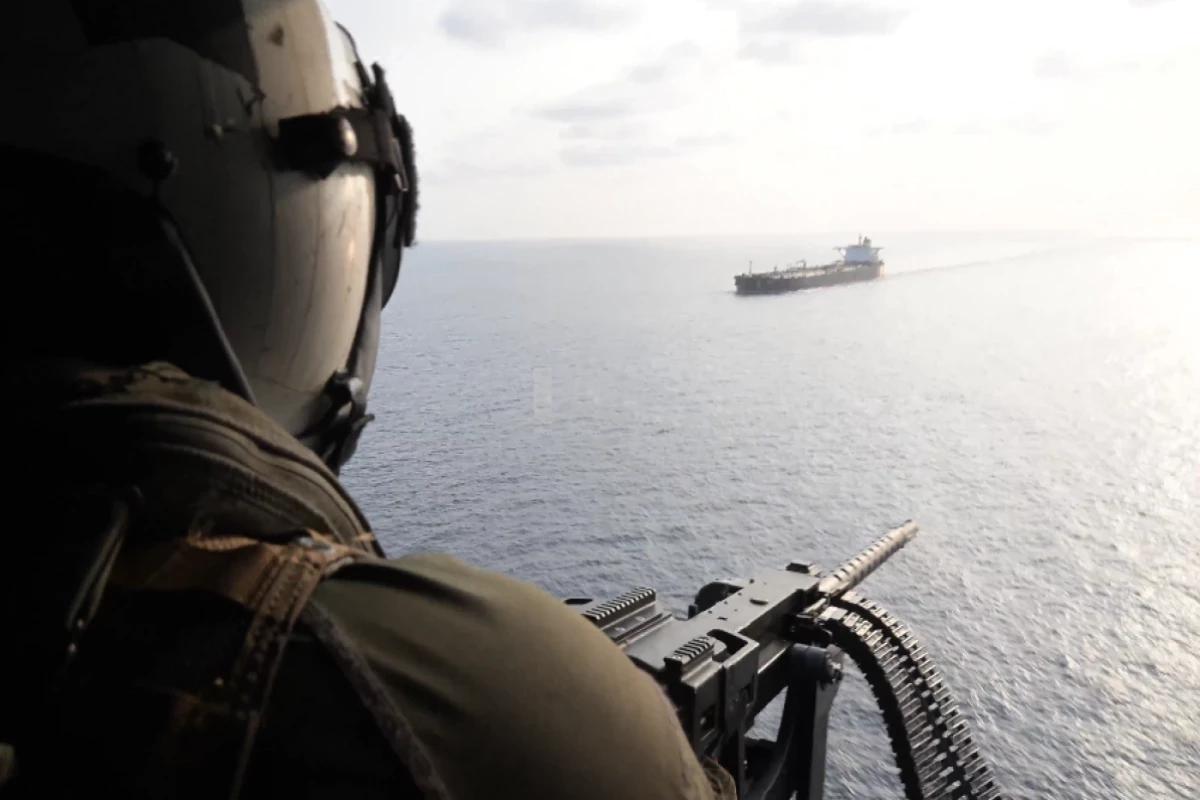
The United States Central Command (CENTCOM) said American forces directed 31 vessels to turn around or return to port as part of the US blockade against Iran, confirming the action in an operational update released via social media.
The Tribune | Asian reported that CENTCOM confirmed on Thursday that American forces "have directed 31 vessels to turn around or return to port as part of the US blockade against Iran," and said the bulk of the intercepted ships were identified as oil tankers.
Apa.az likewise said that "U.S. forces have directed 31 vessels to turn around or return to port as part of the U.S. blockade against Iran," attributing the figure to CENTCOM’s writing on its X account.
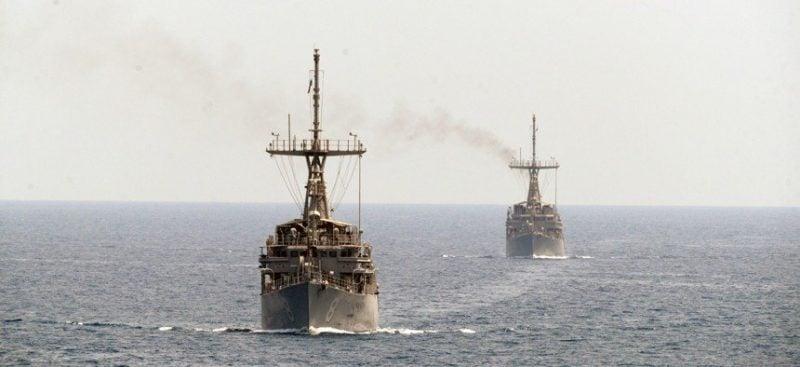
Multiple outlets tied the enforcement to a broader military posture, with The Tribune | Asian stating that "the operation to blockade Iranian ports involves more than 10,000 US troops, 17 warships and more than 100 aircraft."
Breakingthenews.net added that the operation was carried out with "more than 17 warships and over 100 aircraft" positioned across the region.
Kurdistan24 described the blockade as barring all ships from entering or leaving Iranian ports, saying it was enforced by "more than 10,000 US troops" and "at least 17 warships."
Blockade Scale and Assets
While CENTCOM’s figure of 31 vessels turned back anchored the immediate update, the sources also described the blockade’s scale in terms of manpower, warships, and aircraft.
The Tribune | Asian said "the operation to blockade Iranian ports involves more than 10,000 US troops, 17 warships and more than 100 aircraft," and it described the maritime enforcement actions as having "high levels of cooperation."

Breakingthenews.net similarly stated that the command said the operation had been carried out with "more than 17 warships and over 100 aircraft positioned across the region."
Kurdistan24 expanded on the composition of the force, saying assets deployed include "an aircraft carrier, amphibious assault ships, guided-missile destroyers, littoral combat ships, unmanned aircraft, and intelligence, surveillance, and reconnaissance platforms."
The same Kurdistan24 account quoted CENTCOM describing the force as "the strongest and most lethal military the world has ever known."
Mathrubhumi English described the deployed aircraft and systems in more granular terms, saying the blockade involved "more than 10,000 troops, over 100 aircraft" and "at least 17 warships."
Trump’s Conditions and Leavitt’s Demand
Several outlets tied the blockade to the US position on ceasefire talks and the conditions for any longer-term agreement.
The Tribune | Asian reported that White House press secretary Karoline Leavitt clarified that the US "has refrained from setting a formal deadline for the current truce extension."
That same report said Leavitt emphasized that a non-negotiable requirement for any permanent agreement would involve Iran consenting to surrender its entire stockpile of enriched uranium.
Kurdistan24 likewise said Leavitt outlined what Washington expects before any conflict can be brought to a close, stating that Iran must agree to "surrender its enriched uranium to the United States as a condition for ending the war."
Kurdistan24 quoted Trump dismissing time pressure, saying "We have no time frame and there is no need to rush," and it reported that Trump said, "Sanctions scare Iran more than bombing."
The Economic Times framed the dispute as Iran demanding the blockade end before it can consider any agreement to end the conflict launched on February 28 by Israel and the United States, while Trump insisted on maintaining the naval blockade.
Iran Fires, Seizures, and Denials
The enforcement actions were described alongside a separate maritime confrontation in the Strait of Hormuz, with the sources presenting a sequence of escalation and counter-escalation.
The Tribune | Asian said tensions boiled over on Wednesday after Iranian forces opened fire on three commercial ships in the Strait of Hormuz, successfully seizing two of them.

Mathrubhumi English similarly reported that Iranian semi-official agencies said the paramilitary Revolutionary Guard targeted a third vessel on Wednesday, identifying it as Euphoria and saying it became “stranded” along Iran’s coast.
It also said Iranian state television reported that two previously targeted vessels had been seized.
Kurdistan24 described Trump’s response to the seizure of vessels in the Strait of Hormuz by Iranian forces, saying Trump said the ships involved were not American and that the situation was being closely monitored.
Separately, Kurdistan24 said CENTCOM pushed back against media reports alleging that several commercial ships had evaded the blockade, specifically naming the M/V Hero II, M/V Hedy, and M/V Dorena as vessels cited in those accounts.
Leadership Changes and Market Pressure
Beyond the blockade itself, the sources also described internal US leadership movement and the economic pressure framing around the Strait of Hormuz.
Republic World reported that Chief Pentagon spokesperson Sean Parnell announced that Secretary of the Navy John C Phelan was stepping down with immediate effect, with Hung Cao set to take over as Acting Secretary of the Navy.
It quoted Parnell’s post on X: "Secretary of the Navy John C. Phelan is departing the administration, effective immediately."
Mathrubhumi English reported that the US Senate rejected the resolution 46-51 on Wednesday and that oil prices jumped four per cent on Thursday after Iran vowed not to reopen the Strait of Hormuz, with WTI climbing 4.06 per cent to $96.73 per barrel and Brent rising 3.62 per cent to $105.63.
The Economic Times added a broader framing by citing the Strait of Hormuz as "the gateway for one-fifth of the world's oil," and it said Iran responded to being attacked by exerting control over the Strait of Hormuz.
Crypto Briefing described market expectations for traffic normalization, saying the Polymarket contract on Strait of Hormuz traffic returning to normal by June 30 had dropped 25% in implied probability of normalization and that trading volume over the past 24 hours was zero.
More on USA

7th Circuit Upholds Illinois Protect Illinois Communities Act Ban on Semiautomatic Guns
12 sources compared

Indiana State Police Trooper Justin Heflin Shot During Pursuit; Suspect Kevin W. Meyers Found Dead
10 sources compared

Donald Trump Fires Election Assistance Commission Members, Leaving No Commissioners
12 sources compared

Eight Accused Of Planning Terror Attack At Casa Blanca UFC Freedom 250 Event
18 sources compared