Full story
CR to Dec. 11
The U.S. House voted 370-48 on Tuesday to send a continuing resolution to President Donald Trump’s desk that would keep the federal government funded through Dec. 11, averting a politically risky shutdown ahead of the midterm elections.
“The continuing resolution (CR), which funds the government through Dec. 11, passed the House on a 370-48 vote”
The measure extends ongoing federal funding levels and delays implementation of controversial grant rule changes from Oct. 1 until Dec. 11, after the midterm elections.

The Senate had already advanced the stopgap, passing it by a 90-6 vote on Aug. 8, and the bill now awaits Trump’s signature.
House Speaker Mike Johnson, R-La., said the CR “simply holds funding steady at current levels through Dec. 11th,” as Republicans worked to complete the full-year appropriations process.
The stopgap also delays an Office of Management and Budget rule that would put federal grant funding under review by political appointees, a provision that the House included as part of the continuing resolution.
Grant rule block
The continuing resolution bars the Office of Management and Budget from finalizing a proposed regulation that would reshape grant rules and procedures, including changes that would give executive branch political appointees unprecedented power over awarding and canceling federal funds.
Education advocates and elected Democrats opposed the OMB changes, and Sen. Susan Collins, R-Maine, who chairs the Senate’s appropriations committee, was cited among those opposing the grant rule expansion.
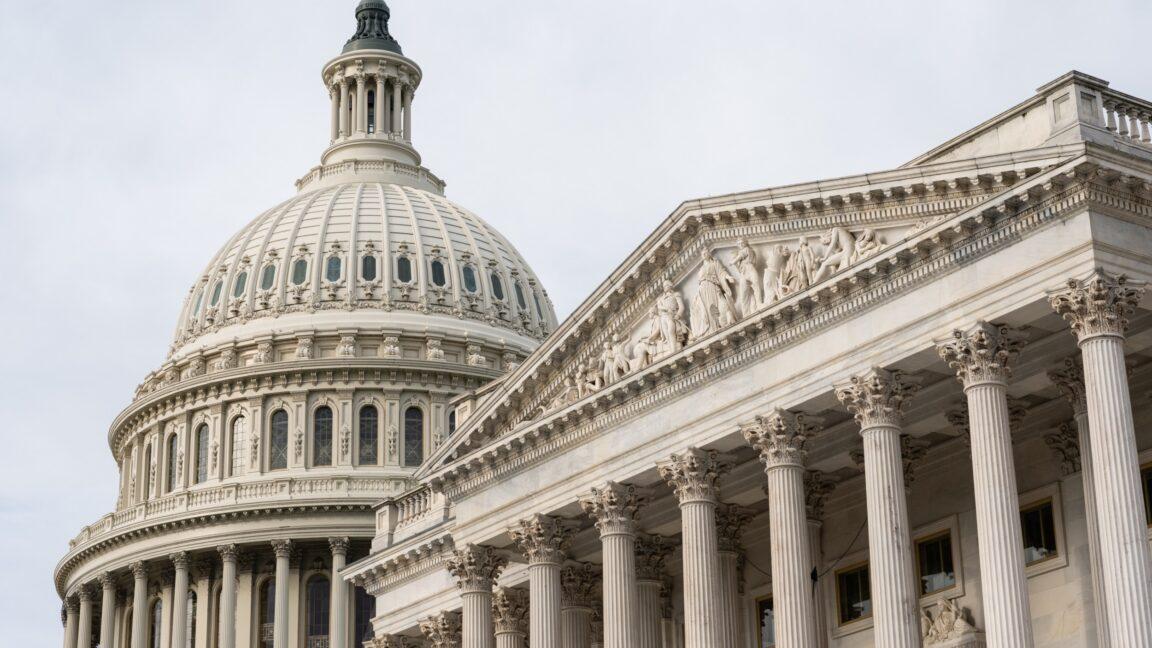
In the House debate, Tom Cole, R-Okla., argued that avoiding a shutdown was worth the complaints, saying, “When we passed our continuing resolution over here, we knew it would change when it got to the Senate.”
Rosa DeLauro, D-Conn., said the CR is a “marked improvement” from an earlier version that would have kept the government funded through Dec. 4 and did not contain provisions blocking OMB’s proposed rule.
The National Association of Counties said the CR delays the implementation of an OMB Rule overhauling Uniform Guidance until Dec. 11, calling it a “major win for counties” concerned about how they can administer federal funds.
After midterms
With the Dec. 11 deadline set, the stopgap buys Congress time to negotiate full-year spending bills for fiscal 2027, which runs through September 30, 2027, while lawmakers prepare for the Nov. 3 midterm elections.
“The measure passed by a vote of 370 to 48 on Tuesday after clearing the Senate on August 8.”
The Hill said the outcome of the midterms will help determine how much leverage each party holds to set the spending agenda, and it described another CR moving the deadline into the new year as likely if Democrats retake one or both chambers.
The Hill also reported that Democrats, if they win back power, would likely seek to downsize defense spending and boost domestic programs for infrastructure, education, childcare and other priorities.
In a separate framing, Al Jazeera said the temporary measure removes the immediate threat of another government shutdown as lawmakers prepare for the midterm elections on November 3.
Ars Technica said the Senate’s budget deal inserted language that blocks OMB from implementing new rules giving political appointees full control over what science is funded and allowing them to cancel any grant at any time, with Patty Murray and Susan Collins cited for inserting the block language.