USA24 October, 20252 min read
U.S. Inflation Surges to Highest Level Since January, Fueling Consumer Price Crisis
This article is an automated aggregation of coverage from news outlets. Our editorials offer in-depth analysis curated by the NewsCord team.
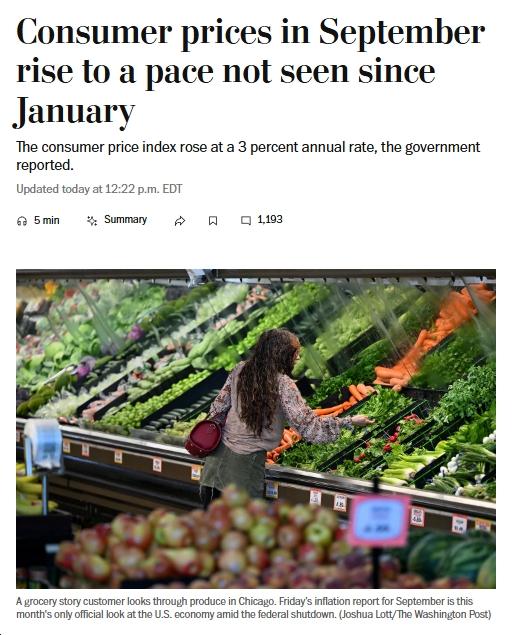
U.S. consumer prices rose 3% year-over-year in September, highest since January. Energy costs surged with electricity up over 5% and piped gas nearly 12% annually.

10 outlets told this the same way.
U.S. Inflation and Energy Costs
U.S. inflation accelerated to 3% year over year in September, the highest since January. This was a slight increase from August’s 2.9% and represented a 0.3% rise month over month. Energy costs, especially gasoline, were the biggest near-term driver of this inflation increase.
“Consumer prices rose 3% in September compared to a year ago, marking the highest inflation level since January and continuing a recent upward trend.”
Multiple outlets reported the same headline figure but framed it differently. The jump was recorded after the Labor Department resumed data releases following a government shutdown. Analysts also noted a slight monthly cooling compared to the prior 0.4% pace.

Gasoline prices rose about 4.1% in the month, reinforcing the energy-led push in prices. The data release was delayed until late October, highlighting the unusual context for this report.
Factors Driving Price Increases
Energy and staple categories are the main contributors to the recent price surge. Gasoline prices increased by approximately 4.1% in September. Grocery items, beef and veal, and coffee have also experienced significant annual price gains.
Some sources point to policy-related pressures such as tariffs and labor market conditions as underlying factors. These pressures have led to cost pass-throughs and a slowdown in hiring. A politically charged issue involving a plan to import Argentine beef is linked to a nearly 15% spike in beef prices.

Federal Reserve Rate Cut Speculation
Policy and markets are reacting in tandem to recent economic data. Several outlets say the print raises odds of a Federal Reserve rate reduction, even as inflation remains above the Fed’s 2% target and political pressure increases. Analysts cited by the BBC say the slower monthly pace strengthens the case for easing monetary policy.
“Wells Fargo analysts view this trend as increasing the likelihood of a Federal Reserve interest rate cut, though some caution remains.”
The Zimbabwe Mail also expects a rate cut due to policy pressure. The Guardian goes further, noting that markets rallied to record highs on hopes for an October 25-basis-point move. Le Monde adds that the persistence of inflation is becoming a political headache for the White House.
Household Cost Increases
Households are feeling the pinch even as a few components cool at the margin. One Local Western source estimates the typical household is paying about $208 more per month than a year ago. Some relief showed up in slowing rent growth and softer airline fare increases.
Category details paint a mixed picture, with beef and veal up more than 14% annually but coffee easing month-to-month. Together, these signals portray an ongoing consumer price squeeze with limited pockets of relief.
Economic Data and Impact Analysis
The reporting context adds complexity as this CPI release came after a government shutdown delay. Some outlets report that data collection has resumed, while others indicate further disruption. Beyond logistical issues, broader economic signals show divergence.
“The Labor Department has resumed inflation data reporting after a government shutdown, which affects Social Security cost-of-living adjustments; as a result, payments will rise by 2.8% next year.”
One source links the inflation increase to a slowdown in hiring. Another source states that overall U.S. business activity grew robustly in October despite falling confidence due to tariff concerns.
Consumer sentiment has dropped to a five-month low because of price worries. Some analysts warn that the shutdown’s practical impact on the economy was minimal despite the data irregularities.