Full story
Seventh Night of Strikes
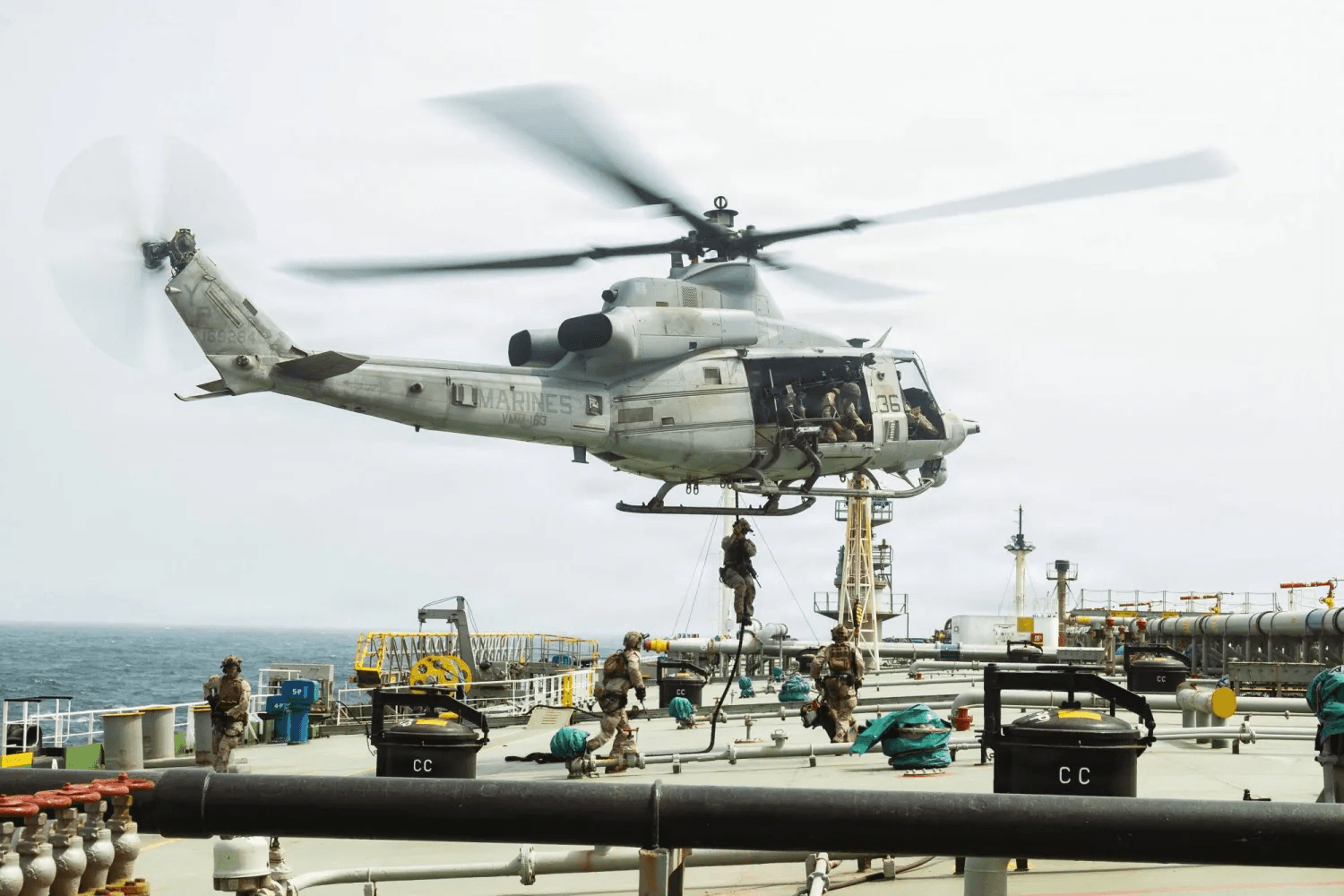
The United States carried out a series of new strikes on targets in Iran for the seventh night in a row, with CENTCOM saying the new strikes began at 19:00 GMT and were designed to continue degrading Iranian military capabilities.
France 24 reported that Tehran announced eight people killed in strikes targeting civilian infrastructure, while Iran also reported damage to the southern electricity grid and said bridges, a port, an airport, and a rail station were struck.

NBC News said the latest expansion of the campaign appeared targeted at cutting off the main port city of Bandar Abbas from the heart of the Islamic Republic, after U.S. airstrikes hit bridges and other key infrastructure in southern Iran.
NBC News also reported that IRNA said at least six bridges were hit, including one that was under construction, and that a railway junction station just west of Bandar Abbas was also hit.
In response to the strikes, IRGC Aerospace Force commander Majid Mousavi vowed on Friday that Tehran will not stop its attacks in the region until the United States halts strikes on Iran's southern coast and the Strait of Hormuz.
Retaliation and Competing Claims
Tehran hit back with new attacks on U.S. allies in the Middle East, including a first direct attack on a Syrian base and a strike on water infrastructure in Kuwait, as NBC News described the collapse of the ceasefire and interim agreement leading to days of strikes and counterstrikes.
NBC News reported that Iran acknowledged “attacks on power infrastructure” during the U.S. airstrikes for the first time Friday, with the Energy Ministry asking people in southern provinces to use less electricity, according to ISNA.

The Guardian said the IRGC threatened a “devastating price” for countries hosting U.S. bases if American attacks against infrastructure continued, quoting the IRGC statement that “crossing red lines and attacking civilians and civilian infrastructure will have a very severe and devastating price to pay.”
BBC reported that Ismail Baqai, the spokesperson for Iran's Foreign Ministry, said eight people were killed in Thursday night’s US strikes on several bridges and residential areas in Hormozgan Province, and he accused the United States of targeting civilian infrastructure and committing war crimes.
BBC also reported that the IRGC said two oil tankers passing along a route it claims is mined in the southern part of the Strait of Hormuz exploded and caught fire, while CNN and other outlets said they could not independently confirm such claims.
What’s at Risk Next
The conflict has pushed shipping traffic in the Strait of Hormuz to largely halt again, with NBC News reporting that traffic in the crucial waterway once again largely halted as the two sides battle over it and that Daily traffic has dwindled to only a dozen or so ships this week.
“Toggle Play US bombards Iran in sixth-straight night of attacks The US has made good on threats to bomb civilian infrastructure in Iran”
NBC News said the escalation has seen shipping traffic ground to a halt through the waterway, through which a fifth of the world’s oil flowed before the war, and it added that the U.S. reimposed its blockade of Iranian ports and ships on Wednesday.
The Guardian reported that the renewed fighting has focused on the strait of Hormuz, which handled about a fifth of the world’s oil and gas supply before the war, while also noting that the memorandum of understanding signed by the US and Iran last month said the strait should be open to traffic.
France 24 said Tehran urged residents to conserve electricity after the southern electricity grid was damaged by the raids, and it reported that IRNA said eight dead and 20 wounded in overnight attacks on these facilities.
NBC News also reported that President Donald Trump insisted the war was going well in a primetime address, saying “We are likewise winning big in Iran, and you will see the fruits of that labor very, very shortly,” as the U.S. campaign continued into its seventh consecutive night.