Full story
Blockade Returns After Strikes
The U.S. reimposed its blockade of Iranian ports in response to Iran’s attacks on commercial ships in the Strait of Hormuz, as the interim ceasefire deal unravels and fighting intensifies.
“Senate Democrats on Tuesday blocked debate on an annual defence policy bill, objecting not only to President Donald Trump’s war in Iran but also to provisions that would more closely integrate the United States and Israeli militaries”
AP reported that the U.S. first imposed the blockade in mid-April and then lifted it in mid-June, a day after the signing of the interim deal aimed at permanently ending the war.

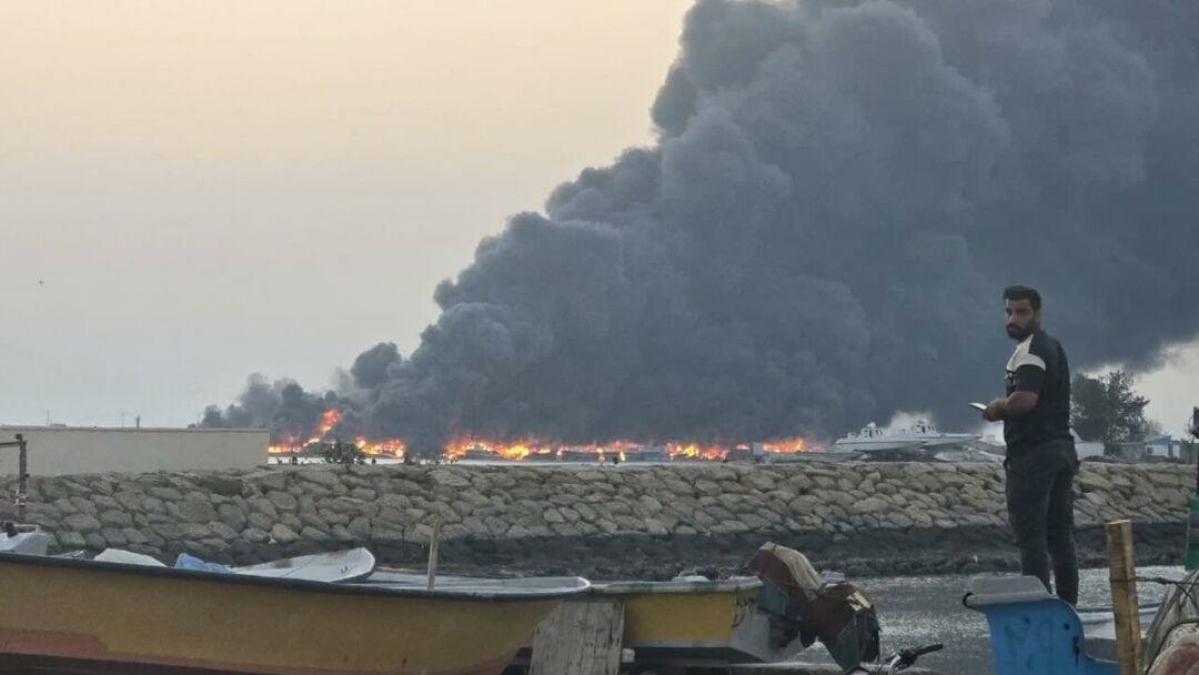
The U.S. military said it struck several areas in Iran targeting “coastal defense systems, missile and drone sites and maritime capabilities,” while Iran acknowledged the strikes but provided no immediate casualty or damage assessments.
Iran’s deputy foreign minister for legal and international affairs, Kazem Gharibabadi, said in an interview aired Tuesday by IRIB that the U.S. was seeking to prevent Tehran from exercising what he described as “effective sovereignty” over the strait.
CNN said the naval blockade of ships going to and from Iranian ports resumed at 4 p.m. ET, and it described the U.S. as launching its fourth consecutive day of strikes on Iranian targets.
Toll Reversal and Iran’s Response
President Donald Trump announced he would impose a 20% fee on ships passing through the strait, but AP reported he dropped the plan hours before resuming the blockade, citing requests from allies in the Gulf.
CNN reported that Trump reversed course on Tuesday, saying Arab states in the Persian Gulf would make “Trade and Investment Deals … into the United States.”
Iran’s deputy foreign minister Kazem Gharibabadi told CNN that Tehran has “no obligations” to the 14-point agreement with the US reached last month, and he said it was “unreasonable and baseless” to expect Iran to uphold commitments such as reopening the Strait of Hormuz.
Fox News reported that the IRGC warned “not a single drop of oil and gas” would be exported from the region as long as U.S. “evil actions” continue, and it said the IRGC framed its attacks as retaliation for American strikes.
The Guardian said Iran’s deputy foreign minister Kazem Gharibabadi told state TV that the Strait of Hormuz is part of Iran’s national security and it will exercise its sovereignty over it “what ever that costs.”
War Powers Fight in Congress
As the U.S. resumed hostilities, Democratic lawmakers criticized Trump’s actions and the administration’s position on authority, with TIME reporting that Sen. Adam Schiff called for Congress to “reassert its war powers authority.”
TIME said Schiff filed a new War Powers Resolution after the collapse of the cease-fire, and it quoted Schumer saying, “Enough is enough. End the war.”
Al Jazeera reported that Senate Democrats blocked debate on the National Defense Authorization Act, with the Senate voting 50-46 against opening debate on the NDAA.
Al Jazeera quoted Senate Minority Leader Chuck Schumer urging Democrats to oppose the bill, saying, “Republicans want the Senate to take up the NDAA … as though Congress can debate the nation’s central national security bill while ignoring the nation’s most urgent national security crisis,” and it said “We cannot.”
Meanwhile, Roll Call reported that Trump’s notification to Congress, dated July 10, renewed questions about the administration’s obligation to seek congressional approval under the 1973 War Powers Resolution.