Europe15 February, 20262 min read
US Secretary of State Marco Rubio Endorses Hungary's Prime Minister Viktor Orban Ahead of April Election
This article is an automated aggregation of coverage from news outlets. Our editorials offer in-depth analysis curated by the NewsCord team.
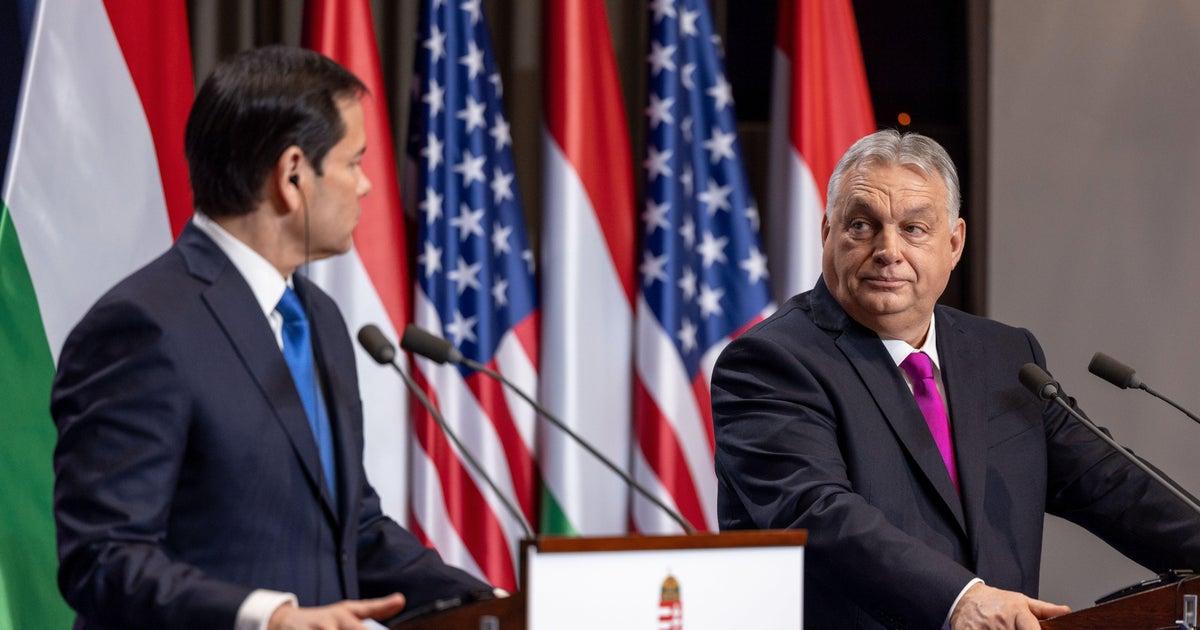
U.S. Secretary of State Marco Rubio publicly endorsed Hungarian Prime Minister Viktor Orbán's reelection. Rubio and Hungarian officials signed a civilian nuclear cooperation agreement during his Budapest visit.

12 outlets told this the same way.
Outlets did split on Marco Rubio Urges Europe To Awaken From Slumber In Athens Speech →
Rubio backs Orbán nuclear pact
U.S. Senator Marco Rubio visited Budapest and publicly backed Prime Minister Viktor Orbán ahead of Hungary’s April 12 parliamentary election, signing a U.S.–Hungarian civilian nuclear cooperation agreement during the visit.
“US official Marco Rubio visited Budapest and publicly backed Hungarian Prime Minister Viktor Orbán, praising Orbán’s close personal and working relationship with US President Donald Trump and saying Trump is ‘deeply committed’ to Hungary’s success.”
The trip followed stops in Slovakia and at the Munich Security Conference as part of a regional push for energy deals that Rubio framed as strengthening bilateral ties, and Orbán described the relationship as entering a "golden era."
The pact could involve U.S. small modular reactors, U.S.-supplied nuclear fuel and spent-fuel storage technology, and U.S. officials presented it as a diplomatic boost for Orbán two months before the vote.
U.S.-Hungary nuclear pact
Multiple sources described the nuclear cooperation agreement as enabling U.S. small modular reactor (SMR) technology, U.S. nuclear fuel supplies, and spent-fuel management support. Those reports mentioned Holtec International as a company to help manage spent fuel. They said the pact allows Hungary to diversify from long-standing reliance on Russian VVER reactors at Paks.
U.S. officials framed the pact as countering Russian and Chinese influence and as part of wider efforts to shore up energy ties in Central Europe. Hungarian officials presented it as helping to lower household energy costs.
Rubio, Trump and Orbán outreach
Rubio’s public backing for Orbán was reported as politically significant because Orbán is trailing in polls and faces his toughest challenge since coming to power in 2010. Multiple sources note Orbán’s outreach to the MAGA movement and former President Donald Trump’s public praise and endorsement. They also report that Budapest has hosted CPAC-style conservative events as part of a campaign strategy.
“Orbán, 62, is facing a strong challenge from opposition leader Peter Magyar’s TISZA; polls suggest Fidesz is trailing.”
Critics cited across outlets warn the outreach underlines concerns about democratic backsliding in Hungary and Orbán’s hardline social policies. Those critics point to recent curbs on LGBTQ+ rights and restrictions on protests.
Media framing of deal
Coverage tone and focus vary by source type. Western mainstream outlets center on diplomatic and energy-security details and frame the agreement as a strategic move to reduce Russian influence. Western alternative and some regional outlets amplify the partisan and electoral angle and sometimes use erroneous or inconsistent job titles for Rubio.
Asian outlets emphasize Trump’s role and Orbán’s courting of MAGA voters. Across the sample, reports converge on three facts: Rubio visited Budapest, a civilian nuclear cooperation agreement was signed, and the timing was politically sensitive ahead of the April election. Where the sources diverge is in what they emphasize and which wider implications they foreground.