Iran20 April, 20268 min read
U.S. Seizes Iranian Cargo Ship as Iran Balks at White House Demands Before Pakistan Talks
This article is an automated aggregation of coverage from news outlets. Our editorials offer in-depth analysis curated by the NewsCord team.
U.S. Navy seized an Iranian-flagged cargo ship near the Strait of Hormuz. Iran says it has not decided to attend Pakistan talks.

Ceasefire Nears End
The Iran war’s latest phase has been driven by a tightening U.S. maritime blockade, a U.S. seizure of an Iranian-flagged cargo ship, and a looming ceasefire deadline as negotiations in Pakistan remain uncertain. CBS News reported that Tehran said it had met with President Trump’s top three negotiators, including Vice President JD Vance, while balking at what it called “unreasonable and unrealistic demands” by the White House. CBS also tied the intensified weekend escalation to “U.S. forces fired on and then seized an Iranian vessel,” while Tehran refused to accept diplomacy amid the ongoing blockade of its ports and exports.
The same CBS report said the “U.S.-Iran ceasefire set to expire this week” is leaving “uncertainty over when the strait might reopen” and pushing global oil prices back up. The Guardian described the situation as mixed signals on talks after the U.S. seized a ship, quoting Reuters that Tehran was “positively reviewing” participation in potential peace talks while stressing “no final decision has been made.” AP News said the United States forcibly seized an Iranian-flagged cargo ship that tried to pass the blockade near the Strait of Hormuz on Sunday, calling it “the first such interception since the blockade of Iranian ports began last week.”

NBC News added that Iran’s Foreign Ministry said “no decision has been made” on whether it will hold new talks, while also noting that Vice President JD Vance and other U.S. negotiators are set to travel to Pakistan. In parallel, Trump’s public posture has been hardening: CNN reported Trump said the ceasefire ends “Wednesday evening Washington time” and that it’s “highly unlikely” he would extend it if a deal is not reached before then.
Strait, Blockade, and Threats
Across multiple reports, the Strait of Hormuz and the U.S. blockade of Iranian ports are presented as the central pressure points shaping both diplomacy and the risk of renewed hostilities.
The New York Times said the “two-week truce, which went into effect April 8” is being tested in the Strait of Hormuz, describing it as a “vital waterway for oil and gas” that Tehran has sought to control while the United States blockades Iranian ports.
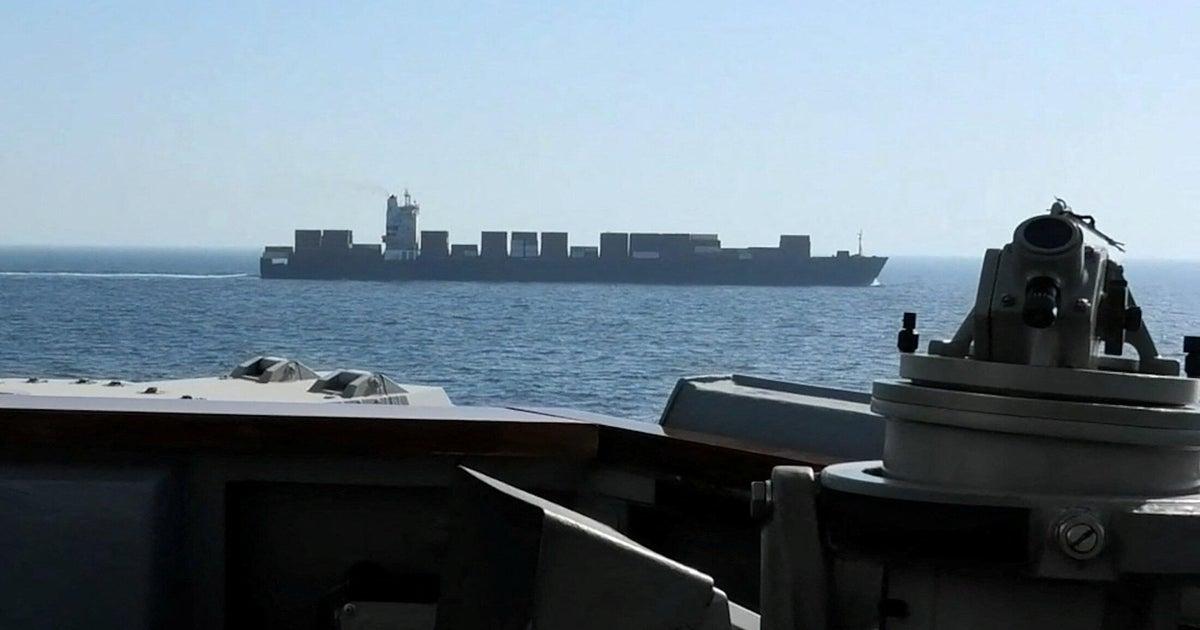
It also said Trump described the U.S. Navy destroyer firing on an Iranian cargo ship on Sunday after it defied the blockade, with U.S. forces ultimately seizing it, and it reported Iran’s armed forces called it “piracy.”
CNBC reported that on Friday Iran declared the Strait of Hormuz “fully open to commercial traffic,” sending crude prices tumbling more than 10%, but that by Saturday “hopes for a fully opened artery quickly unraveled” as Tehran reclaimed control after Trump refused to end the U.S. naval blockade.
CNBC further said that on Sunday “the U.S. Navy fired on and seized an Iranian container ship in the Gulf of Oman,” and that Trump called Iran’s actions over the weekend a “total violation” of the truce.
NBC News said Trump threatened to “knock out every single Power Plant, and every single Bridge, in Iran” if there is no deal as the ceasefire ends.
The Guardian added that Esmaeil Baghaei, Iran’s foreign ministry spokesperson, said the U.S. attack on the Iranian cargo ship, the U.S. naval blockade, and delays in implementing a ceasefire in Lebanon were “clear violations of the ceasefire.”
CNN also included a Russian-linked framing, reporting that Abbas Araghchi told Sergei Lavrov that Tehran considered “the insecurity in the Strait of Hormuz” the result of “the military aggression of the United States and the Zionist regime.”
Negotiations in Pakistan
While the U.S. and Iran trade threats tied to the blockade and the Strait of Hormuz, multiple outlets describe a parallel effort to restart talks in Pakistan, with conflicting signals about whether Iran will send a delegation. The New York Times reported that despite mixed messages in public, “several Iranian officials indicated their delegation would travel to Islamabad on Tuesday,” when Vice President JD Vance is scheduled to arrive with a team of U.S. negotiators. It said two Iranian officials told the paper that Mohammad Bagher Ghalibaf, the influential political and military figure who attended the last round of talks, would attend if Vance also did.
The New York Times also said the two-week truce that began April 8 is being tested, and it described Iran’s threats to retaliate for the U.S. seizure as calling it “piracy.” AP News said Pakistan is preparing for upcoming peace talks despite the U.S. seizure, and it reported that Trump said U.S. negotiators will be in Pakistan on Monday for another round of talks with Iran. NBC News said Vance and other U.S. negotiators are set to travel to Pakistan, but that Tehran’s participation is unclear, emphasizing that Iran’s Foreign Ministry said “no decision has been made” on whether to hold new talks.
The Guardian, citing Reuters, said a senior Iranian official told Reuters that Tehran was “positively reviewing” participation but stressed “no final decision has been made.” CBS News said Tehran told the U.S. it had met with Trump’s top three negotiators, including JD Vance, while balking at “unreasonable and unrealistic demands” by the White House. In parallel, CNN reported that Iran’s Foreign Ministry earlier insisted there were no plans for talks “as of now,” even as Vance and top U.S. officials were expected to depart for Islamabad.
Voices: Pezeshkian and Jamshidi
The dispute over law, legitimacy, and coercion is reflected both in official statements and in legal commentary from outside mainstream coverage. NBC News quoted Iranian President Masoud Pezeshkian saying his country maintains “deep historical mistrust” of the U.S. government, adding that “contradictory signals” from U.S. officials are a sign that they want Iran’s surrender, and it reported him writing “Iranians do not submit to force.” CNN similarly quoted Pezeshkian saying “Honoring commitments is the basis of meaningful dialogue,” and it included his line that “Iranians do not submit to force.”
In the same reporting stream, CNN also described Trump’s stance that the ceasefire ends “Wednesday evening Washington time” and that it’s “highly unlikely” he would extend it if a deal is not reached. Separately, Democracy Now! featured law professor Maryam Jamshidi arguing that international law is being used in a way that restrains Iran while allowing the United States and Israel “a free hand to do what they want.” Jamshidi said, “This says a lot about the ways in which international law is being deployed in this moment as a way of restraining and regulating Iranian behavior,” and she contrasted that with what she called a “clearly unlawful” war launched by the United States and Israel against Iran.

She also argued that Iran has “a reasonable legal argument to regulating the Strait of Hormuz, as well as to charging fees,” while saying criticism of U.S. and Israeli actions has been “more muted.” In the official sphere, the Guardian reported that Esmaeil Baghaei said the U.S. attack and blockade were “clear violations of the ceasefire,” while the New York Times reported that Iran called the U.S. seizure “piracy.”
Stakes and Broader Fallout
The stakes described across the reports extend beyond U.S.-Iran talks to global energy markets, regional diplomacy, and the risk of wider conflict.
CBS News said uncertainty over when the strait might reopen is pushing global oil prices back up and weighing on U.S. stocks, while also noting that the U.S. will host a second round of Israel-Lebanon talks later this week at the State Department.
The Guardian reported that Israeli and Lebanese representatives will hold talks in Washington on Thursday, and it named Israeli ambassador to the U.S. Yechiel Leiter as the representative, while also describing an Israeli strike hitting a town in southern Lebanon despite a 10-day ceasefire between Israel and Hezbollah.
The New York Times added that President Trump is working to broker a permanent cease-fire between Israel and Lebanon, and it described a 10-day truce last week and Hezbollah agreeing to abide by it, while also noting that Israel has said it plans to occupy all of southern Lebanon below the Litani River.
AP News said the U.S. blockade has focused on vessels entering or exiting Iranian ports and that it is an attempt to pressure Iran into reopening the Strait of Hormuz, describing the chokepoint as one through which “20% of the world’s oil normally flows.”
CNBC reported that the Strait of Hormuz normally carries roughly one-fifth of global oil supply and that the crisis has been “one of lost time and lost production,” with Johnston estimating supply disruptions of around 13 million barrels per day and saying “13 million barrels a day of production remains shut-in.”
CNN included a military framing from retired Gen. Wesley Clark, who said reopening the Strait of Hormuz by force is “a much, much tougher problem” for the U.S. than keeping Iran’s ports closed, and he warned “this would be a real dogfight if we went in there.”
In the background of these stakes, AP News reported Iran’s forensic chief saying “at least 3,375 people had been killed,” and NBC News listed a broader death toll figure for Iran’s forensics chief at “nearly 3,400 people had been killed,” while also listing deaths in Lebanon, Gulf states, and Israel.