
U.S. Seizes Iranian-Flagged Cargo Ship as Trump Says Ceasefire Extension Is Highly Unlikely
Key Takeaways
- U.S. seized Iranian-flagged cargo ship Touska near Strait of Hormuz after engine-room attack.
- Trump said a ceasefire extension with Iran is unlikely.
- Iran says no talks with US for now, complicating Pakistan mediation.
Ceasefire, talks, and escalation
A fragile US-Iran ceasefire is set to expire in the night from Tuesday to Wednesday, and Donald Trump said an extension is “highly unlikely,” as the standoff over the Strait of Hormuz intensifies.
In a live account of the war in the Middle East, DIE WELT reported that “On February 28, the United States and Israel began attacking Iran,” and that “A ceasefire is now in effect,” while also noting that “The blockade of the Strait of Hormuz has been resumed.”

Al Jazeera framed the moment as day 52 of US-Israeli attacks, saying Donald Trump announced “a second round of US-Iran talks is to be held in Pakistan on Monday – but Tehran has not confirmed participation, two days before a ceasefire deal expires.”
CNBC tied the escalation to attacks on commercial ships, saying “Crude oil prices rose Monday” after the U.S. and Iran “teetered on the brink of a renewed war” in the Strait of Hormuz.
The PBS/AP report described the immediate trigger for renewed uncertainty: the United States attacked and seized an Iranian-flagged cargo ship near the Strait of Hormuz on Sunday, and Iran’s joint military command vowed to respond “throwing a fragile ceasefire into question days before it expires.”
In parallel, NPR reported that the U.S. seized the Iranian-flagged cargo ship in the Strait of Hormuz after firing on its engine room, with Trump saying the USS Spruance intercepted the Touska in the Gulf of Oman and that U.S. Marines have custody of the vessel.
What happened at sea
The seizure and attack on the Iranian-flagged ship became the focal point of competing accounts about who violated what and when.
PBS/AP said the United States attacked and seized an Iranian-flagged cargo ship it said had tried to evade a naval blockade near the Strait of Hormuz on Sunday, and that Iran’s joint military command called the armed boarding “an act of piracy and a ceasefire violation,” as the state broadcaster reported.

NPR similarly described Trump’s account that the USS Spruance warned the Touska to stop and then “stopped them right in their tracks by blowing a hole in the engineroom,” while CENTCOM said the ship refused to comply with U.S. warnings over six hours before the U.S. fired and boarded it.
CNBC added that “The U.S. Navy on Sunday fired on an Iranian container ship in the Gulf of Oman,” and that the Marines later took custody of the ship, with Trump saying it had tried to get past the U.S. naval blockade of Iran’s ports.
Al Jazeera reported that the capture of an Iranian-flagged container ship near the Strait of Hormuz “has further clouded the Islamabad talks,” and said Tehran pledged to retaliate.
In the same Al Jazeera account, Iran’s top joint military command, Khatam al-Anbiya, accused the U.S. of violating the ceasefire by shooting at an Iranian ship in the Gulf of Oman and vowed to retaliate.
Diplomacy in Islamabad
As the ceasefire clock ran down, multiple outlets described preparations for a second round of talks in Pakistan, but also emphasized uncertainty about Tehran’s participation.
Al Jazeera said Donald Trump announced “a second round of US-Iran talks is to be held in Pakistan on Monday – but Tehran has not confirmed participation, two days before a ceasefire deal expires,” and it described the capture at sea as clouding the Islamabad talks.
PBS/AP reported that Trump had said U.S. negotiators would head to Pakistan on Monday, and that it was “not clear where President Donald Trump 's earlier announcement on new talks with Iran now stood,” after the ship seizure.
CNBC said “It is unclear whether the U.S. and Iran will meet for a second round of peace negotiations in Pakistan,” while also stating that Trump said the U.S. and Iran would hold talks in Islamabad on Monday.
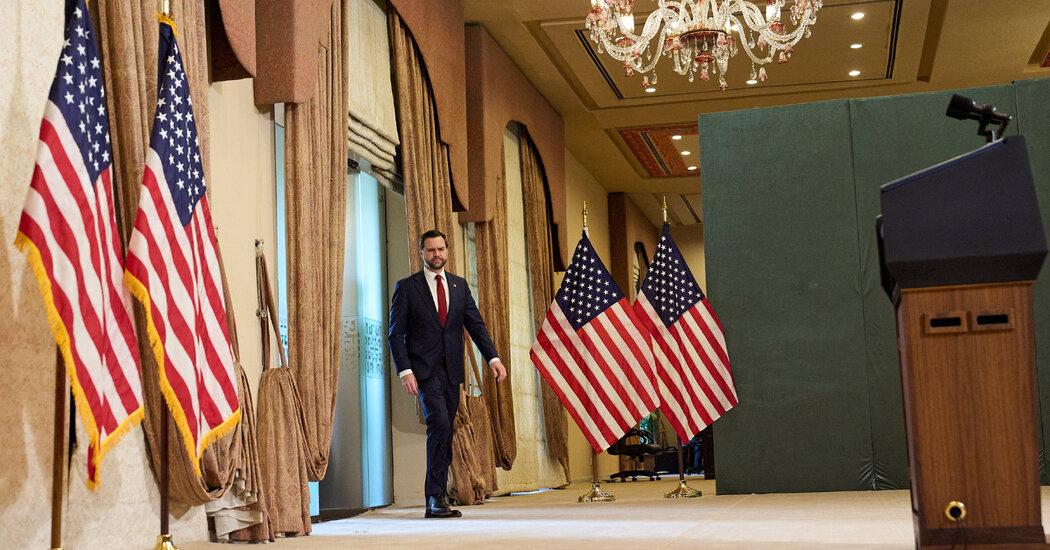
NPR said the talks would begin on Monday evening and that “The three U.S. officials heading to Pakistan are Vice President Vance, U.S. special envoy Steve Witkoff and Jared Kushner,” according to a White House official.
On the Iranian side, PBS/AP said Iranian state media issued brief reports suggesting talks would not happen, and CNBC said Iran would not attend due to the ongoing U.S. naval blockade, “among other grievances,” according to IRNA.
Numbers, casualties, and claims
Beyond the maritime confrontation, Iranian officials and outlets reported competing figures for the war’s overall death toll, and those numbers were presented alongside claims about nuclear and diplomatic positions.
Al Arabiya said Iran announced that “the death toll from the war has risen to about 3,500 dead,” quoting ISNA through the head of the Veterans Foundation, Ahmad Mousavi, as saying “a file has been opened for 3,468 killed in the latest conflict,” and it also cited a prior toll of “3,375 killed” announced by the Forensic Medicine Organization on April 12.

The same Al Arabiya report said HRANA, based in the United States, counted “up to April 7” that at least “3,636 people had been killed,” including “1,701 civilians among them at least 254 children,” plus “1,221 military personnel,” and “714 others whose status was not specified.”
DIE WELT’s live ticker described leadership changes in Tehran, saying “Modschtaba Chamenei succeeded his slain father Ajatollah Ali Chamenei,” and it also stated that “Leading figures of the regime in Tehran were eliminated.”
In a separate thread, The Guardian reported Pope Leo XIV’s comments and also included a discussion of nuclear claims, stating that there is “no evidence that Iran has had an active nuclear weapons program since 2003,” when it was suspended by a decree from the country’s supreme leader, and it quoted Tulsi Gabbard’s testimony that U.S. intelligence agencies “assess that Iran is not building a nuclear weapon.”
Anadolu Ajansı focused on Trump’s framing of causality, reporting Trump said the attack on Iran was “a U.S. decision with no relation to Israel,” and it quoted Trump’s claim that the real factor behind the war was “the outcomes of the October 7, 2023 events.”
Religious dispute and broader stakes
The Iran war’s diplomatic and military stakes were mirrored by a separate but intertwined political dispute involving Pope Leo XIV and Donald Trump, which The Guardian reported as dominating headlines during the pope’s Africa tour.
The Guardian said Pope Leo XIV told reporters onboard the papal plane flying from Cameroon to Angola that it was “not in my interest at all” to debate the US president, Donald Trump, about the Iran war, but that he would continue preaching the Gospel message of peace.
It quoted Leo saying, “There’s been a certain narrative that has not been accurate in all of its aspects,” and added that “Much of what has been written since then has been more commentary on commentary.”
The Guardian also quoted Leo’s insistence that his preaching was “not directed at Trump, but reflected the broader Gospel message of peace,” and it included Leo’s statement that “it was viewed as if I was trying to debate again with the president, which is not in my interest at all.”
In parallel, the PBS/AP report emphasized the immediate material stakes of the Strait of Hormuz confrontation, saying “Roughly one-fifth of the world’s oil trade normally passes through the strait,” and that critical supplies of fertilizer, natural gas, and humanitarian supplies depend on the waterway.
Across the reporting, the ceasefire’s fragility was repeatedly tied to the blockade and threats, with CNBC saying the ceasefire agreement “will expire this week” and Trump called Iran’s weekend attacks on ships a “total violation” of the truce.
More on Iran
Trump Warns U.S. Will Resume Bombing If Iran Talks Fail Before Ceasefire Deadline
11 sources compared

Reuters/Ipsos Poll Finds 36% Approve Trump’s Job Performance Amid Iran War And Pope Feud
10 sources compared

Iran’s Judiciary Chief Mohseni-Eje’i Warns US-Israeli War Coalition May Strike Again
11 sources compared

Trump Says U.S. Expects a Great Deal With Iran, Won’t Extend Ceasefire Deadline
25 sources compared