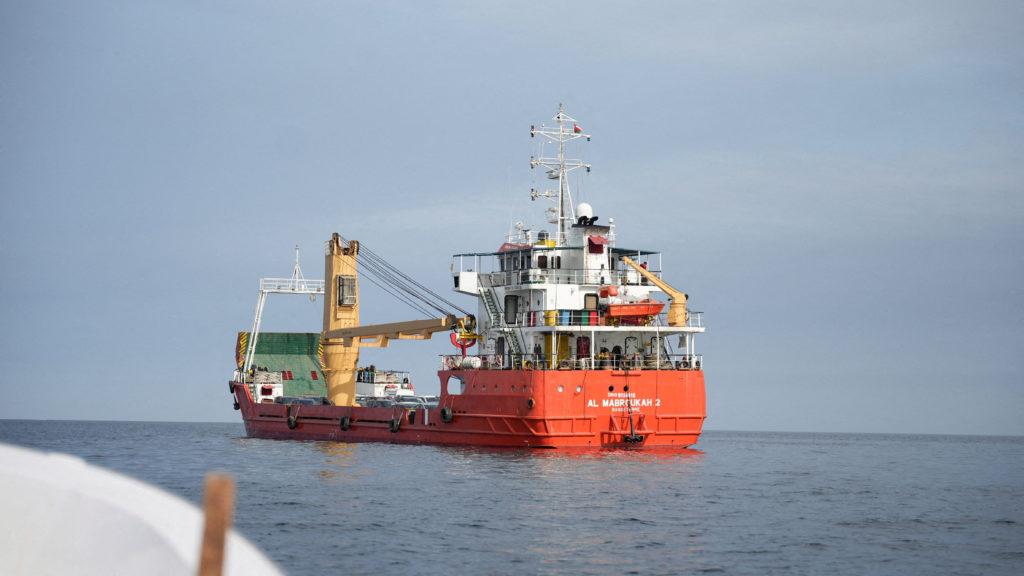
U.S. Seizes Iranian-Flagged Ship Near Strait of Hormuz as Iran Strikes Vessels
Key Takeaways
- U.S. seized an Iranian-flagged container ship near the Strait of Hormuz amid Iran's port blockade.
- U.S. officials say the naval blockade of Iranian vessels will remain in place.
- Oil prices rose above $100 per barrel as Hormuz traffic stayed near standstill.
Hormuz standoff escalates
The Strait of Hormuz has been at a near-standstill for weeks amid the Iran war, with NBC News describing an “almost daily back and forth over whether the strait is open or closed, blockaded or not.”
“On April 20, the United States fired at and then seized an Iranian-flagged container ship close to the Strait of Hormuz in the northern Arabian Sea, amid its blockade of Iranian ports”
NBC News said President Donald Trump stated that U.S. forces seized an Iranian-flagged ship in the Gulf of Oman after the ship allegedly ignored orders to stop, while Iran launched strikes on ships and demanded tolls from vessels transiting the waterway.

NBC News also reported that Tehran suggested it may have mined the strait, and that Iranian media published a map from Iran’s Islamic Revolutionary Guard Corps Navy suggesting safe inbound and outbound routes.
Al Jazeera framed the latest crisis as a “Tanker War redux?” and said that on April 20 the United States fired at and then seized an Iranian-flagged container ship close to the Strait of Hormuz in the northern Arabian Sea.
CNBC reported that the U.S. and Iran seized commercial ships from the Persian Gulf to the Indian Ocean this week as they competed for control of the strait during the ceasefire agreement.
CNBC added that Brent oil rose above $100 per barrel again as tanker traffic through the strait remained at a near standstill, and that “Two cargo vessels, but no tankers, have crossed the strait so far Thursday.”
PBS, citing the Associated Press, said Iran choked off a crucial trade route for energy shipments and that the longer the standoff persists, “the more the global economy will suffer.”
How it began
The current crisis, as described by Al Jazeera, began when Tehran closed passage to all vessels after the U.S. and Israel began bombing the country, and it said Tehran’s territorial waters extend into the strait.
Al Jazeera reported that on March 4 the Islamic Revolutionary Guard Corps (IRGC) declared it was in full control of the strait and that ships would need to get clearance from them to pass through it.

Al Jazeera said shipping through the strait collapsed by 95 percent and that the price of oil—described as 20 percent of global supplies shipped this way—soared above $100 a barrel.
NBC News added that Iran launched strikes on ships and demanded tolls from vessels transiting the crucial waterway “in the wake of the U.S.-Israeli attack on Feb. 28,” which it said effectively shuttered a trade route through which some 20% of the world’s oil and natural gas once passed.
NBC News also reported that there has been an almost daily dispute over whether the strait is open or closed, blockaded or not, and that it is tracking the daily count of how many ships pass through the strait.
NBC News cautioned that exact numbers may be higher because “some ships manipulate their GPS trackers during transit.”
PBS described the blockade as a tool President Donald Trump has turned to in other contexts, saying he has used naval blockades to pressure Venezuela, Cuba, and now Iran.
Officials set the tone
At the Pentagon, Defense Secretary Pete Hegseth said the U.S. blockade of Iranian vessels and ports will remain in place “as long as it takes,” telling reporters that the Trump administration is in no hurry to reach a peace deal with Iran.
Hegseth echoed President Trump’s comments that the U.S. is in control of the timeline for Operation Epic Fury, which CBS News said has continued for nearly two months.
CBS News reported that Hegseth said the U.S. is not anxious for a deal and that “We have all the time in the world, and we're not anxious for a deal,” while also stressing that the mission is continuing into a new phase focused on keeping Iran from developing a nuclear weapon.
Hegseth described the blockade as “ironclad,” and said “a second aircraft carrier will be joining the blockade in the coming days.”
He also addressed Iran’s criticism of the blockade, quoting Hegseth’s response that “the clock is not on their side.”
CBS News said Chairman of the Joint Chiefs of Staff Gen. Dan Caine provided details, including that 34 ships had met the U.S. blockade and turned around, but one, the M/V Touska, was seized.
CBS News also reported that two other “stateless” vessels linked to Iran, the M/T Tifani and , were interdicted and that their crew remain in U.S. custody.
Ceasefire, but ships still seized
Even as a ceasefire paused “the bombs, missiles and drones,” the standoff shifted to naval blockades and ship seizures, according to CNBC.
CNBC said the U.S. and Iran seized commercial ships from the Persian Gulf to the Indian Ocean this week as they competed for control of the Strait of Hormuz during the ceasefire agreement.
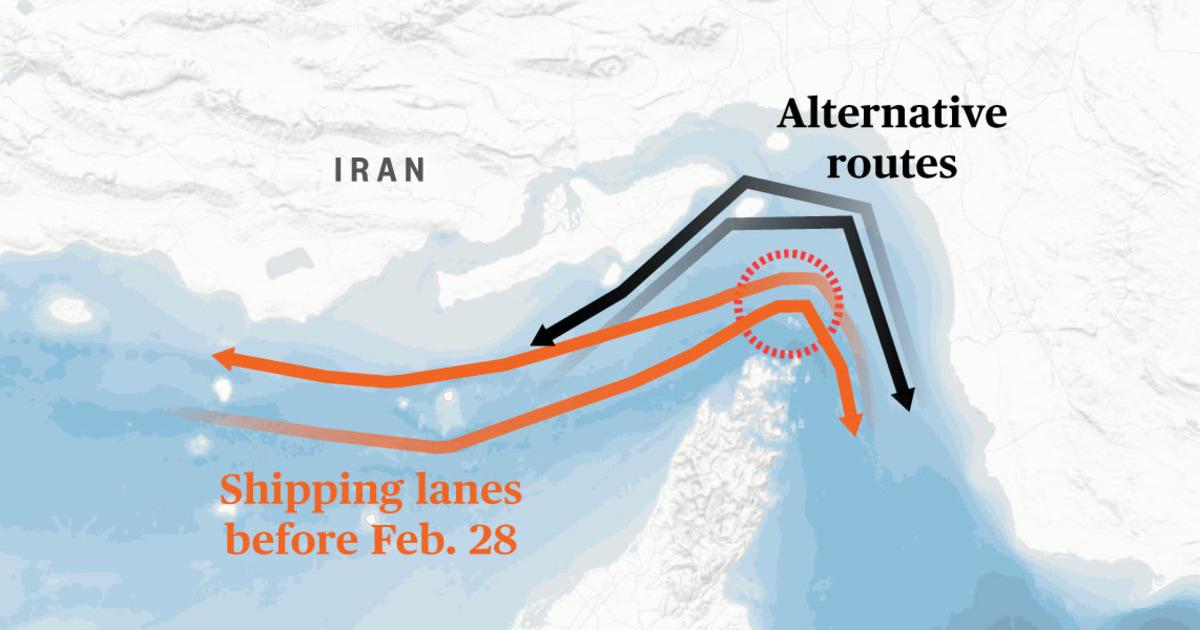
It reported that “At least nine tankers have transited the sea lane since Monday,” while also stating that “Two cargo vessels, but no tankers, have crossed the strait so far Thursday,” based on ship tracking data from LSEG.
CNBC added that Iran continues to demand that ships obtain its permission to transit the strait, while President Donald Trump claimed the U.S. has “total control” over the sea lane and said no ship is allowed to enter or leave the strait without the approval of the Navy.
CNBC quoted Trump saying, “It is 'Sealed up Tight,' until such time as Iran is able to make a DEAL!!!”
It also said Trump ordered the U.S. Navy to “kill any boat” that is laying mines in the strait.
CNBC reported that U.S. forces intercepted a sanctioned tanker in the Indian Ocean carrying oil from Iran, and that the Pentagon said it recently blocked the Iranian tankers M/V Hero II, M/V Hedy and M/V Dorena.
Analysts weigh risks and outcomes
PBS, drawing on Associated Press reporting, contrasted Trump’s naval blockade approach with earlier U.S. pressure campaigns in Venezuela and Cuba, arguing that Iran’s control of a crucial energy route makes the economics of the standoff different.
“Ben Finley, Associated PressBen Finley, Associated Press David Klepper, Associated PressDavid Klepper, Associated Press Konstantin Toropin, Associated PressKonstantin Toropin, Associated Press Leave your feedback WASHINGTON (AP) — President Donald Trump has turned to naval blockades to pressure the governments of Venezuela, Cuba and now Iran to meet his demands, but his preferred tactic is confronting a very different reality in the Middle East than in the Caribbean”
PBS said Iran’s leverage over the Strait of Hormuz gives it power during a shaky ceasefire because “the widening economic risks, especially higher U.S. gas prices in an election year, could force the Republican president to end the blockade on Iran's ports and coastline, experts say.”
PBS quoted Max Boot, a military historian and senior fellow for national security studies at the Council on Foreign Relations, saying, “It's really a question now of which country, the U.S. or Iran, has a greater pain tolerance.”
PBS also quoted Todd Huntley, director of Georgetown University's National Security Law Program, saying, “I do think that the success of the Maduro mission in Venezuela has probably emboldened the president,” and then added Huntley’s view that “There are some major differences,” between Venezuela and Iran.
PBS included a warning from Salvatore Mercogliano, a maritime history professor at Campbell University in North Carolina, that “Blockades are usually just one tool of a mechanism used in a conflict,” and that “it's only one element. And I don't think it's going to be enough to convince the Iranians.”
The same PBS report said Adm. Brad Cooper, head of U.S. Central Command, claimed last week that “no ship has evaded U.S. forces,” while Lloyd's List Intelligence said “a steady flow of shadow fleet traffic” has passed in and out of the Persian Gulf, including “11 tankers with Iranian cargo that have left the Gulf of Oman outside the strait since April 13.”
PBS also cited the maritime intelligence firm Windward saying Iranian traffic continues to flow “via deception,” and it quoted Mercogliano on methods including “spoofing their location tracking data” and traveling through “Pakistani territorial waters.”
More on Iran
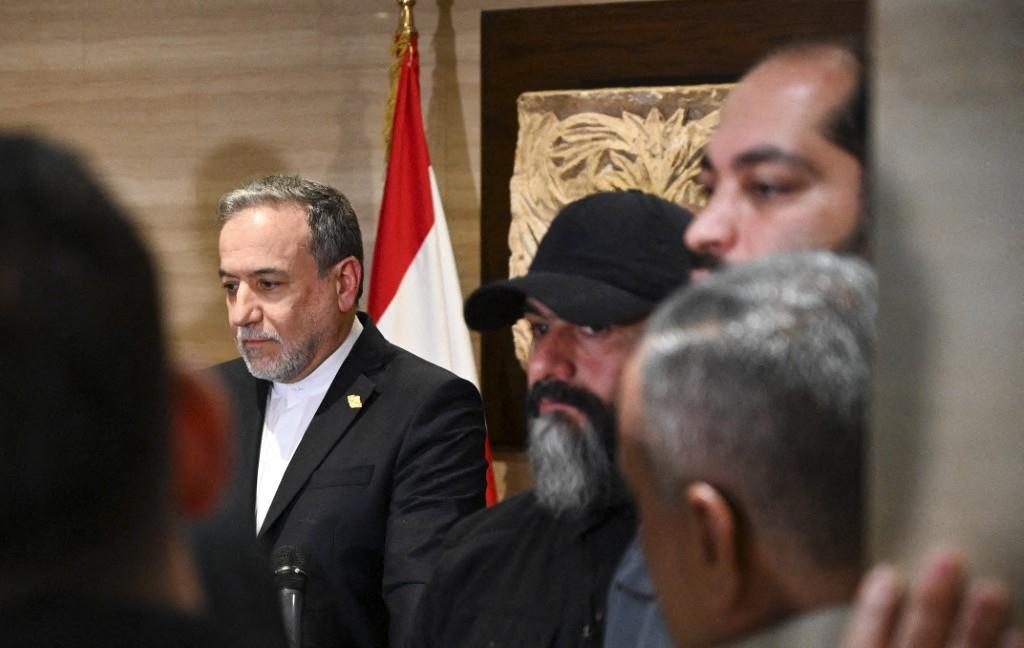
Seyed Abbas Araghchi Arrives in Islamabad to Convey Iran’s Considerations on War’s End
22 sources compared
Trump Orders U.S. Forces To Board Iranian Ships Amid Hormuz Blockade
17 sources compared

Ahmad Vahidi and the IRGC Control Iran, Jerusalem Post Says Mojtaba Khamenei Not Leading
22 sources compared
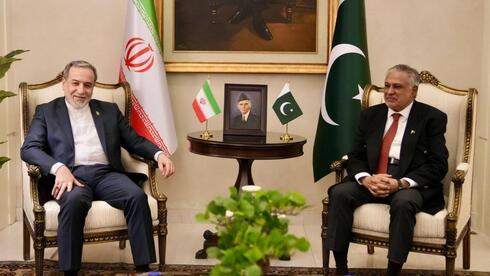
Abbas Araghchi Arrives in Pakistan as Witkoff and Kushner Prepare Direct Iran Talks
17 sources compared