USA19 July, 20263 min read
US Seizes More Than 1,000 Internet Domains for Illegally Streaming World Cup Games
This article is an automated aggregation of coverage from news outlets. Our editorials offer in-depth analysis curated by the NewsCord team.
DOJ seized over 1,000 domains used to illegally stream World Cup games. HSI Washington field office led Operation Offsides.
Domains seized, Operation Offsides
The U.S. seized more than 1,000 internet domains that the Justice Department said were used to illegally stream World Cup games, in an effort called Operation Offsides carried out by Homeland Security Investigations (HSI) Washington field office over three separate actions during the more than monthlong World Cup.
HSI Deputy Executive Associate Director Matthew Millhollin said, "Streaming content from illicit websites opens your devices to unknown risks," warning that criminals running unauthorized platforms might also plan to inject malware or steal payment information.

ABC News also said the U.S. worked with Colombian authorities to target counterfeit goods and that on July 17, authorities from the U.S. and Colombia arrested four members of a cybercrime gang for allegedly streaming pirated content.
The Justice Department affidavit in support of the seizures alleged the sites were illegally streaming intellectual property of FIFA and the media rights-holders, and Director Ivan J. Arvelo of the National Intellectual Property Rights Coordination Center said, "The unauthorized broadcast of World Cup matches violates intellectual property rights."
Cyber and drone threats
John Cohen, executive director of the office of strategic programs and initiatives at the Center for Internet Security, said the World Cup planning reflected "The threat environment has changed," with digital intrusion considerations put on equal footing with physical threats.
Cohen said a report published by the center on Monday counts more than one billion cyberattacks that were blocked over the course of the games, and he described planning that included scenarios such as Jihadist calls for knifings and arson, ticketing scams, and malicious web domains preying on clumsy typists.

In parallel, the FBI said it seized more than 700 illegal drones and detected 1,600 in total around the 11 stadiums across the country a week before the World Cup started, creating a constant stream of potential threats to places packed with tens of thousands of people.
FBI director Kash Patel told Fox News, "If you’re in the space, we’re gonna take you down. And that’s why we took down over 700," as the article described no-drone zones spanning three nautical miles and 3,000 feet above the ground around stadiums and threatened fines of up to $100,000 for drones that fly into restricted airspace.
Security operation and fallout
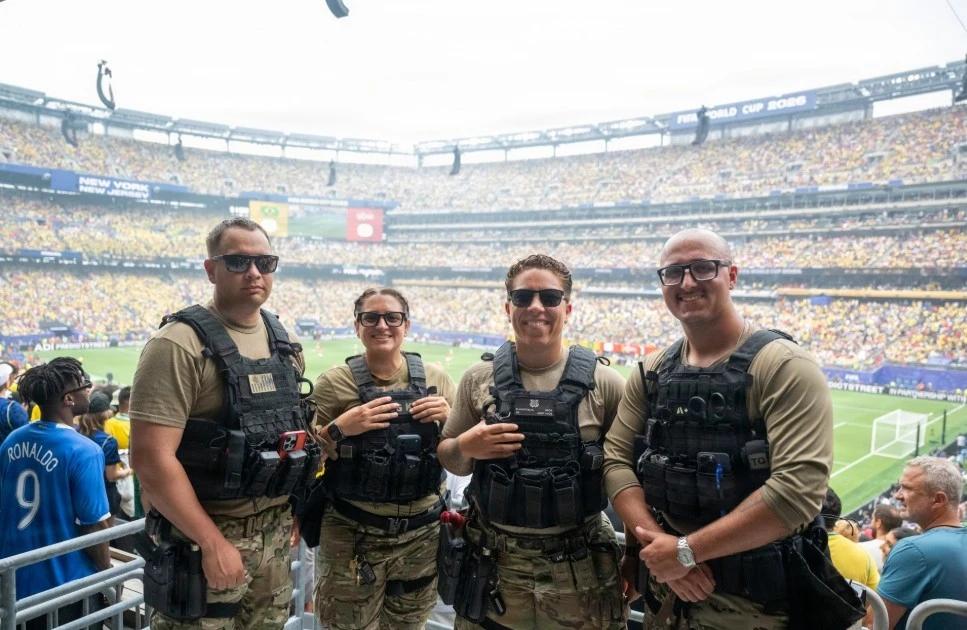
As the tournament concluded on Sunday with fireworks, not bombs, and a 1-0 Spanish victory over Argentina, the Center for Internet Security’s John Cohen said planning for the World Cup spanned 39 days and began last year, as state and local governments and private companies outlined contingencies that sometimes arose and were thwarted. In the same U.S. security narrative, Fox News reported FBI Director Kash Patel said the agency dedicated nearly 5,000 personnel to securing the 2026 FIFA World Cup and that the FBI had "no significant criminal attacks" during the tournament.
Patel also said the FBI conducted approximately 300,000 background checks on players, coaches and other accredited personnel, and Fox News described an aggressive response to the rapidly evolving drone threat in which the bureau treated every unauthorized incursion as a potential threat. After the World Cup final in New Jersey, BBC Sport reported that supporters faced long queues to get into New York New Jersey Stadium amid heightened security because United States president Donald Trump attended the final, with the Secret Service taking over security for the game and supporters queueing for about two hours.