Full story
Senate blocks war powers
The US Senate rejected a largely symbolic effort to limit Donald Trump’s authority to wage war in Iran, with the war powers resolution failing in a 49-50 vote on Thursday after the US conducted a “heavy wave” of retaliatory airstrikes.
“The US Senate on Thursday rejected a largely symbolic effort to limit Donald Trump’s authority to wage war in Iran”
The vote came as the US military said it launched a fresh wave of airstrikes in Iran on Wednesday in retaliation for an Iranian missile attack targeting a US base in Jordan, and the exchange marked an escalation after the collapse of a ceasefire between Washington and Tehran.

The Senate action reflected a split among Republicans, with Susan Collins of Maine, Lisa Murkowski of Alaska, and Rand Paul of Kentucky crossing the aisle to vote in favor, while Pennsylvania senator John Fetterman voted with Republicans to sink the measure.
The political dispute unfolded alongside a widening conflict, with the Guardian describing the war’s context as US strikes following Tehran’s missile attack in Jordan and the BBC reporting that the US completed a “heavy wave” of strikes against Iran after Tuesday’s attempted ballistic missile attacks on American forces.
The BBC also tied the latest escalation to the resumption of hostilities after a ceasefire in April fell apart in June, and it said the latest wave began at 20:00 ET on Wednesday and lasted about an hour.
Threats and retaliatory strikes
Iran threatened to “punish” the United States after the “heavy wave” of strikes against Tehran, with Iran’s Revolutionary Guard saying it “will punish the aggressor today” and extending the threat to Gulf nations helping Washington.
President Trump told reporters at the White House that the US would “beat the f‑‑‑ing s‑‑‑ out of” Iran and said it was the US military’s “turn” to strike, while the BBC described the retaliation as a “powerful response” to Tuesday’s attempted Iranian attacks on US forces.
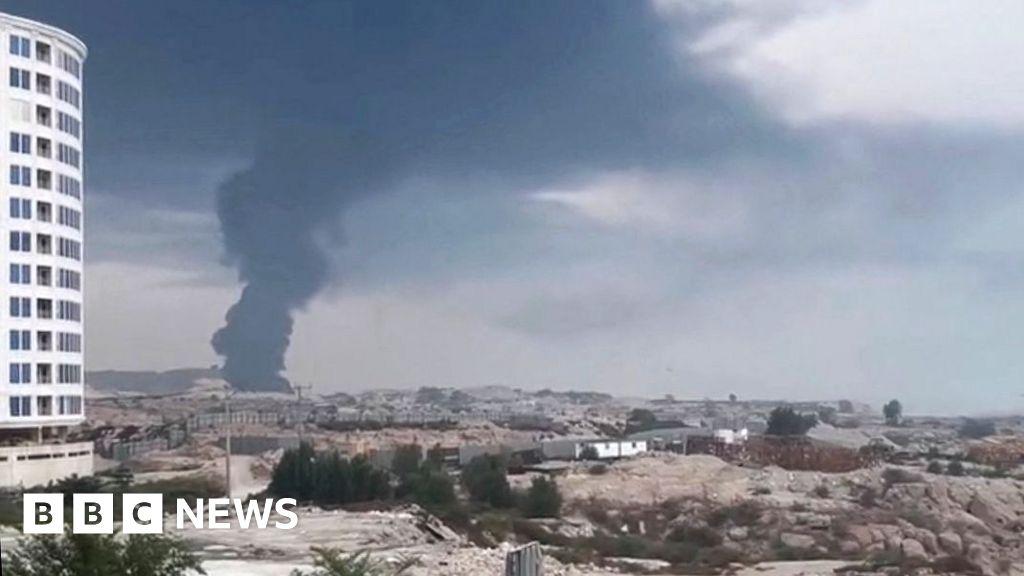
The Hill reported that the US military late Wednesday unleashed two hours of airstrikes against Iran after the Guard fired five missiles at an American base in Jordan on Tuesday, and it said US and Saudi Arabia responded hours later with strikes on Iran-backed militias in Iraq.
NPR described the US retaliation as aimed at military command centers and missile facilities in Iran, and it said Iran also claimed a residential building was hit, killing two children.
In Iraq, the BBC said the conflict expanded after the first publicly announced joint US-Saudi strikes targeting Iranian proxies, while Al Jazeera reported that the PMF said the US-Saudi attacks killed at least 20 fighters and wounded 32 in seven provinces.
War powers, casualties, and costs
The stakes in Washington were tied to the conflict’s human toll and the political fight over congressional authority, with the Guardian saying at least 18 US service members have so far been killed and more than 450 wounded, according to Pentagon figures.
“The Pentagon has told Congress it needs roughly $80bn more to sustain the war effort”
The Guardian also reported that the Pentagon has told Congress it needs roughly $80bn more to sustain the war effort, on top of the more than $37bn already spent, while Democratic lawmakers questioned the Pentagon figures over a lack of transparency.
In the Senate, Chuck Schumer urged colleagues to back the resolution, arguing that “This war seems to be expanding with Iran’s latest attack in Egypt’s territory,” and he said Senate Republicans “cannot sit on the sidelines as Trump’s war escalates out of control.”
NPR described the operational backdrop for those political disputes, saying Jordan’s military shot down five Iranian missiles targeting its territory early Thursday, and it said the Jordanian base is a US air hub and frequent target of attacks.
As the conflict spread across the region, the BBC said Centcom hit “dozens” of IRGC targets and reported that Iranian state media said the latest strikes had killed three people, including a two-year-old child, on Qeshm island.