Full story
Fiorella vanishes after strikes
In Ecuador’s coastal town of Jaramijó, a 52-foot longline boat called the Fiorella left for a routine three-week voyage on January 13, 2026, and by January 16 its crew spotted an aircraft and drones that one survivor, Cristhian Flores, later described as white, very loud, and circling the boat "like it was hunting."
“A fifty-two-foot longline boat called the Fiorella and its ten-member crew left Jaramijó”
At 1:00 p.m. on January 20, Flores and Dimas Ignacio Álvarez saw black smoke rise on the horizon, heard the other skiff’s radio cut out, and found their own radio calls to the Fiorella unanswered as the satellite tracking device went dark at 1:06 p.m.
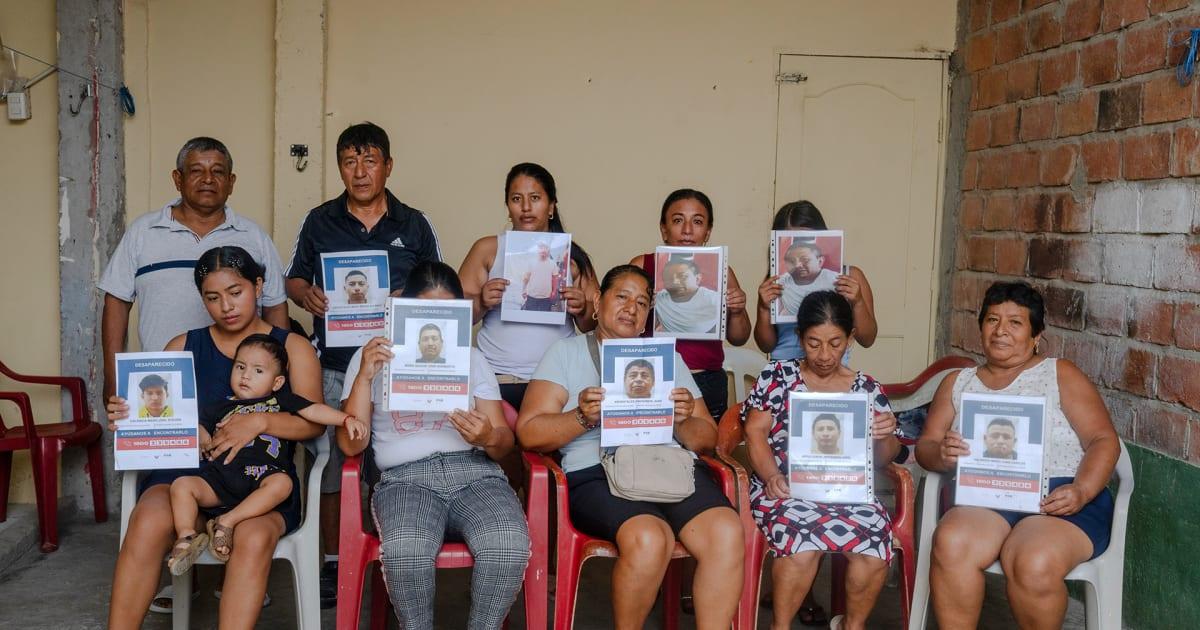
The missing crew included eight of the ten men, and their families remain convinced this was a U.S. strike on men they say were innocent of drug trafficking, even as the Pentagon and Ecuador’s Defense Ministry denied any knowledge of or participation in the strikes.
Will Freeman, whose research focuses on organized crime in Latin America, traveled to coastal Ecuador to interview survivors and families, and he said the New Yorker published an investigation that new reporting indicates could be the result of a covert U.S. operation.
Freeman frames the broader context as Operation Southern Spear, the Trump administration’s campaign of strikes on alleged drug-smuggling vessels ongoing since September 2025, with the Eastern Pacific off Ecuador described as its main theater.
Denials, doubts, and oversight
The accounts Freeman reviewed point to Operation Southern Spear as a possible covert campaign, but both the Pentagon and Ecuador’s Defense Ministry denied any knowledge of or participation in the strikes, leaving the question of who was behind the attacks contested.
Freeman reports that legal experts have called Southern Spear a program of extrajudicial murders, citing laws barring U.S. forces from deliberately targeting civilians who pose no imminent threat, even suspected criminals.

The administration countered that its targets are “unlawful combatants” in a “non-international armed conflict” between the United States and a secret list of drug cartels, insisting the boats are carefully selected based on intelligence.
Freeman also says no evidence has surfaced to link any of the three crews—including the eight fishermen still missing—to drug trafficking, while he describes the Ecuadorian government as refusing to search for the Fiorella after the navy waited nine days to send a ship that never came within ninety nautical miles of the site.
In parallel, the same source describes how congressional oversight is being demanded as strikes sharpen an inquiry into who is being targeted and on what basis.
Regional security and prison models
Beyond Ecuador’s case, the sources describe a wider Latin America security push tied to U.S. priorities, with Infobae reporting that on March 7, 2026, the summit “Shield of the Americas” took place at the Doral complex of Donald Trump.
“On March 7, 2026, at the Doral complex of Donald Trump, the summit “Shield of the Americas” took place”
Infobae says the summit aimed at “establishing a framework for cooperation to combat drug cartel trafficking, control irregular migration, and coordinate shared intelligence,” and it adds that on August 12 Secretary of War Pete Hegseth met representatives from 19 governments in Panama.
The same Infobae account ties these meetings to a geostrategic focus on countering extra-continental powers, primarily China, and notes the absence of Mexico and Brazil as a consequence of their leftist ideological orientation.
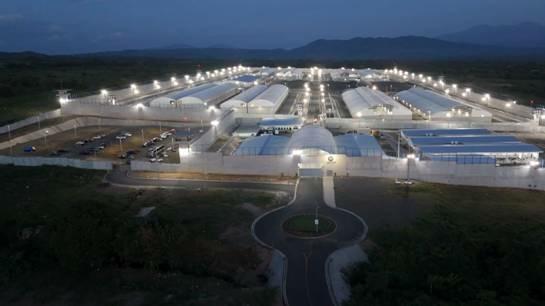
In a separate thread about crime-fighting models, the Council on Foreign Relations source is not used; instead, the “MEGAPRISONS IN LATIN AMERICA, a model to follow?” article says Salvadoran President Nayib Bukele’s Terrorism Confinement Center (CECOT) in Tecoluca has a capacity to hold 40,000 inmates.
That prison model is described as part of an “iron hand” policy, with the article adding that Bukele’s crackdown began in March 2022 after a massacre carried out by gangs that left 86 dead, while it also notes that CECOT opened its doors in February 2023 after being built in just seven months.