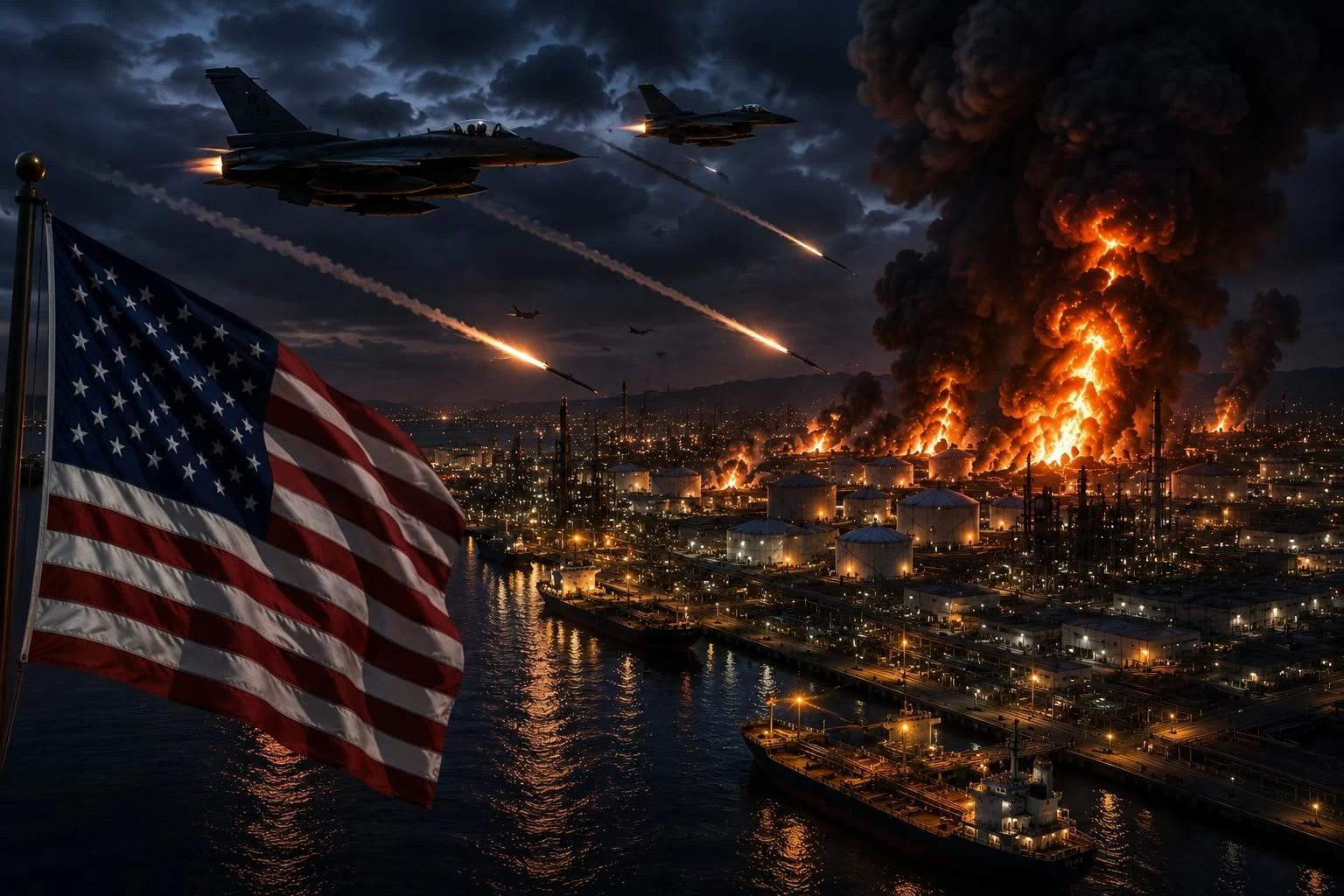
US Strikes Hit Southern Iran, Explosions Reported in Bandar Abbas, Qeshm, Minab, and Sirik
Key Takeaways
- US launched defensive strikes against Iranian targets; CENTCOM cites self-defence.
- Explosions and air-defense activity reported in Bandar Abbas, Qeshm, Minab, Sirik, Hengam Island.
- Conflicting accounts on escalation versus defense, with some officials denying war resumption.
Strikes after Apache downing
Explosions were reported in southern Iran, including in the southern port city of Bandar Abbas, the island of Qeshm, the cities of Minab and Sirik, as Iranian sources reported hits by “enemy projectiles” in Qeshm and the cities of Kargan and Sirik.
The US Central Command said American forces began “additional self-defence strikes today at 5.15pm ET against multiple targets in Iran,” adding that “The strikes are in response to Iran’s unwarranted and continued aggression.”

Iranian air defense was reported as activated in the south, with Mehr news agency saying it was operating in Fars province and in areas west of Tehran, while explosions were reported near the Sirik and Minab districts.
The Straits Times said the US military completed strikes against Iranian air defence, ground control stations, and surveillance radar sites near the Strait of Hormuz that were launched earlier on June 9 in retaliation for the downing of a US helicopter, and it quoted Trump telling ABC News, “I believe the response should be very strong, very powerful, and that’s what this one is.”
Iranian warnings and US framing
Iran’s Foreign Minister Abbas Araghchi warned foreign military forces operating in the Strait of Hormuz to leave the area, saying they would remain at constant risk due to “potential human errors, accidents, or the possibility of being caught in crossfire.”
The Straits Times reported that following the initial strikes, Iran’s Revolutionary Guards said they had attacked the US Fifth Fleet in Bahrain with drones, and it quoted the Guards warning of “a more severe response” if what they described as US “aggression” continued.

In a separate account, the US military said the latest strikes began at 5pm local time and described the “mission is a proportional response to unjustified Iranian aggression,” while Trump told reporters in the Oval Office, “We’re going to be attacking them -- attacking them very hard.”
The Straits Times also reported that following the helicopter incident, Abbas Araghchi posted on X that the country would “leave no attack or threat unanswered,” and it added that he wrote, “To reduce risk, best solution is for them to leave.”
Regional spillover and stakes
The Straits Times linked the US-Iran escalation to wider regional strain, saying Israel struck the historic port city of Tyre in southern Lebanon, killing at least eight people, and it described it as “the deadliest strike on the city” since fighting erupted in Lebanon in early March.
It also said Iran and Israel exchanged air strikes earlier this week, killing two people in Tehran, and it reported that Tehran has long said any peace deal with Washington depends in part on an end to fighting in Lebanon.
In the Gulf, the Straits Times reported that Iran continued to block most shipping through the Strait of Hormuz, which before the war carried a fifth of the world’s crude oil and other commodities, and it said the episode could add further strain to efforts to broker a peace deal to reopen Hormuz.
Meanwhile, Free Malaysia Today said American forces began “additional self-defence strikes today at 5.15pm ET against multiple targets in Iran,” while Iranian sources reported hits by “enemy projectiles” in Qeshm and the cities of Kargan and Sirik, keeping attention on the Strait of Hormuz corridor and the southern Iranian locations where explosions were heard.
More on Iran
U.S. Military Strikes Multiple Targets in Iran After Bahrain, Kuwait, Jordan Face Iranian Fire
12 sources compared

U.S. Launches Self-Defense Strikes on Iran After Apache Helicopter Downing Near Strait of Hormuz
14 sources compared
U.S. Military Strikes Multiple Targets in Iran After Trump Warns Tehran Will Pay Price
16 sources compared
U.S. Launches Self-Defense Strikes Against Multiple Targets in Iran After Helicopter Downing
12 sources compared