
USA · 31 August, 2026 · 3 min read
Trump’s Iran War Reaches Six Months, Reuters Cites Six Consequences and Strait of Hormuz Disruption
US strikes two IRGC launchers on Larak Island near Strait of Hormuz. Iran retaliates with missiles and drones against US bases in Jordan and UAE.
Whose account is foregrounded first.
6 of 8 outlets skipped it: iran says the IRGC struck US bases in Jordan after the Larak strike.
1168outlets compared
Same story, two versions
tap a side to read it in full
20Minutos
“According to Washington, the Persian nation was preparing to launch these mines toward the Strait of Hormuz.”
Translated from the original.
Read the original ↗6abc Philadelphia
“One U.S. strike hit a home hosting a wedding, killing two people and wounding dozens, local officials said.”Read the original ↗
20Minutos leads with verified operational details, while 6abc foregrounds Iranian accounts and reported civilian harm.
Six months of escalation
Six months after the start of the Iran war, Reuters reported that the conflict described by President Donald Trump as a “short trip” has become a crisis that many are outraged by and threatens to undermine his presidency.
“Reuters reported that the war described by President Donald Trump as a “short trip” has become a crisis”
Reuters said Iran has not yielded and that navigation through the Strait of Hormuz remains highly disrupted, with no clear path to end the conflict that Trump once predicted would end within four weeks.
Reuters also listed six consequences, including that Trump’s approval rating fell from 40% to 33% since the conflict began, and that a May report from the Congressional Research Service stated that 42 U.S. military aircraft were lost in the conflict.
In Rochester, N.Y., WHAM reported that Tommy Mach, a Fairport resident and retired Marine, said, “There’s nothing more disheartening than hearing explosions above an airport while you’re in there waiting for an airplane,” as he described being evacuated from the Middle East during the Iran and U.S. conflict.
Strikes, missiles, and threats
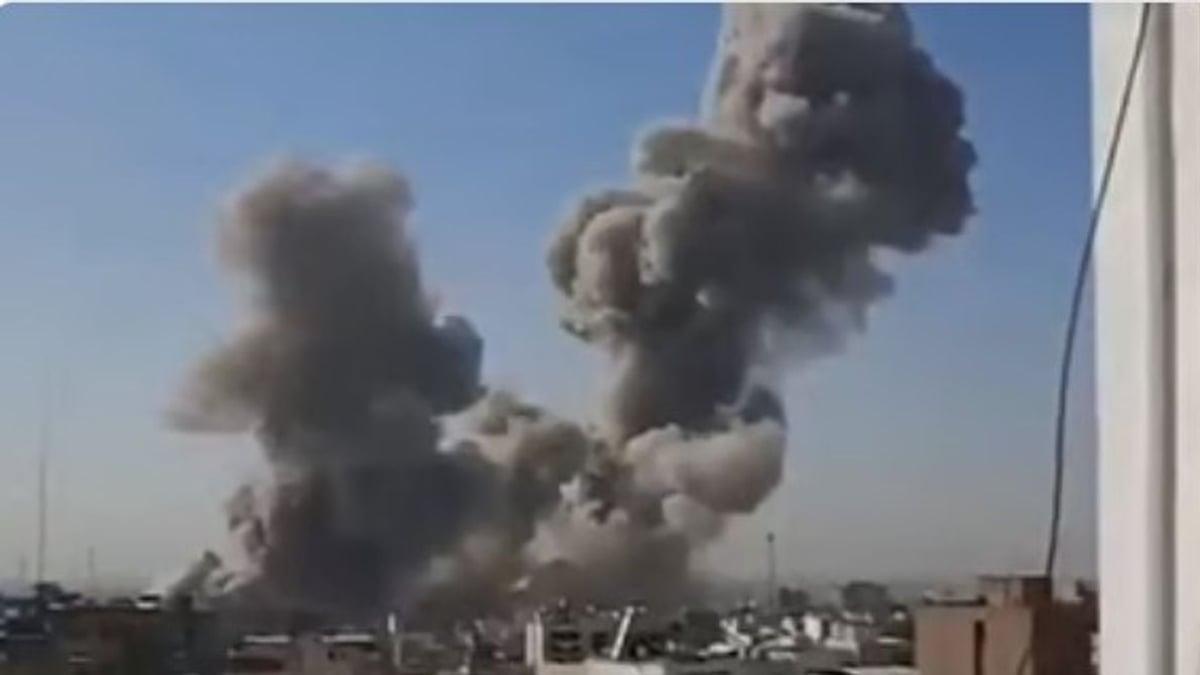
As hostilities flared again, 20Minutos reported that the United States carried out on Sunday a 'precision' strike against two platforms used to launch rockets equipped with sea mines on Iran's Larak Island, and that Iran responded by claiming it attacked two U.S. bases in Jordan.2
20Minutos said the Jordanian Army confirmed that its defense systems intercepted eight missiles and that there were no damages or fatalities, while CENTCOM stated the placement of the mines by the Islamic Revolutionary Guard Corps represented an 'imminent threat' at the strategic passage.2

Iran’s President Masoud Pezeshkian told the world, “We do not seek war, and this is the message we have conveyed to the world. But we will never stand idly by in the face of aggression and we will respond decisively,” before departing for Kyrgyzstan.
In the same escalation, 6abc Philadelphia reported that Trump warned on social media, “If the failed Nation of Iran retaliates for this very justified attack, they will be hit again at a much harder and higher level, but it will not be the biggest attack of them all, that is waiting in the wings,” as U.S. strikes hit targets in Iran and Tehran fired missiles and drones in response.6
Oil transit and political fallout
The renewed fighting described by 6abc Philadelphia came as oil prices spiked, with the report saying crude was up about 7% this week and that the price of crude has jumped more than 50% this year, dragging the cost of gasoline upward.6
“The cost for a gallon of regular gasoline in the U.S. ticked higher again overnight to $4.10”
6abc Philadelphia reported that the cost for a gallon of regular gasoline in the U.S. ticked higher again overnight to $4.10, according to AAA, and noted that the U.S. and Iran are both seeking control over the Strait of Hormuz, through which 20% of the world’s oil normally flows.6
Reuters, meanwhile, said the war shook the global economy but to a lesser extent than feared, and that the conflict led to a sharp rise in oil prices and raised concerns about a global recession.
WHAM also captured the domestic pressure in the U.S. as Tommy Mach said, “I hope that we can bring our troops back,” and added, “They don’t necessarily need to be there,” while he said the war still ongoing frustrated him six months in.