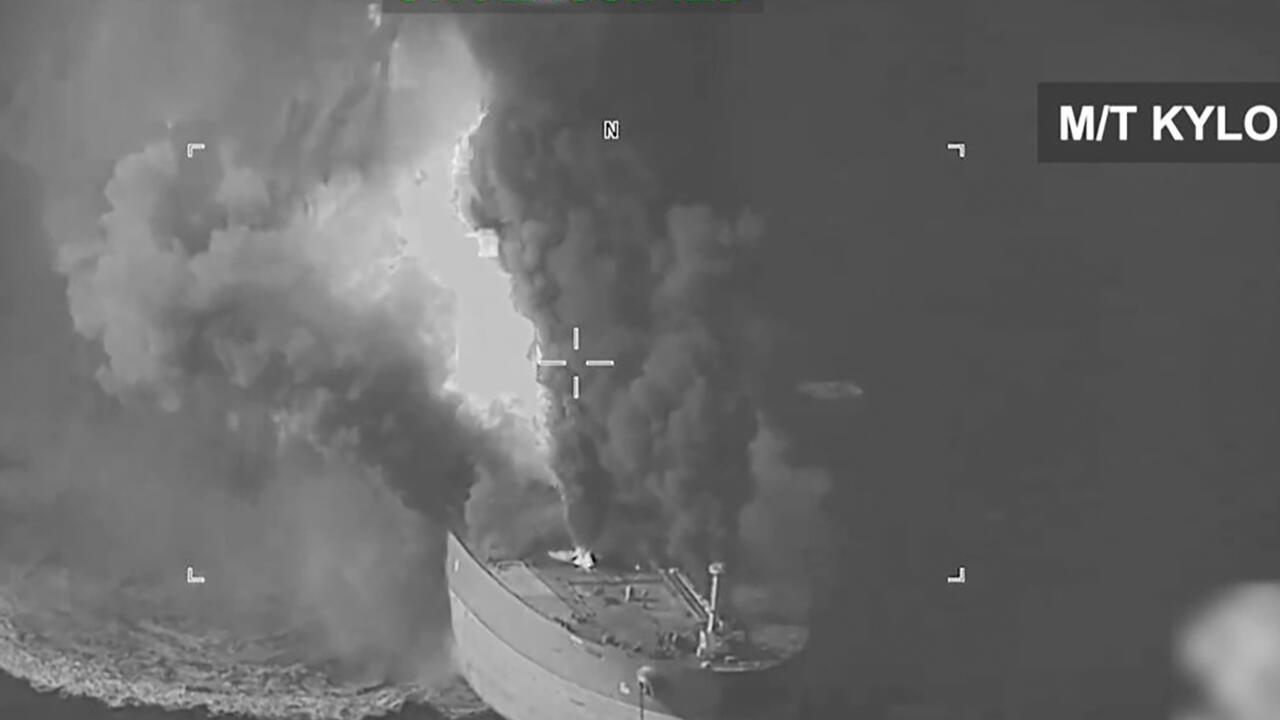
Full story
Tankers hit after missile attacks
The U.S. and Iran traded retaliatory attacks on ships on Saturday after fighting flared up a week earlier, with the U.S. military saying it had "permanently disabled" two Iran-linked oil tankers and "completely destroyed" a third in the Gulf of Oman.
“permanently disabled" two Iran-linked oil tankers”
The BBC reported that Iran’s state media confirmed the strikes and said Tehran had attacked three US-affiliated vessels in response, as well as three oil tankers travelling through the Strait of Hormuz along an "unauthorised" route.
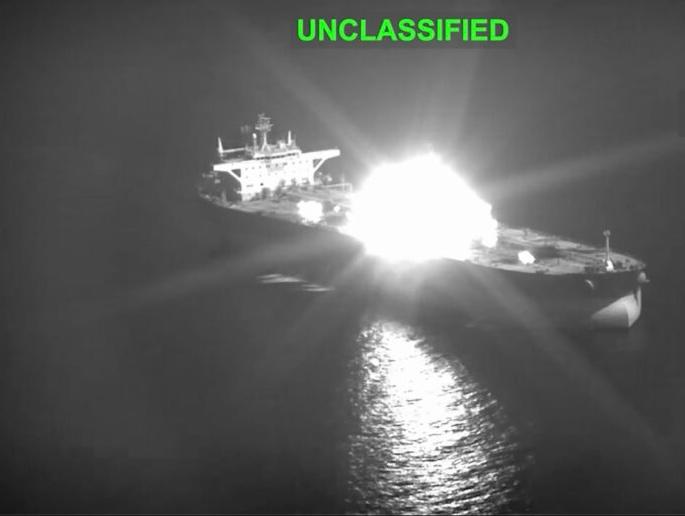
U.S. Central Command said it "successfully evaded" multiple attacks from the IRGC earlier in the day, which were targeting a US aircraft carrier and guided-missile destroyer, and it said no American troops were harmed.
Iran International said CENTCOM released video showing the Iranian oil tanker M/T Kylo on fire, heavily listing and sinking in the Gulf of Oman after U.S. attacks a day earlier, and CENTCOM said the Kylo sank and "joined Iran’s navy at the bottom of the sea."
Threats, vows, and competing claims
Defense Secretary Pete Hegseth wrote on social media that "if Iran shoots at US ships, we will destroy (and sink) their oil tankers," as the BBC described the latest round of strikes.
The BBC also reported that Iranian state media said Tehran had attacked three US-affiliated vessels and three oil tankers through the Strait of Hormuz on an "unauthorised" route, while the BBC said it had approached US Central Command (Centcom) for comment about Iran’s latest claims.

Iran International quoted the IRGC warning that "If the United States continues its hostile and aggressive actions, it should expect a severe response," after the IRGC accused two warships of interfering with Iranian vessels and taking part in a maritime blockade.
In the same report, House Intelligence Committee Chairman Rick Crawford told Fox News that the strikes should signal to Iran’s leadership that "all options are on the table," framing the tanker attacks as "the kinetic component" of the administration’s sanctions strategy.
Energy costs and next moves
The renewed U.S.-Iran fighting pushed up energy costs, with Reuters reporting that Americans faced record-high gasoline prices for Labor Day weekend and that the national average gasoline price was expected to reach $4.03 a gallon on Labor Day.
“crude oil climbed back above $90 a barrel this week”
Iran International added that crude oil climbed back above $90 a barrel this week after renewed military action revived concerns about disruptions to global oil supplies, and it said analysts tied the Strait of Hormuz to leverage for Iran.
The BBC said a 60-day ceasefire between the US and Iran formally expired last month, with little sign of a further diplomatic settlement on the horizon, and it described the strait as "crucial to the world's oil and gas industry" and effectively closed since the war began in February.
In the same BBC account, it reported that Trump dismissed the conflict as "small potatoes" and that he had not commented on Saturday’s attacks, while the BBC said the strikes came a day after Trump dismissed the conflict with little apparent progress toward ending the six-month war.