USAupdated 20m ago3 min read
MapU.S. Supreme Court Lets Trump Administration Resume Big Bend Border Wall Construction
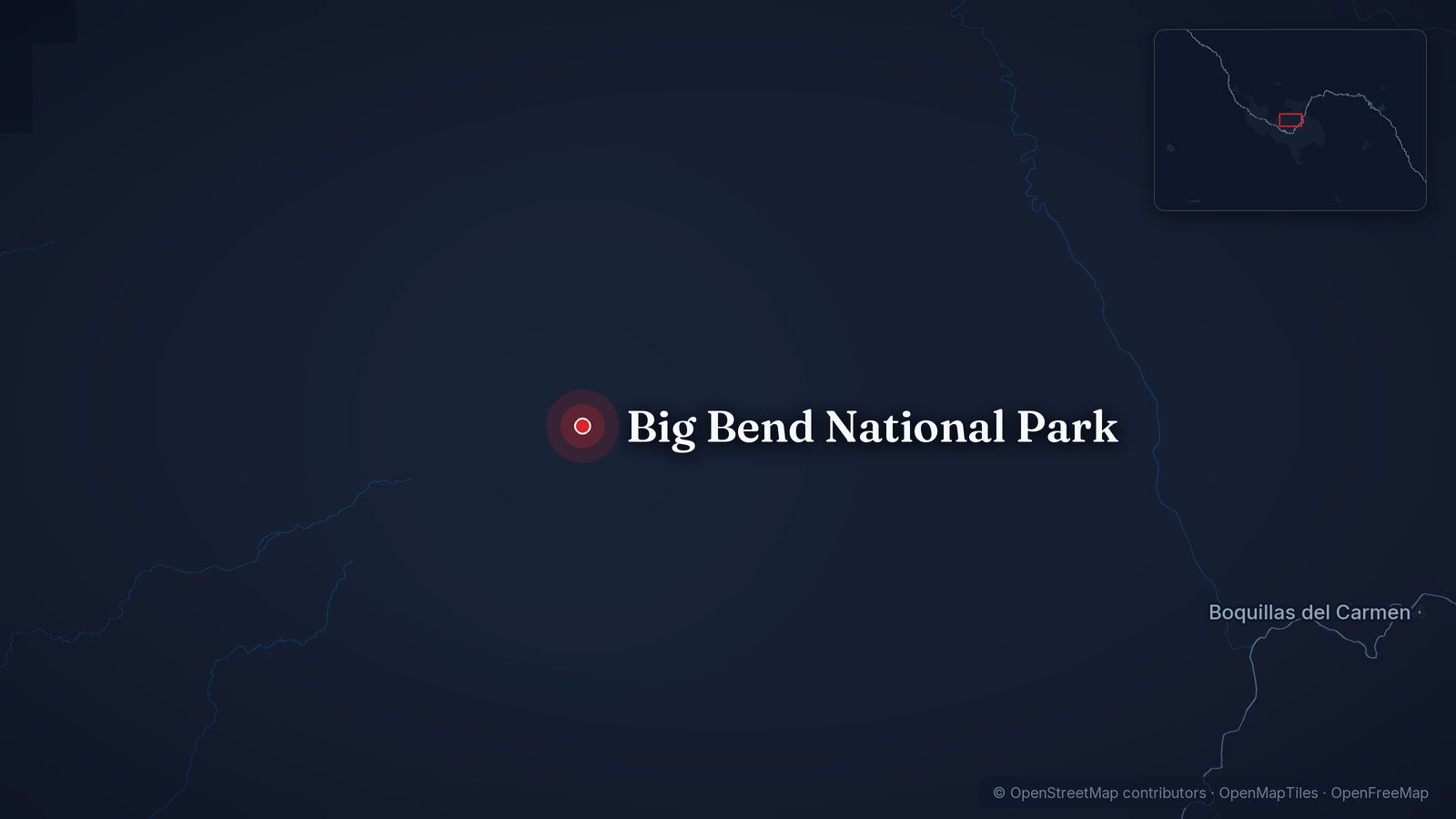
5 Western Mainstream4 Local Western2 Other1 West AsianMap: © OpenStreetMap contributors, ODbL · Cropped for layout
This article is an automated aggregation of coverage from news outlets. Our editorials offer in-depth analysis curated by the NewsCord team.
Supreme Court lifts lower court injunction, allowing construction to resume in Big Bend region. Court grants emergency relief to move forward with border barrier, roads, lighting, and surveillance.
Save coverage image
12 outlets in this story. Read their headlines below.
Supreme Court lifts Big Bend stay
The United States Supreme Court allowed President Donald Trump’s administration to build a border wall through a remote section of Big Bend National Park in West Texas, lifting a lower court injunction that had paused construction while the matter was litigated.
The court granted the government’s emergency request, saying the injunction “impedes the Government from advancing its ‘compelling interests’ in border security and integrity,” and the decision came as the dispute over the project’s legality continued.
Justice Ketanji Brown Jackson was the only justice to indicate she would have denied the government’s request, and she did not explain her reasoning.
U.S. District Judge Kathleen Cardone had blocked the construction in October, writing that while the Big Bend sector makes up more than 25 percent of the US-Mexico border, it accounts for only 0.3 to 2.2 percent of migrant apprehensions.
The Supreme Court said the challengers’ claim did not qualify, writing that “there is no such thing as a ‘constitutional’ major-questions claim,” and it found the government was “exceedingly likely to prevail” on its argument about Cardone’s jurisdiction.
Waivers, dissent, and plaintiffs
The Department of Homeland Security plans to build vehicle barriers, patrol roads, and install lighting as well as surveillance and detection systems in and around Big Bend National Park, and the Supreme Court lifted the stay without ruling on the merits. The Supreme Court held that the Department of Homeland Security is authorized to waive regulations to facilitate construction, and it concluded that “the government’s interest outweighs any aesthetic, recreational, or environmental harm claimed by the plaintiffs.” Laiken Jordahl of the Center for Biological Diversity lamented the decision, saying, “This terrible decision opens the way for bulldozer destruction of an untouched desert and blasting canyon walls before the courts have decided whether that destruction is legal.”
The Center for Biological Diversity, Friends of the Ruidosa Church, and a local river guide and landowner challenged the waivers, arguing that without them construction would have to comply with laws such as the Endangered Species Act, the National Environmental Policy Act and the National Historic Preservation Act. The challengers argued that the Big Bend area is not an area with high illegal entry, and Cardone had reasoned that if the Big Bend Sector were high illegal entry, “so is every other sector, and the waiver authority would apply to the entire U.S.-Mexico border.”
What resumes, what is at risk
The Supreme Court’s order cleared the way for the Trump administration to resume building a border wall and other infrastructure through the Big Bend sector while litigation continues, and it covered a remote area of West Texas that includes Big Bend National Park.
The decision also allowed the Department of Homeland Security to proceed with waivers that fast-track construction and sidestep environmental and conservation laws, and the court said Congress’s enactment reflects “a clear preference for expeditious border construction over the very harms respondents assert.”
The plaintiffs warned that allowing construction to proceed would permit “immediately resume blasting, bulldozing, road construction, and other border barrier-related construction across one of the most remote and ecologically and culturally significant landscapes in the United States.”
The Trump administration argued that stopping construction would have serious consequences for border security, and Solicitor General D. John Sauer warned about “disruption of the government's ability to secure a quarter of the southern border against cartel incursions, drug trafficking, and illegal entry.”
The dispute now turns on whether the waivers and the project’s scope can be upheld as the lower-court battle continues, with the Supreme Court’s Monday ruling described as temporary until the case is decided or settled in the lower court in El Paso.