USA10 July, 20263 min read
U.S. Supreme Court Upholds Birthright Citizenship in 6-3 Ruling on June 30
This article is an automated aggregation of coverage from news outlets. Our editorials offer in-depth analysis curated by the NewsCord team.
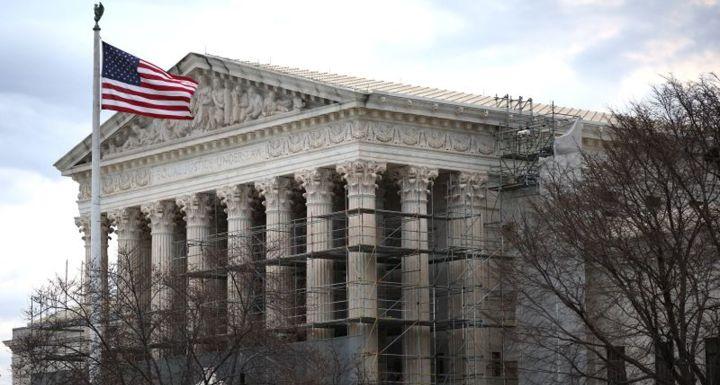
The Supreme Court upheld birthright citizenship in a 6-3 decision on June 30. Constitutional debate persists over birthright citizenship despite Court ruling.

Supreme Court Upholds Jus Soli
On June 30, the U.S. Supreme Court upheld birthright citizenship, with the Japanese American National Museum welcoming the decision to uphold birthright citizenship.
The Rafu Shimpo report says the court’s 6-3 ruling upheld a major pillar of the Constitution affirmed by the landmark 1898 case U.S. v. Wong Kim Ark, and it quotes the decision that “[c] hildren born in the United States to parents unlawfully or temporarily present are ‘subject to the jurisdiction’ of the United States and are citizens at birth under the Fourteenth Amendment’s Citizenship Clause.”

In the same report, JANM president and CEO Ann Burroughs said, “We welcome the Supreme Court’s decision to uphold the 14th Amendment, reaffirming one of the Constitution’s most fundamental guarantees: that all persons born or naturalized in the United States are citizens,” while also warning that “these constitutional protections cannot be taken for granted.”
The Al Jazeera profile of Sandra Wong ties the ruling to her family’s legacy, saying the Supreme Court upheld the precedent Wong set back in 1898 on June 30, and that Wong’s case was cited in the decision more than 100 times.
Voices, Dissent, and Debate
Rafu Shimpo reports that in a concurring opinion, Justice Brett Kavanaugh held out the possibility that while an executive order violated existing law, the Constitution could allow Congress to restrict birthright citizenship. The News-Press opinion piece frames the issue as still contested, quoting the dissent by Justice Thomas as keeping the matter “solidly 'in play'” and noting that the “constitutional” portion of the decision was “5-4.”
In the same News-Press piece, it quotes Justice Thomas’s view that doubts his decision “will stand the test of time,” while also quoting Chief Justice Roberts’s response that Thomas’s side contains “scant evidence” to support their conclusions. Al Jazeera adds that Donald Trump pledged to keep fighting birthright citizenship after the June 30 ruling, and it says he called on Congress to amend the Constitution and asked the Supreme Court to reconsider its decision.
What’s at Stake Next
Rafu Shimpo reports that the Japanese American Citizens League celebrated the Supreme Court’s decision in the case of Trump v. Barbara as reaffirming that every child born in the United States has a claim to citizenship regardless of their parents’ immigration status.
“These children’s citizenship did not depend upon a government determination of their parents’ loyalty, patriotism, or legal status.”
The same report says the JACL pointed to how the 14th Amendment protected the citizenship of children born in the United States even when parents were classified as “enemy aliens,” and it quotes the JACL’s position that “These children’s citizenship did not depend upon a government determination of their parents’ loyalty, patriotism, or legal status.”
The Mendocino Beacon describes how the Chinese Exclusion Act shaped the legal environment around birthright citizenship, saying that in 1884 U.S. Customs Officers were waiting for Look Tin Eli and that, because of the Exclusion Act, 14-year-old Look Tin Eli was required to present a “Certificate of Return” to be allowed re-entry into the United States.
In the Al Jazeera profile, Sandra Wong’s family story is presented as a direct stake in the ruling’s durability, saying Trump’s campaign poses the “most dire threat to Wong's legacy in more than a century” as he continues to pursue changes through Congress and the courts.