
U.S. Weighs Iranian Proposal To Reopen Strait Of Hormuz, Delay Nuclear Talks
Key Takeaways
- Iran proposed reopening the Strait of Hormuz in exchange for ending blockades.
- The proposal would delay negotiations on Iran's nuclear program.
- U.S. weighing Iranian proposal as a multi-track deal, Hormuz first and nuclear talks later.
Hormuz-first proposal
The United States is weighing an Iranian proposal that would reopen the Strait of Hormuz by pairing an immediate lifting of the U.S. blockade with a delay on talks about Iran’s nuclear program and a larger peace deal.
“United States President Donald Trump’s national security team is reviewing an Iranian peace proposal aimed at halting the war and reopening the Strait of Hormuz”
The Washington Post says the White House is considering a plan where “the United States and Iran immediately lift their blockades in the Strait of Hormuz but delay talks regarding Iran’s nuclear program and a larger peace deal.”

DW reports that the proposed interim deal would have “Iran would reopen the Strait of Hormuz in exchange for Washington ending its blockade of Iranian ports,” while “Tehran's proposal would postpone more complex negotiations over Iran's nuclear program.”
Al Jazeera frames the same diplomatic thrust as Washington reviewing “an Iranian peace proposal aimed at halting the war and reopening the Strait of Hormuz,” with the plan coming as the U.S. weighs “delaying talks on Iran’s nuclear programme.”
In parallel, South Florida Reporter describes the Iranian offer as a “two-stage de-escalation plan” in which Iran would “reopen” the strait and end a maritime “toll” system while the U.S. would lift its naval blockade, with nuclear discussions pushed to a later stage.
The Iranian proposal is also described as three-stage in other reporting, with The Wall Street Journal cited by ynetnews as calling it “a three-stage plan,” where nuclear issues come after Hormuz reopening and war-ending guarantees.
Across the coverage, the core sequencing dispute is consistent: Hormuz first, nuclear later, and the U.S. blockade is the lever that would be pulled to restart shipping.
Rubio’s rejection
The Iranian proposal met a direct public refusal from Secretary of State Marco Rubio, who characterized it as a coercive arrangement rather than genuine freedom of navigation.
South Florida Reporter says Rubio “dismissed the Iranian offer as a ‘repackaging of extortion,’” and quotes him explaining that the U.S. would not accept a conditional reopening tied to Iranian permission.

Rubio told reporters, “If what they mean by ‘opening the straits’ is, ‘the straits are open as long as you coordinate with Iran, get our permission, or we will blow you up and you pay us’—that’s not opening the straits,” according to the same account.
He added, “Those are international waterways. We cannot tolerate, nor can we normalize, a system in which the Iranians decide who gets to use them.”
DW similarly describes the U.S. posture as wary of a peace plan that would postpone nuclear negotiations, noting that “US President Donald Trump is reportedly considering a proposed interim deal” that would reopen Hormuz while delaying nuclear talks.
CryptoRank reports that White House press secretary Karoline Leavitt confirmed the proposal’s structure, saying it involves reopening the shipping route “if the United States lifts its blockade and the war ends,” and that it would “delay negotiations on Tehran’s nuclear ambitions to a later stage.”
ynetnews adds that Trump did not explicitly reject the latest proposal in a Truth Social post, writing, “Iran has just informed us that they are in a ‘State of Collapse,’” and that “They want us to ‘Open the Hormuz Strait,’ as soon as possible.”
Diplomacy and internal debate
While Rubio rejected the offer, other reporting depicts an active diplomatic and internal U.S. review process, with Trump’s national security team weighing next steps and considering whether to separate nuclear talks from reopening Hormuz.
“What you need to know - US President Donald Trump is reportedly considering a proposed interim deal communicated to the US via Pakistan - Iran would reopen the Strait of Hormuz in exchange for Washington ending its blockade of Iranian ports - Tehran's proposal would postpone more complex negotiations over Iran's nuclear program This blog is now closed”
Al Jazeera says Trump’s national security team is “reviewing an Iranian peace proposal aimed at halting the war and reopening the Strait of Hormuz,” and notes that the plan comes as Washington weighs “its next steps, including delaying talks on Iran’s nuclear programme.”
Al Jazeera reports that Iran’s Foreign Minister Abbas Araghchi met Russian President Vladimir Putin in Saint Petersburg, saying Tehran is considering a U.S. request to resume negotiations, which Al Jazeera describes as “cautious movement on diplomacy despite ongoing tensions.”
The Al Jazeera account adds that “dozens of countries have called for the ‘urgent and unimpeded reopening’ of the Strait of Hormuz,” and quotes United Nations chief Antonio Guterres warning the impasse risks the “worst supply chain disruption since COVID-19 and the war in Ukraine.”
The ynetnews report adds that U.S. officials told CNN that “Opening the strait without resolving the question of Iran’s uranium enrichment would remove a large part of American leverage in the talks,” and it also cites a U.S. official telling The New York Times that accepting the proposal could be seen as denying Trump a victory.
Al Jazeera further quotes former U.S. official Henry S Ensher saying “The top of the agenda has to be reopening the Strait of Hormuz,” while also stating that “the nuclear issue will be harder to resolve.”
The الحرة report says the Iranian foreign minister spent the weekend moving between Muscat, Doha, Riyadh, and Saint Petersburg, where he sat across from Putin, and it describes the White House response as canceling a planned trip for Steve Weitkoff and Jared Kushner to Islamabad.
Strait enforcement and markets
Even as diplomacy gathered pace, the reporting shows the U.S. blockade and enforcement actions continuing, while markets tracked the possibility of a Hormuz reopening.
DW’s roundup includes a U.S. Central Command update that “US Marines from the 31st Marine Expeditionary Unit boarded M/V Blue Star III” in the Arabian Sea, describing the ship as “suspected of attempting to transit to Iran in violation of the US blockade of Iranian ports.”
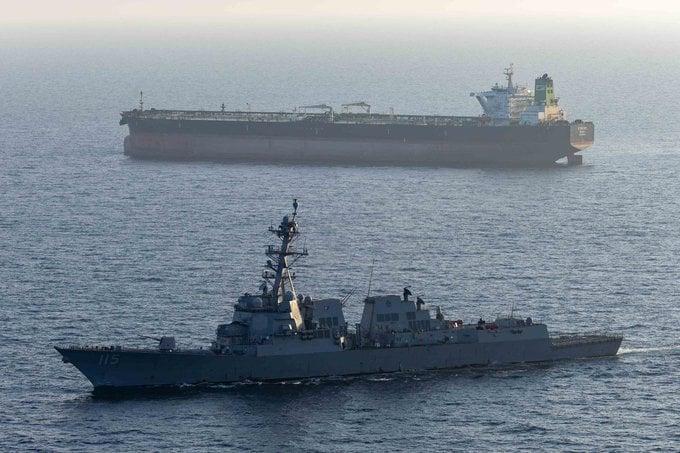
The same DW account says “US forces released the vessel after conducting a search and confirming the ship's voyage would not include an Iranian port call,” and adds that “American forces continue to operate and enforce the blockade across the Middle East,” with “So far, 39 vessels have been redirected to ensure compliance.”
CryptoRank ties investor sentiment directly to the Hormuz proposal, stating that “US President Donald Trump and his national security team discussed Iran’s proposal regarding the Strait of Hormuz,” and that “White House press secretary Karoline Leavitt confirmed on Monday” the proposal’s core condition: reopening if the U.S. lifts its blockade and the war ends.
CryptoRank also reports expected market moves, saying “Germany’s DAX is projected to rise by 0.23%,” “France’s CAC 40 is seen gaining 0.34%,” and “Italy’s FTSE MIB is also expected to trade 0.3% higher,” alongside “the UK’s FTSE 100 index is expected to open slightly higher.”
The same CryptoRank piece notes that “Oil prices edged higher overnight,” linking the move to “concerns about supply disruptions and the broader implications of the conflict.”
Al Jazeera’s day-60 roundup similarly emphasizes the stakes of Hormuz reopening, saying the route is “a crucial maritime route through which one-fifth of global oil passes,” and it situates the diplomatic push amid ongoing tensions.
Nuclear leverage and war risks
The sources repeatedly return to the nuclear file as the central leverage point that could determine whether Hormuz-first steps lead to a durable agreement.
“The White House is weighing an Iranian proposal that would see the United States and Iran immediately lift their blockades in the Strait of Hormuz but delay talks regarding Iran’s nuclear program and a larger peace deal”
ynetnews reports that U.S. officials told CNN that “Opening the strait without resolving the question of Iran’s uranium enrichment would remove a large part of American leverage in the talks,” and it adds that the proposal’s sequencing is tied to concerns about what the U.S. would gain or lose.
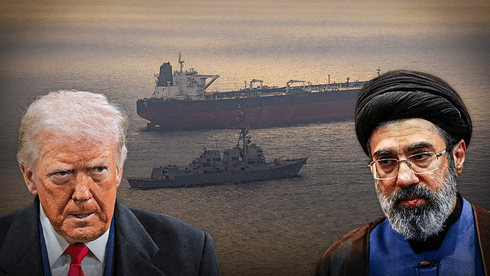
South Florida Reporter describes the administration’s “core demand” as “the total removal of Iran’s stockpile of 60% enriched uranium and a 10-year moratorium on further enrichment,” while it says the Iranian proposal instead seeks “economic relief first” and delays nuclear discussions “to a ‘later stage.’”
The same South Florida Reporter account quotes Rubio’s framing of the strait as “recognized under international law as international waterways,” and it links the administration’s stance to a concern that Iran could use control of the “21-mile-wide choke point” to “hold the global economy hostage.”
Al Jazeera’s roundup adds that critics say Trump’s negotiators—naming Jared Kushner, Steve Witkoff and JD Vance—lack nuclear expertise, describing this as “a ‘crucial weakness’” in the context of negotiations.
In parallel, ynetnews reports that Iran’s parliament committee spokesman Ibrahim Rezaei reiterated Tehran’s position, saying, “We will not compromise on the nuclear issue, and we have many surprises,” and it quotes Iranian military spokesman Mohammad Akrami Nia: “We do not see the war as over,” adding, “The conditions are still considered wartime conditions, and accordingly, the target bank and the forces’ equipment have been updated.”
The الحرة report states that the Iranian proposal places “the management of the Strait of Hormuz first, and the nuclear file last,” while it says the Washington framework reverses that entirely with “uranium first,” leaving “These positions do not intersect.”
More on Iran

US Besieges Iranian Ports as Trump Mulls Extended Blockade, Driving Oil Prices Higher
10 sources compared

Oil Prices Surge as US Siege of Iranian Ports Threatens Strait of Hormuz Supply
11 sources compared
Trump Receives CENTCOM Briefing on Potential U.S. Military Action Against Iran Thursday
13 sources compared
Pentagon Says Iran War Costs $25 Billion So Far, Acting Comptroller Jules Hurst III Tells Congress
37 sources compared