Technology and Science01 June, 20262 min read
USDA Confirms New World Screwworm Fly Reappears In Southern Texas Ranch
This article is an automated aggregation of coverage from news outlets. Our editorials offer in-depth analysis curated by the NewsCord team.
USDA confirms New World screwworm reappears in South Texas cattle. Eradicated for decades; last Atlantic-wide eradication occurred about 60 years ago.

Screwworm returns in Texas
The New World screwworm fly has reappeared in the United States, with the U.S. Department of Agriculture confirming on Wednesday, June 3, its presence in a ranch in southern Texas near the Mexican border.
Franceinfo reported that a case of cutaneous myiasis caused by the parasite was detected in a three-week-old calf in Zavala County, Texas, and said the USDA described the larvae as burrowing into the flesh of living animals.
Euronews said the case was detected in a three-week-old calf in La Pryor, Texas, about 80 kilometers from the U.S.-Mexico border, and quoted Agriculture Secretary Brooke Rollins saying, "Nothing suggests this incursion will lead to the parasite establishing itself in our country."
Euronews also reported that Texas State Veterinarian Bud Dinges established a 20-kilometer quarantine zone, prohibiting the movement of any warm-blooded animal, including pets, outside the zone without inspection.
USDA response and costs
Brooke Rollins rejected the idea that cuts to foreign aid contributed to the bollworm’s appearance, telling a reporter in La Pryor, Texas, "That has absolutely nothing to do with it," and saying the USDA had increased staff from 10 full-time employees to more than 120. In the same account, Rollins said the USDA has been able to allocate resources and "redouble efforts, with a 1,000% increase compared to what we found," and said it spent a year working to keep the pest out of the country.
Yalibnan said the Department of Agriculture is gearing up for a $1 billion+ fight against the screwworm and that it would cost about $750 million to set up a plant to produce and release 300 million sterile male screwworms every week. Yalibnan also stated that the first case in the U.S. was detected in South Texas on June 3 and that there are now 12 confirmed cases in the U.S., including 11 in Texas and one in New Mexico.
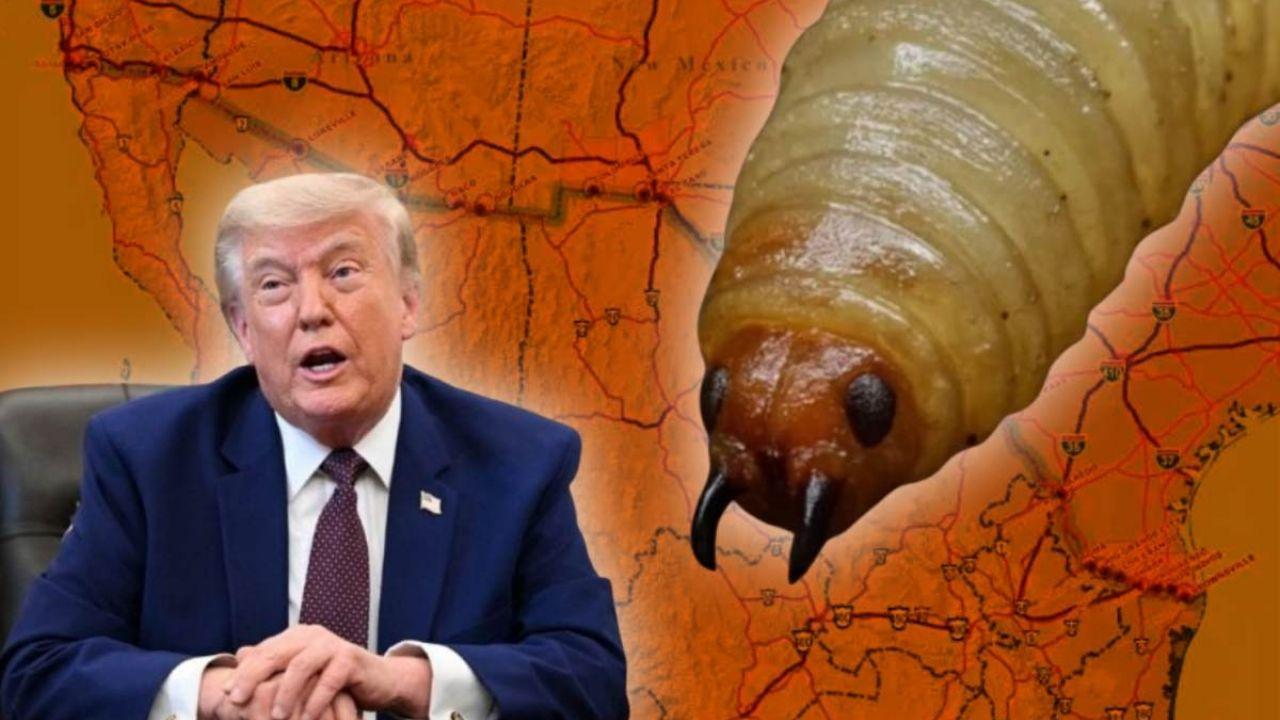
Political stakes and trade
Yalibnan framed the screwworm as turning an agricultural problem into a political one for Trump and the GOP, citing a possible $1 billion+ response and saying the outbreak could exacerbate vulnerabilities tied to soaring beef prices and accelerating inflation. The outlet said Trump officials are pointing the finger at the Biden administration and attributing the spread of the flies to the northward migration of people and livestock, while it quoted Rollins on X writing, "The threat didn’t appear overnight; it was the direct result of the Biden-Harris Admin’s WEAK foreign policy agenda and FAILED immigration policies."
In Mexico, Álvaro Bustillos, president of the Regional Cattlemen's Union of Chihuahua, warned that the confirmation of the first case of the bark-boring worm in the United States classifies the neighboring country as 'positive' and demanded Mexico respond reciprocally in trade. El Heraldo de México reported that Bustillos said Mexico has a capacity of 100 million sterile flies, below the 500 million needed for effective control, and added that he urged a "mirror operation" by closing the border to importation of cattle and live animals from the United States.