Full story
A month of searching
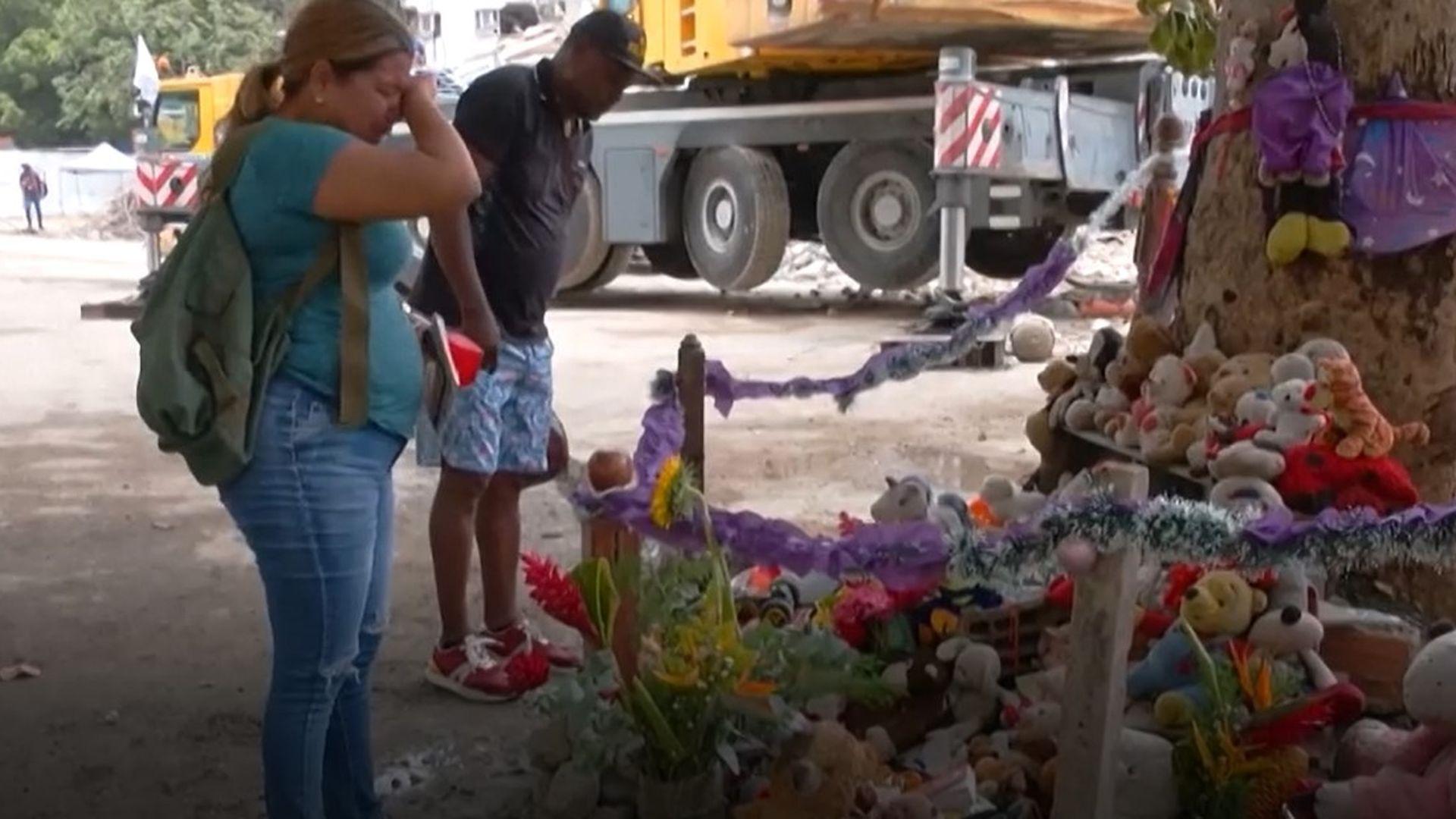
A month after twin earthquakes struck Venezuela on 24 June, families in La Guaira—where the BBC said the region was “worst-hit”—continued searching for remains of loved ones among flattened apartment buildings along the coast.
“The World Bank has said that the powerful earthquakes that struck Venezuela in late June caused an estimated $19”
The BBC reported that government officials say the death toll has surpassed 5,300, while estimates of those still missing could be as high as 50,000.

In Caraballeda, survivors were being cared for at a makeshift hospital formed on the site of a country club, as the BBC’s Will Grant returned to find families continuing their search a month on.
The Telecinco report said “Miles de fallecidos siguen debajo de los escombros” and described people continuing to look for relatives with their own means because there was “sin maquinaria pesada” to rescue and deliver bodies to families.
Telecinco also cited Zuly Mejías, director of 'Otro enfoque', saying suicides increased as people “Han tomado la decisión de quitarse la vida al haber perdido todos sus familares, al haber perdido sus viviendas.”
Missing, damage, and aid
While the BBC said estimates of those still missing could be as high as 50,000, Euronews reported that the Venezuelan government’s balance rose to 5.398 fallecidos, with injuries at 16.740 and 17.907 people having lost their homes.
The World Bank estimated that the earthquakes caused $19.6bn in physical damage, and said 47 percent of the damage occurred to residential buildings and 27 percent to infrastructure.

Al Jazeera quoted World Bank vice president for Latin America and the Caribbean Susana Cordeiro Guerra saying, “Recovering effectively begins with reliable evidence.”
Euronews said President of the National Assembly Jorge Rodríguez informed the public via Telegram that the death toll reached 5.398 after 52 more deaths were added in the last hours.
The World Bank report also described how the estimate was conducted using Global Rapid Damage Estimation (GRADE), relying on local seismic data, remote-based earthquake modelling, satellite imagery, and damage reports from government and humanitarian groups.
Reconstruction and health risks
The Red Cross said the recovery is far from over, with Scott Craig telling reporters, “This disaster is far from over,” as he described health care, mental health support, and access to drinking water as immediate priorities.
“Families in Venezuela are still searching for the remains of their loved ones, lost amid the rubble of flattened apartment buildings that line the coast of La Guaira, the region worst-hit by twin earthquakes on 24 June”
Euronews reported that 23.335 people remained in 107 transitory camps, while 128.324 families had received some type of attention from authorities.
Courrier international said authorities were worried about a resurgence of diseases linked to living conditions of the displaced, and it cited rising dysentery cases recorded by the Health Ministry between June 28 and July 4.
RTVE.es reported that the Spanish Emergency Committee spokesperson Eloísa Molina emphasized the need for coordinated information about missing people, warning that figures must be “muy cautas” as work continues to locate them.
Looking ahead, the same RTVE.es report said shelters are temporary and that it is “essential to work so that all these people have safe housing, safe spaces, and family reunification,” while also stressing priorities such as clean water, sanitation and hygiene.