South America · 06 July, 2026 · 2 min read
Venezuela Searches for Missing People in La Guaira After Twin Earthquakes
Death toll tops about 5,300–5,400, with thousands still unaccounted. Missing persons estimated tens of thousands, up to 50,000.
How many people are missing.
7 of 9 outlets skipped it: world Bank damage estimates and recovery costs framing.
40outlets compared
Same story, two versions
tap a side to read it in full
Euronews
“Las autoridades venezolanas no han publicado en ningún momento una cifra oficial”Read the original ↗
BBC credits officials on missing up to 50,000; others stress no official figure.
A month of searching
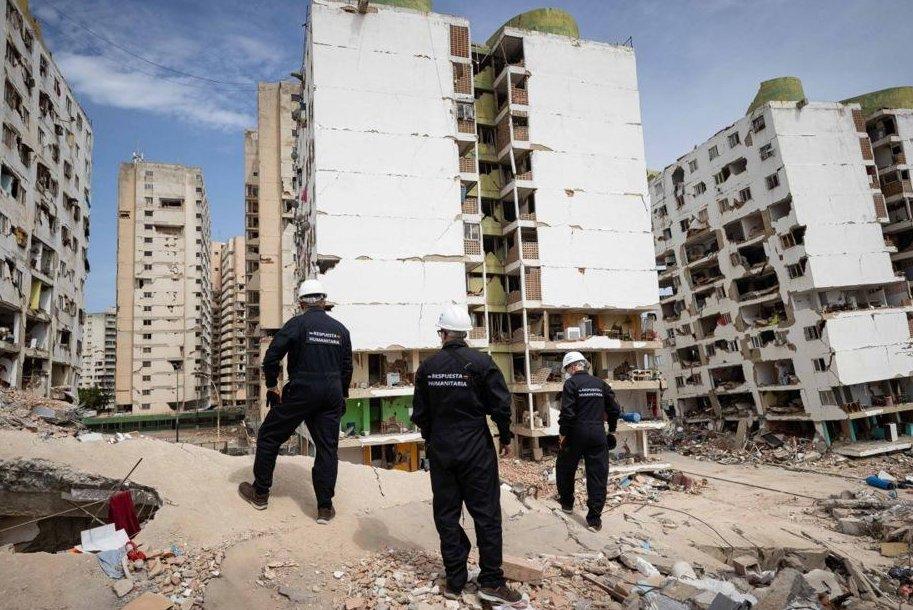
A month after twin earthquakes struck Venezuela on 24 June, families in La Guaira—described by the BBC as the region worst-hit by the quakes—were still searching for the remains of loved ones amid rubble from flattened apartment buildings.B
“Families in Venezuela are still searching for the remains of their loved ones”
Government officials told the BBC the death toll has surpassed 5,300, while the BBC reported estimates of those still missing could be as high as 50,000.B

Euronews said the Venezuelan government raised the balance to 5.398 fallecidos, adding 52 deaths, while injuries remained at 16.740.E
Euronews also said Delcy Rodríguez reported that 17.907 people had lost their homes, and that the figure had fluctuated after previously being stable from 7 de julio.E
In the same month-long aftermath, the BBC described a makeshift hospital formed on the site of a country club in Caraballeda, where survivors were being cared for as searches continued.B
Missing numbers diverge
The BBC reported that estimates of the number still missing could be as high as 50,000, even as government officials said the death toll had surpassed 5,300.B
Telecinco said the Government asked many families to undergo ADN tests to try to match them with bodies that had not been identified, and it quoted Zuly Mejías, directora de 'Otro enfoque': "Han tomado la decisión de quitarse la vida al haber perdido todos sus familares, al haber perdido sus viviendas".

Euronews said Venezuelan authorities had not published an official missing persons figure, and it cited the citizen initiative "Desaparecidos Terremoto Venezuela" as having surpassed 29.000 registros.E
Euronews also said the United Nations Office for the Coordination of Humanitarian Affairs handled a June figure that raised the total to 50.000, a number it said Venezuelan authorities never corroborated or denied.E
In parallel, Telecinco described the search continuing without heavy machinery, with families using their own hands to look for relatives as the “tragedia en La Guaira solo acaba de empezar”.
Recovery, health, and aid
As rescue operations shifted toward humanitarian aid and reconstruction, the BBC described survivors being cared for at a makeshift hospital in Caraballeda while families continued searching along the coast of La Guaira.B
“"Recovering effectively begins with reliable evidence."”
Euronews said 23.335 people remained in 107 campamentos transitorios, and it reported that 128.324 familias had received some kind of attention from authorities.E
Euronews also said damages remained significant, with 856 edificios afectados and 190 colapsados, and it reported 1.463 réplicas contabilizadas since the original quake.E
The World Bank estimated the earthquakes caused $19.6bn in physical damage, and Al Jazeera quoted World Bank vice president for Latin America and the Caribbean Susana Cordeiro Guerra saying, "Recovering effectively begins with reliable evidence."
In the health aftermath, Courrier international reported that the number of dysentery cases detected rose to more than 16,000 between June 28 and July 4, compared with 12,700 on a seasonal average, and it said the Venezuelan Society of Infectious Diseases warned about progressive disease development as living conditions deteriorate.