Lebanon · updated 2h ago · 2 min read
Israeli Air Strikes Kill At Least 10 In Southern Lebanon As Talks Postponed
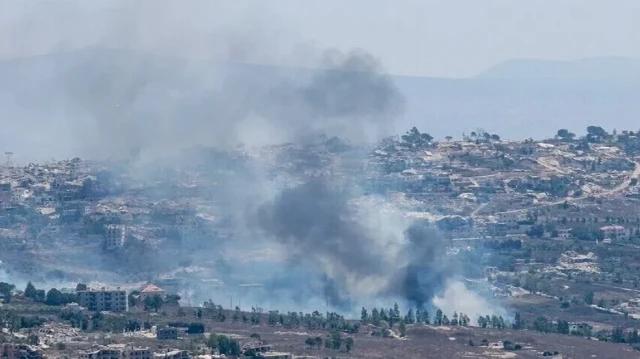
Israeli air strikes kill 10 people across Nabatieh, Arab Salim, Nabatieh al-Fawqa, Kfar Roummane. US-mediated Israel-Lebanon talks postponed as strikes devastate southern Lebanon and buildings are demolished.
Whether talks are postponed and the basis for reporting.
5 of 7 outlets skipped it: no casualties reported in one round of attacks.
www.haaretz › Middle East News › Lebanon News was read line by line by the Watchdog: 6.1. See the score →
18outlets compared
Same story, two versions
tap a side to read it in full
Al Jazeera
“The next round of United States-mediated talks between Israel and Lebanon has been postponed”Read the original ↗
Haaretz
“Talks between Israel and Lebanon that were scheduled to take place in Rome next week are expected to be postponed until October”Read the original ↗
They align on postponement but differ on reporting detail and certainty.
Air strikes and talks
Israeli air strikes on southern Lebanon began at dawn on Sunday, killing at least 10 people, according to local media and Al Jazeera’s Zeina Khodr.A
“Israeli air strikes on southern Lebanon began at dawn on Sunday, killing at least 10 people.”
The attacks hit Nabatieh, Arab Salim, Nabatieh al-Fawqa and Kfar Roummane, as the next round of United States-mediated talks between Israel and Lebanon was postponed.

Lebanese President Joseph Aoun confirmed in a sudden visit to Nabatieh on Saturday that “there will be no new negotiations with Israel at the moment.”
Earlier, AFP quoted an unnamed US official saying the next round of talks scheduled for this month in Rome would not be happening until October, while Lebanese and Israeli ambassadors would instead meet at the Department of State next week.
Drones, demolitions, and blame
In Mansouri, residents gathered at a vantage point in neighboring Hanniyeh to watch Israeli drones descend carrying boxes laden with explosives to be dropped on houses, as the Israeli military occupied large swaths of southern Lebanon.
The Associated Press reported that early Friday the Israeli military detonated the village's public school, and that Ali Hussein Ghanem, a tobacco farmer from Mansouri, said: “This is something that should never happen.”

Wissam Khashabi, a beekeeper from Mansouri, told AP, “We are seeing our land being destroyed,” adding that “The state is not really doing anything.”
The AP account said active fighting between Israel and Hezbollah simmered down since they entered into a truce in June, but that more than 300,000 people remain displaced and there is “no political solution in sight that would allow them to go home.”
IDF stance and stakes
After Thursday’s Israeli strike on a strategic Hezbollah stronghold, Israeli military officials reiterated on Friday that the IDF has no intention of withdrawing from areas Israel holds in southern Lebanon, with the subject described as one for ongoing diplomatic negotiations.
“Israeli military officials reiterated on Friday that the IDF has no intention of withdrawing”
Haaretz reported that Israeli military officials framed withdrawal as a matter for diplomatic talks even as Israeli forces continued to strike and demolish buildings across southern Lebanon.H
In parallel, Al Jazeera reported that the Israeli army continued attacks on southern Lebanon on Monday with artillery shelling and heavy machine-gun fire directed at the outskirts of towns including Shuqra and Barhashit, in a continuous breach of the ceasefire agreement signed in Washington on June 26.A
Al Jazeera also cited Israeli Defense Minister Yoav Gallant threatening to “ eliminate anyone who approaches” Al-Ali al-Tahir Heights and asserting the area is 700 square kilometers, as Lebanese and Israeli officials were expected to meet for another round of U.S.-mediated talks in Rome next month. A