Crypto22 June, 20262 min read
Wall Street Journal Says Polymarket Paid Creators to Stage Fake Bets on Copycat Sites
Polymarket paid creators to film fake bets on copycat versions of its site. Around $1.9 million in shown wagers were fake across about 1,100 videos.

Fake bets for viral growth
A Wall Street Journal investigation described how Polymarket paid college-age creators to stage up to $1.9 million in fake bets on copycat versions of its website, with the WSJ team reviewing at least 1,105 videos and finding none of the wagers to be real.
“Polymarket paid college-age creators to stage up to $1.9 million in fake bets.”
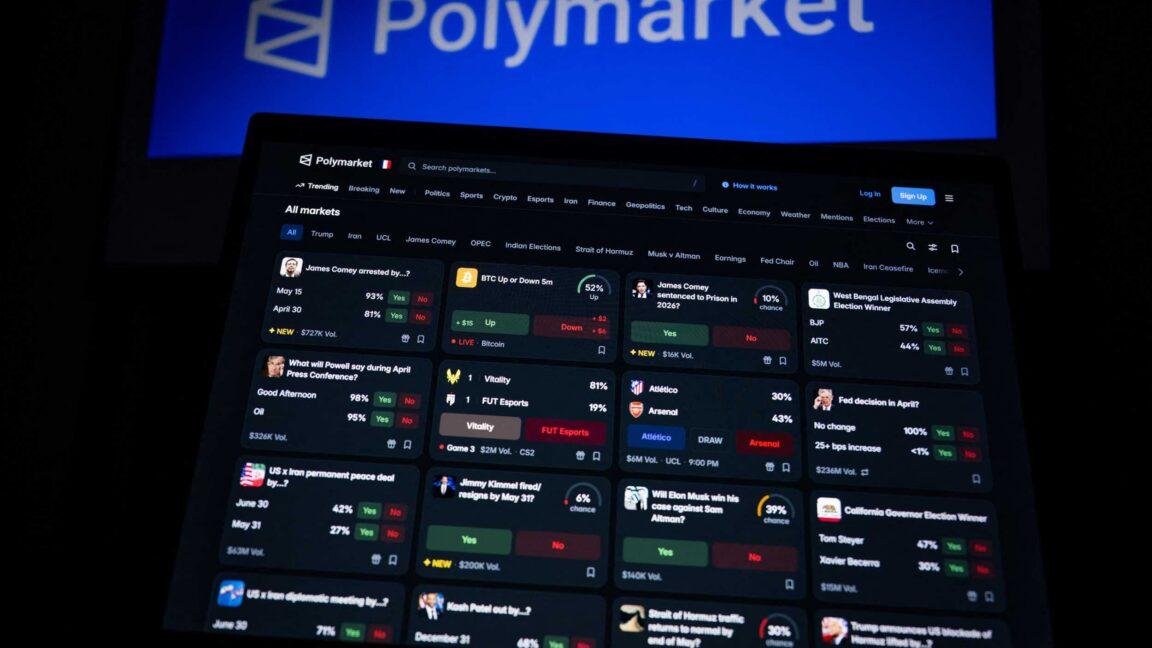
The report said Polymarket’s promotional content claimed trades were settled in USD Coin (USDC) on the Polygon blockchain, but the creator videos instead showed trades placed on dummy sites like “poiymarket.com,” created to mirror the real platform.
In one example, a college student named George Makihara appeared to win $100,000 on a bet that U.S. President Donald Trump would say “McDonald’s” in January, but the footage used to justify the winning was older and more than 50 real accounts that placed the same bet in January all lost.
The investigation also said creators were paid $2,000 to $3,000 a month to post videos of bets seemingly placed and won, while being told to refrain from disclosing that they received payments for the clips.
Targeting Americans, hiding pay
The Defiant reported that Polymarket employed marketing firm Virality to manage a network of “clippers,” mostly college-age influencers, and that creators were paid only when at least 60% of their audience was based in the U.S. The Cryptonomist said the clips collectively drew more than 140 million views across TikTok, YouTube, and Instagram, while Polymarket remained barred from serving U.S. users since a 2022 settlement with the CFTC.
In the January Makihara example, the WSJ investigation described how Trump never said the word publicly in January and how the footage was filmed two months earlier, even as the clip showed a $100,000 celebration. Polymarket told the Journal it is “committed to maintaining accurate, fair, and transparent markets” and planned a comprehensive audit of its promotional content, as the controversy centered on staged wins and undisclosed payments.

Regulators, audits, and integrity
The Defiant said the findings arrived as Polymarket pursued U.S. regulatory approval and institutional backing, including Intercontinental Exchange’s roughly $2 billion investment across successive funding rounds. It also reported that the CFTC, under Chair Mike Selig, warned that forcing prediction markets offshore risks an FTX-style implosion, and that the CFTC had already sued Wisconsin and New Mexico to block state gaming laws from reaching federally regulated prediction markets.
The Cryptonomist added that the campaign targeted American users despite restrictions preventing Polymarket from offering its primary crypto prediction market platform to U.S. residents since the 2022 CFTC settlement, with Americans able to access the offshore platform through a VPN. As Polymarket said it would audit promotional content, the allegations raised questions about market integrity for institutional counterparties that rely on prediction market prices as a real-time data layer, according to The Defiant’s account of the institutional ambitions around Polymarket.