Technology and Science17 April, 20267 min read
Warming Seas Push Great White Sharks And Tuna Toward Potentially Fatal Overheating
This article is an automated aggregation of coverage from news outlets. Our editorials offer in-depth analysis curated by the NewsCord team.
Warm-bodied great whites and tunas risk fatal overheating as oceans warm. They burn nearly four times more energy than cold-blooded species.
Overheating in the open ocean
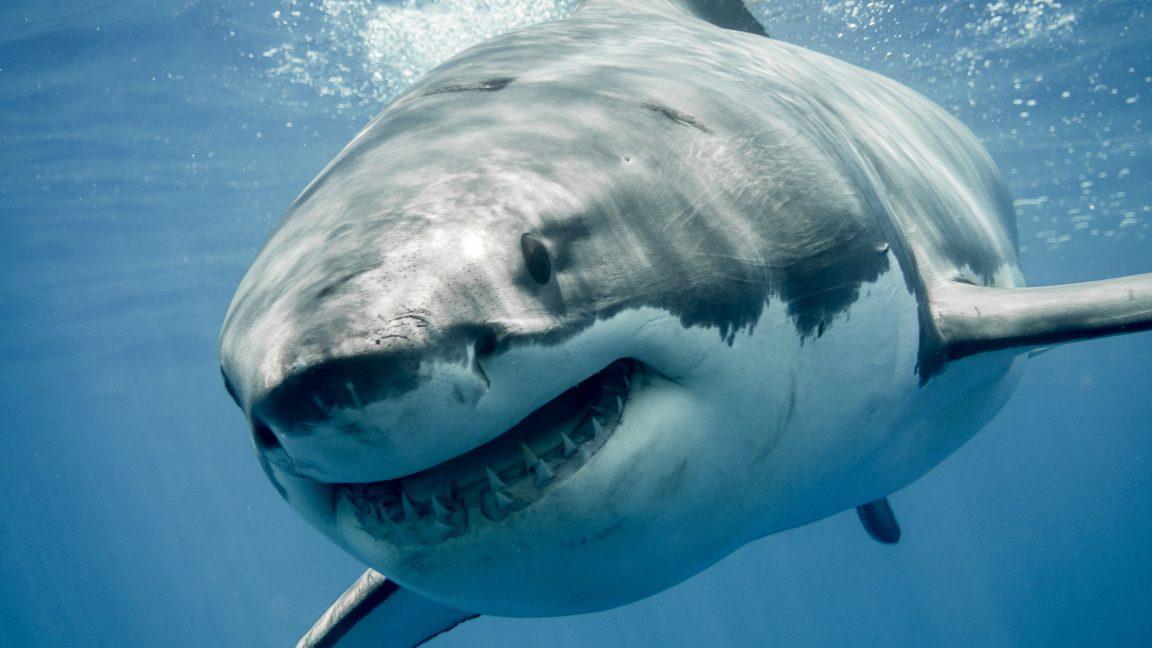
A new report in Science warns that some of the ocean’s fastest predators—great white sharks and tuna among them—are “paying an increasingly steep price” as warming seas push them toward “potentially fatal overheating.” The problem centers on “mesothermic” species, described as a rare group “comprising fewer than 0.1 percent of all marine life,” whose bodies run hot and require more fuel to maintain their temperature. Ars Technica says these warm-bodied predators face a “double jeopardy” as “warming oceans and declining food, mainly from overfishing” combine to squeeze their energy budgets.
The same account says that as water temperatures climb, mesotherms will be forced to relocate to cooler waters, and that they may have to “slow down, alter their blood flow or dive to cooler temperatures” while still hunting. Trinity College Dublin’s release similarly frames the finding as “double jeopardy” and says warm-bodied fish “burn nearly four times more energy than their cold-blooded counterparts.”
In the ScienceDaily write-up, the study’s method is described as using “biologging data—from small sensors that record body and water temperatures” to estimate metabolic rates in fish swimming freely in the wild. Together, the sources depict a physiology-driven heat problem that is becoming harder to manage as oceans warm and prey availability declines.
Fuel, heat, and the physics
The sources attribute the overheating dilemma to how mesothermic physiology interacts with ocean temperatures and with the scaling of heat production as animals grow.
Ars Technica explains that mesotherms “burn nearly four times as much energy as their cold-blooded counterparts,” and that this elevated fuel demand is tied to maintaining warmer body temperatures than the surrounding seawater.
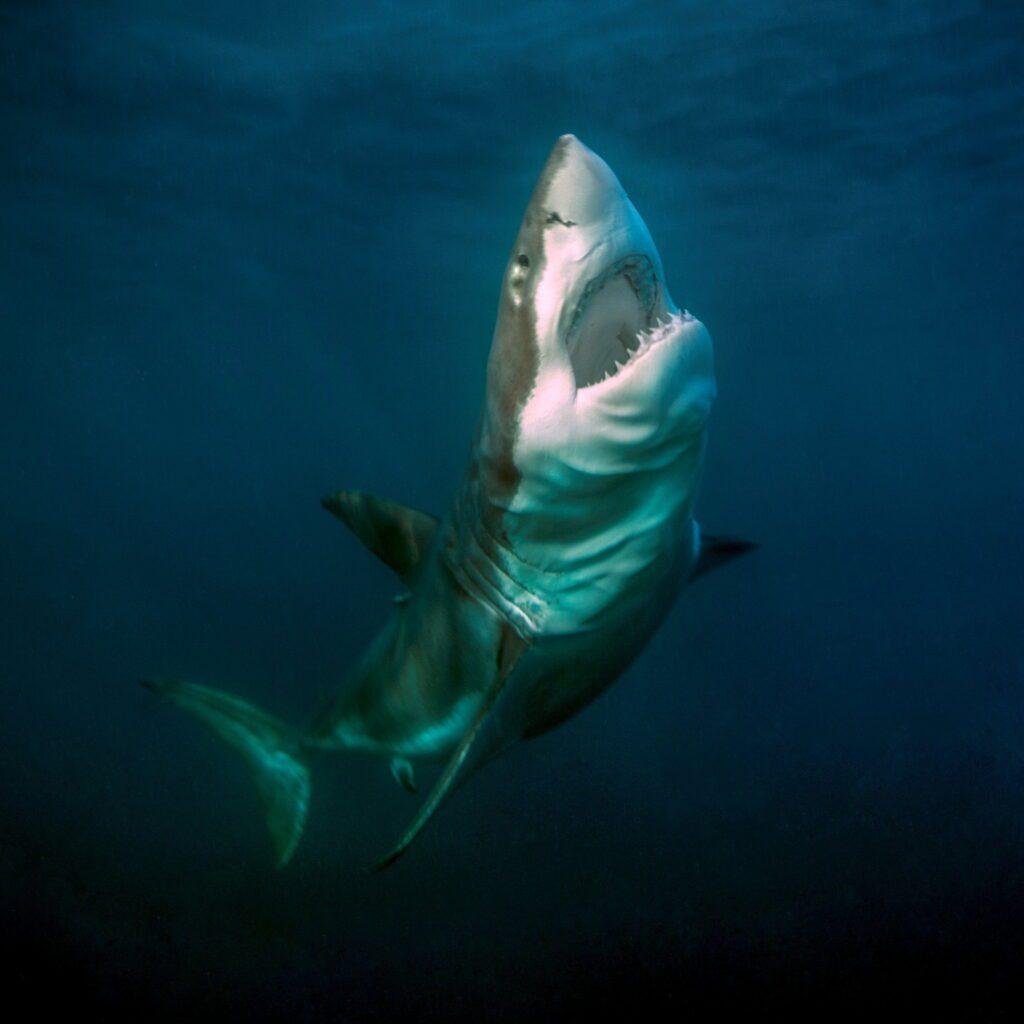
It adds that “a rare group comprising fewer than 0.1 percent of all marine life” includes “thresher and porbeagle sharks” alongside great whites and basking sharks, and that their heat retention has been “evolutionarily key” for “higher swimming speeds, enhanced predation and their long-distance migrations.”
ScienceDaily and Trinity College Dublin both quantify the energy difference more precisely, saying researchers found mesothermic fishes “use about 3.8 times more energy than similarly sized ‘ectothermic’, or ‘cold-blooded’ fishes.”
ScienceDaily also provides a temperature-sensitivity detail, quoting Dr. Nicholas Payne that “a 10°C increase in body temperature more than doubles a fish’s routine metabolic rate.”
The same materials connect the energy demand to a geometry-and-physics mismatch: Payne says “as fish grow larger their bodies generate heat faster than they can lose it,” creating “a mismatch driven by basic geometry and physics.”
Trinity College Dublin’s release echoes that explanation, stating that “bigger bodies retain heat more effectively, and in mesotherms, high metabolic rates amplify this effect.”
Heat-balance thresholds and behavior
Beyond energy use, the study described in the sources builds toward specific “heat-balance thresholds” that indicate when large warm-bodied fish cannot shed enough heat to keep stable body temperatures. Professor Andrew Jackson is quoted in ScienceDaily describing how the team created “theoretical ‘heat-balance thresholds’,” defined as “the water temperatures above which large fish cannot shed heat quickly enough to maintain stable body temperatures without changing their behaviour or physiology.” He gives a concrete example: “a 1-tonne warm-bodied shark may struggle to remain in heat balance in waters above about 17°C.”
The same threshold logic is repeated in Trinity College Dublin’s release, which says “For example, a 1-tonne warm-bodied shark may struggle to remain in heat balance in waters above about 17°C.” ScienceDaily then spells out the behavioral and physiological countermeasures that would be required above those limits, quoting Jackson that “fish must slow down, alter blood flow, or dive into cooler depths to avoid dangerous warming.”
The sources emphasize that these changes come with costs, with Jackson saying “it might be harder to find food, or catch it, for example -- especially if your main weapon is speed and power.” Ars Technica similarly describes the options as “slow down, alter their blood flow or dive to cooler temperatures,” while also noting that they must do so “all while hunting for an ever-dwindling food supply.”
Who said what about the findings
The sources include multiple named researchers and institutions, each emphasizing different implications of the same overheating mechanism.
Nick Payne, described as lead author and associate professor at Trinity College Dublin, is quoted in Ars Technica saying, “If you’re a shark, you can’t just pop down to the supermarket and buy more food,” and he adds, “We’re seeing animals move with climate change in every biome on land and in the sea; this is just another example of that mechanism.”

In ScienceDaily and Trinity College Dublin’s release, Payne is also quoted on the metabolic cost, saying “The results were really quite striking -- after accounting for body size and temperature, we found that mesothermic fishes use about 3.8 times more energy than similarly sized 'ectothermic', or 'cold-blooded' fishes.”
He further explains the scaling mismatch, saying “This creates a mismatch driven by basic geometry and physics because bigger bodies retain heat more effectively, and in mesotherms, high metabolic rates amplify this effect.”
Professor Andrew Jackson, senior author, focuses on the “heat-balance thresholds” and the behavioral tradeoffs, warning that above those temperatures “fish must slow down, alter blood flow, or dive into cooler depths,” but that “it might be harder to find food, or catch it, for example -- especially if your main weapon is speed and power.”
Dr. Edward (Ned) Snelling, UP, is quoted in Trinity College Dublin’s release saying, “This research shows that being a high-performance predator in the ocean comes at a greater cost than we previously appreciated,” and he adds that “these species are being pushed closer to their physiological limits.”
Across the quotes, the message is consistent: the physiology that once enabled dominance now makes survival more constrained as warming and food scarcity intensify.
Different outlets, same core message
While the underlying study is consistent across outlets, the sources emphasize different angles—ranging from conservation urgency to the mechanics of measurement. Ars Technica frames the story around the “evolutionary edge” that could become “its greatest downfall,” and it highlights that mesotherms “burn nearly four times as much energy” and face “double jeopardy” from warming and declining food. ScienceDaily and Trinity College Dublin both foreground the study’s quantitative findings and methods, describing biologging sensors that record “body and water temperatures” and reporting that mesothermic fishes use “about 3.8 times more energy.”
Trinity College Dublin also stresses the habitat outcome, saying the “double jeopardy” “may result in a reduction of suitable habitat and an enforced relocation towards the poles.” Discover SWNS and Down To Earth both use the same “double jeopardy” language but add conservation framing, with Discover SWNS saying the findings should set “alarm bells ringing loudly” for shark conservation and Down To Earth warning that there is “no guarantee that they will be able to find suitable prey” in cooler areas.

EurekAlert! provides a different kind of presentation, centering on an image caption for “Great white shark (_Carcharodon carcharias_)” and noting that the “large and warm-bodied great white shark” has “high fuel demands and risks overheating in warm oceans”. Across these variations, the sources converge on the same core claims: mesothermic fishes have high energy costs, warming increases overheating risk, and the “double jeopardy” of heat and food scarcity constrains where they can survive.
What happens next for ecosystems
The sources describe consequences that extend beyond individual fish, linking overheating risk to shifting distributions, seasonal movement, and potential ecosystem disruption. Ars Technica says that as suitable habitats shrink, mesotherm species will be forced to relocate to cooler waters, and it adds that this will be especially the case during summer months when sharks will face increased competition for prey. Trinity College Dublin similarly predicts that “suitable habitat for large mesotherms will shrink, and particularly so during summer months,” and it notes that Atlantic bluefin tuna can temporarily increase heat loss or dive to cooler waters.
ScienceDaily and Phys.org both describe the same seasonal and geographic pattern, saying the findings help explain why large fishes tend to occur in cooler waters, at higher latitudes, or at greater depths, and that many species migrate seasonally to stay within favorable temperature ranges. Inside Climate News adds an ecosystem framing by stating that mesotherms are “apex predators” that exert “disproportionate control on species below them in the food chain,” and it quotes Edward Snelling saying, “These species are being pushed closer to their physiological limits, which could have consequences for where they can live and how they survive.”
The same Inside Climate News text says the animals are “already operating on a tight energy budget” and that “climate change is narrowing their options even further.” The sources also point to the conservation and research implications of identifying “hidden heat budgets,” with Inside Climate News stating that “Discovering these ‘hidden heat budgets’ could prove critical to any hope of conserving them or mapping protection areas.”