
We must invest in early-warning systems to tackle crises like Kenya’s drought
Key Takeaways
- Dancliff Mbura is advocacy and communications manager at Action Against Hunger Kenya
- 3.3 million people in Kenya's arid and semi-arid counties are facing acute hunger
- The previous drought, four years ago, involved five consecutive failed rainy seasons
Scale and trajectory
Kenya is facing a deepening drought crisis that has left 3.3 million people in the country’s arid and semi-arid counties facing acute hunger just four years after the last devastating drought, and up from 1.8 million people six months ago.
“Dancliff Mbura is the advocacy and communications manager at Action Against Hunger Kenya”
If nothing changes, the number will climb to 3.7 million by August.
The crisis is visible in parched riverbeds, weakened animals and unusually quiet children, and the scale is different from previous cycles across the ASAL counties that cover nearly 80% of the country.
The October–December 2025 short rains delivered only 30 to 60% of the long-term average, making it one of the driest seasons since 1981, and in some areas rainfall failed almost entirely.
More than 90% of open water sources have dried up in most parts of ASAL counties, families are walking up to 20 km (12 miles) or more just to find water, and projections for the March–May rainy season are well below average across the hardest-hit northern counties, raising the prospect of a fourth consecutive poor season that could be catastrophic for communities that have exhausted their coping mechanisms.
Malnutrition and services
The drought is driving severe malnutrition and service breakdowns: more than 810,000 children between the ages of six months and five years are acutely malnourished, and nearly 117,000 pregnant and breastfeeding mothers are also acutely malnourished.
Approximately half of severe acute malnutrition cases are going untreated, and only 24% of the nutrition and health outreach sites mapped across the arid and semi-arid counties are currently functioning.
The cycle of nutrition that healthy communities depend on is breaking down, and every week without a scaled-up response leaves children hungry and families at greater risk.
Livelihoods and social harms
The economic devastation is compounding the humanitarian emergency: livestock losses are severe, with more than 50,000 sheep and goats dead in Marsabit county and nearly 30,000 animals lost in Mandera; milk production has plummeted by 55%.
“Dancliff Mbura is the advocacy and communications manager at Action Against Hunger Kenya”
As animals grow weaker, families receive less when they sell them, livelihoods are collapsing in slow motion, and households are running out of options.
That drives desperate social outcomes: more daughters are married off early in exchange for dowry like livestock, female genital mutilation rises so girls can be considered ready for marriage, and children drop out of school as families move in search of better land.
Response gaps and solutions
Humanitarian actors and the government know which responses work but currently lack the resources and systems to move fast enough: a coalition estimated the drought response would cost more than 30 billion Kenyan shillings ($232 million), and Kenya’s government has released just 6 billion shillings so far.
Recommended immediate measures include cash transfers, mobile health and nutrition outreach teams, and emergency water provision, but beyond the immediate response the article argues for investing in systems that reduce future drought damage.
Kenya’s National Drought Management Authority already produces monthly county and national early-warning bulletins with detailed data, but information must reach communities in time and be paired with resources that enable action.
The author proposes village-level climate change and disaster hubs to provide simplified, actionable information and support locally relevant early actions, and says with better technology including AI-assisted climate modeling precise early-warning information can prompt anticipatory moves—storing water, switching to short-maturity crops, moving livestock and food stocks to higher ground, applying preventative treatments, and selling livestock early to protect income.
The author, who has spent 15 years working on humanitarian response in Kenya, stresses urgency: if we do not act, lives will be lost—preventably; not because we lacked the knowledge, not because we lacked the warning—but because we were not able to move fast enough.
More on Africa

Somaliland Offers US Exclusive Access to Minerals and Military Bases to Win Recognition
10 sources compared
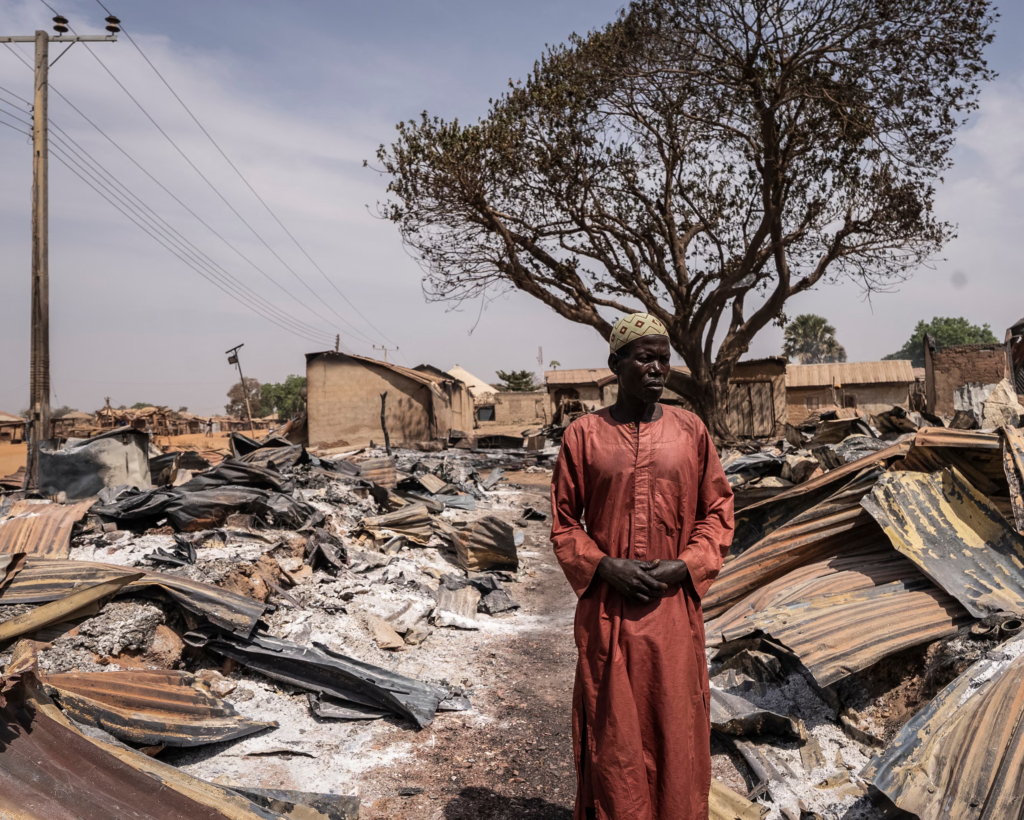
Boko Haram Gunmen Massacre Scores of Villagers in Kwara and Katsina After Sending Letter Asking to Preach
19 sources compared
Boko Haram Gunmen Massacre Villagers in Kwara After Sending Letter Asking to Preach
20 sources compared

Four Masked Gunmen Assassinate Saif al‑Islam Gaddafi at Zintan Residence
30 sources compared