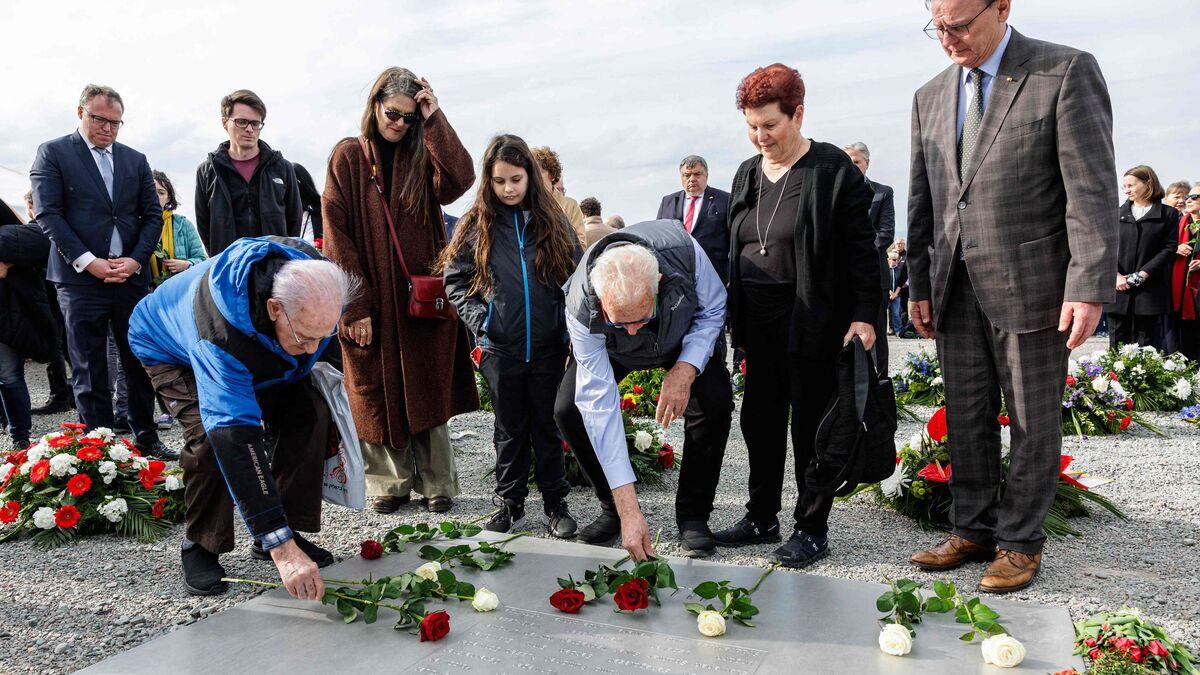
Yad Vashem President Dani Dayan Says Antisemitism Rises After Hamas October 7 Attack
Key Takeaways
- Dani Dayan says antisemitism rose after Hamas's October 7 attack.
- Holocaust memory must be maintained beyond a one-day remembrance.
- Germany will allocate 25 million euros to Holocaust survivors affected by Oct 7.
Holocaust memory and Gaza
The war in Gaza has become intertwined with Holocaust memory and the politics of antisemitism, as Dani Dayan, president of Yad Vashem, told Euronews that the “memory of the Holocaust and the lessons that follow from it should be remembered and implemented 365 days a year.”
“In November, Yad Vashem announced that the World Holocaust Remembrance Center had identified the identities of five of the six million Jews murdered during the Holocaust”
Dayan said the work of the World Holocaust Remembrance Center was not a “one-day job,” and he linked the center’s efforts to restoring dignity, describing how “the identification of the victims restores their dignity.”
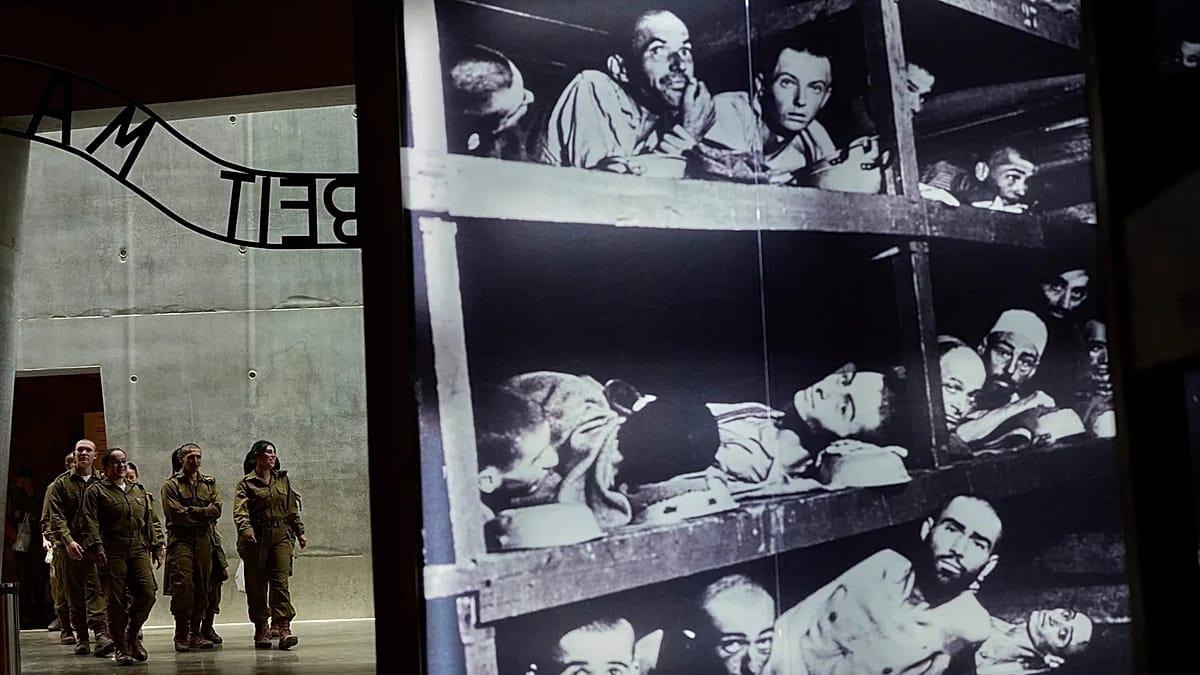
He also said that the situation in Europe has worsened since Hamas’s 2023 attack and the Israeli military operation that followed in Gaza, arguing that “Antisemitism is on the rise” and calling it “an old virus, centuries old.”
Speaking during a visit to Brussels to meet the President of the European Parliament, Roberta Metsola, Dayan said he could not say the same for “the landscape in Europe, within the member states themselves,” citing “rampant antisemitism and a distortion of the Holocaust in many of them.”
Dayan rejected attempts to compare the Hamas attack on southern Israel on October 7, 2023 with the Holocaust, telling Euronews, “October 7 is not a Shoah 2.0.”
He said, “October 7 was atrocious,” and added that while there were “similarities: the sadism, the cruelty, and the intent,” the difference was “much larger” because “Making this comparison, even though common in Israel, between the Holocaust and October 7 also plays into Hamas.”
In the same Euronews account, the context of hostages in Gaza was tied to the ceasefire timeline, with the body of the last Israeli hostage found in Gaza “one day before International Holocaust Remembrance Day,” and Israeli troops locating the body of police officer Ran Gvili in a Gaza cemetery and handing him back to Israel on Monday after 843 days.
Compensation and solidarity
Germany’s response to the October 7 attacks on Israel also appeared in the coverage as a financial measure aimed at Holocaust survivors affected by Hamas’s assault.
Le Parisien reported that Germany announced on Tuesday, April 9, that it would allocate an additional 25 million euros to its spending on compensation for Holocaust victims, describing it as a “symbolic payment.”

The article said the fund would enable a one-off payment to Holocaust survivors who lived through the Hamas attacks on October 7 in Israel, and it quoted a spokesperson for the German Finance Ministry saying, “Many Holocaust survivors have been particularly affected by the Hamas attacks, whether through the loss of their homes or disruptions to care services.”
Le Parisien said the “Israel Solidarity Fund” (SFI) consists of an emergency one-off payment from the German government of 220 euros per person, guaranteed by the Claims Conference in collaboration with the Israeli government’s Holocaust Survivors Rights Authority (HSRA).
It also stated that the total budget of the SFI program amounts to 25 million euros, and that “About 113,000 people are affected by this one-off payment.”
The Claims Conference president Gideon Taylor framed the payment as ongoing support during the conflict, saying, “Immediately after the horrific attacks on October 7, we began working to ensure that every survivor is first safe, then securely in a place where they can feel comfortable, and to ensure that they have financial support while the conflict continues.”
Taylor added, “This additional symbolic payment from Germany to Holocaust survivors in Israel is a message of solidarity,” and Le Parisien reported that disbursement had already begun since March and could be spread over several months depending on payments already received by some victims.
Famine claims and counterclaims
While Holocaust memory and compensation were being discussed in European coverage, Le Figaro focused on famine conditions in Gaza and the dispute over whether a famine exists.
“We cannot stay silent: Twelve Holocaust survivors condemn famine in Gaza”
It reported that the UN officially declared a famine in Gaza on Friday, and it quoted Israeli Prime Minister Benjamin Netanyahu calling it a “blatant lie,” while also saying his government threatens “total destruction of the city of Gaza if Hamas does not accept peace on its terms.”
Le Figaro said that after months of UN warnings and warnings from humanitarian NGOs, the UN’s Integrated Food Security Phase Classification (IPC) framework confirmed that a famine was underway in the Gaza governorate (northern Gaza).
The article stated that “According to UN experts, more than half a million Gazans are facing 'catastrophic' conditions,” describing the IPC’s highest level of food distress as “characterized by famine and death.”
Against that backdrop, Le Figaro published a condemnation letter from twelve Holocaust survivors, saying, “We cannot stay silent: Twelve Holocaust survivors condemn famine in Gaza.”
The signatories included Eva Clarke, born in the Mauthausen concentration camp on 29 April 1945, Ruth Shire, a Holocaust survivor of German origin sent to Oxfordshire to escape the Nazis by her parents at the age of 15, and Hanneke Dye, born in the Netherlands in hiding in 1943 during the Nazi occupation and sent to a foster family until the end of the war.
Le Figaro further provided casualty figures, stating that the October 7 attack killed 1,219 people on the Israeli side, mostly civilians, according to an AFP tally based on official data, and that the Israeli retaliatory campaign has killed at least 62,192 people in the Gaza Strip, mostly civilians, according to Hamas, while noting these figures could not be independently verified.
Voices, accountability, and framing
Across the articles, different voices connected the Gaza war to accountability and to the moral language of Holocaust remembrance.
Euronews quoted Dani Dayan saying the “memory of the Holocaust and the lessons that follow from it should be remembered and implemented 365 days a year,” while also describing antisemitism as “an old virus” that “metastasizes into a different manifestation.”
Dayan told Euronews that he rejects political alliances that use antisemitism or hate as a bridge, saying, “We see in Europe parties with evident neo-Nazi roots, and I do not want their support,” and he added, “We have no relationship with Yad Vashem, nor with the AfD (Alternative for Germany), nor with the FPÖ (Freedom Party of Austria), nor with others.”
In the same Euronews report, Roberta Metsola was quoted saying, “Today antisemitism is spreading faster than ever, amplified online and turning old lies into deadly realities,” and she said, “Remembering the Shoah is to fight hate wherever it manifests, before it can take root again.”
Le Figaro’s letter from Holocaust survivors similarly framed the Gaza war as a test of humanity, with the signatories writing, “Our anger must not lead us to dehumanize those we fear,” and warning that defense must not become “the slow death of Palestinian children by hunger.”
The letter also called on Hamas and on those with responsibility for aid, stating, “We join the Arab League and many governments to call on Hamas to immediately release all hostages, to stop using civilians as shields and to stop diverting aid.”
Le Parisien’s Gideon Taylor, meanwhile, framed Germany’s payment as solidarity and support for survivors during the conflict, saying, “This additional symbolic payment from Germany to Holocaust survivors in Israel is a message of solidarity.”
What comes next
The sources also point to immediate next steps and ongoing consequences tied to the Gaza war, including ceasefire phases, hostage issues, and humanitarian conditions.
“In November, Yad Vashem announced that the World Holocaust Remembrance Center had identified the identities of five of the six million Jews murdered during the Holocaust”
Euronews said that the finding of the body of the last Israeli hostage in Gaza “opened the way to the second phase of the ceasefire between Israel and Hamas,” and it described the release of all remaining hostages, living or dead, as “a key element of the first phase of the Gaza ceasefire.”
It also said Israeli troops handed back police officer Ran Gvili to Israel after 843 days, and that “It is the first time since 2014 that there are no Israeli hostages in Gaza.”
Le Figaro’s account of famine emphasized that the UN’s IPC framework confirmed famine in the Gaza governorate (northern Gaza) and that “more than half a million Gazans are facing 'catastrophic' conditions,” which the IPC defines as “characterized by famine and death.”
The Holocaust survivors’ letter urged action to prevent famine among Palestinians in Gaza, writing, “In the name of our shared humanity, we urge all those who have the responsibility to feed the most vulnerable and to prevent famine among Palestinians in Gaza to act.”
It also warned of the political and social consequences of hunger and war, asking, “But what would happen if, in trying to overthrow Hamas, the trauma of hunger and war prompted the next generation to seek vengeance?” and concluding, “It would be a Pyrrhic victory for Israel.”
On the European policy side, Le Parisien reported that Germany’s SFI disbursement had already begun since March and could be spread over several months, while the program’s structure was tied to the Claims Conference and the Holocaust Survivors Rights Authority (HSRA).
More on Gaza Genocide
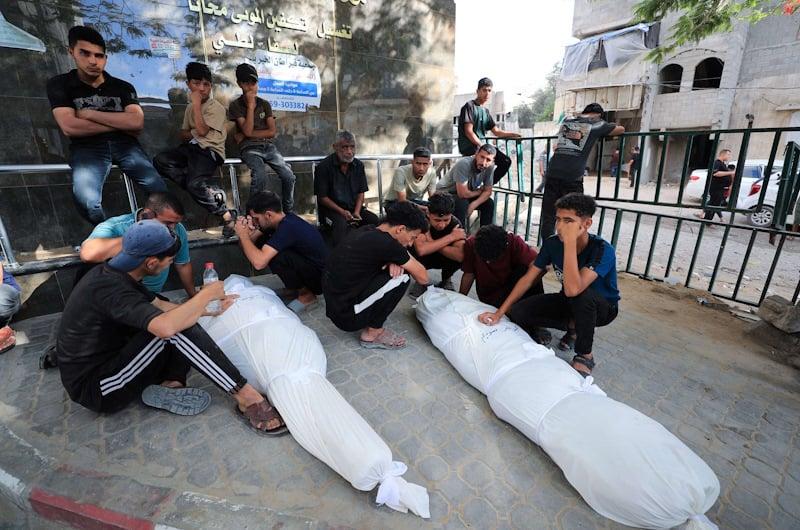
Israeli Forces Kill Three-Year-Old Palestinian Boy Rayan Abu Al-Ajeen in Central Gaza
11 sources compared

Israeli Drone Kills Nurse Mohammed Al-Habil and His Son in Gaza City
12 sources compared
Israel Plans To Control 100% Of Gaza, Squeezing Hamas, Netanyahu Says
11 sources compared
Iran Negotiator Mohammad Baqer Qalibaf Questions US Peace Commitment After Israel Attacks Beirut
10 sources compared