Yemen03 November, 20262 min read
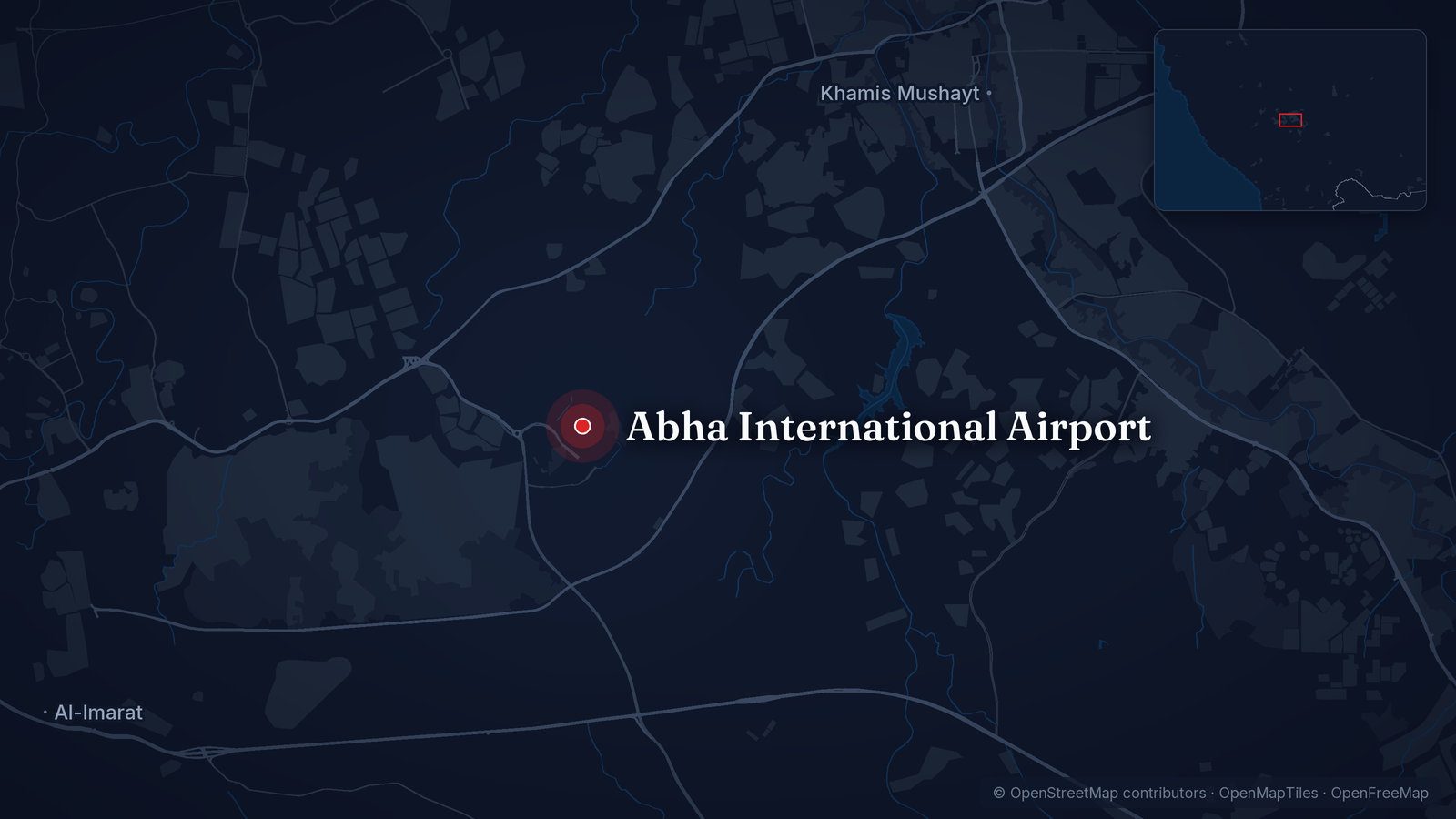
MapYemeni Armed Forces Strike Saudi Targets With Ballistic Missiles and Drone, Saudi Coalition Intercepts
“Defences ‘intercepted and destroyed a ballistic missile’ targeting Saudi Arabia’s southern region, said coalition spokesman Major General Turki al-Maliki in a statement on Monday.”
“General Saree indicated that a drone and ballistic missiles were used in the attacks and achieved direct hits.”
Map: © OpenStreetMap contributors, ODbL · Cropped for layout
This article is an automated aggregation of coverage from news outlets. Our editorials offer in-depth analysis curated by the NewsCord team.
Coalition intercepts a ballistic missile targeting Saudi Arabia’s southern region amid ongoing fighting. Yemeni Armed Forces claim drone and ballistic missiles hit Abha airport and Khamis Mushait base.
Save coverage image
Missiles and drones hit Saudi
Yahya Saree, the spokesman for the Yemeni Armed Forces, announced via Telegram that Yemeni forces carried out operations against pro-Saudi militias in al-Ara and al-Mudharaba areas and against Al-Jawf City, using ballistic missiles and a drone. Saree said the Yemeni Armed Forces targeted Saudi enemy concentrations in the Ras al-Ara and al-Mudharaba areas under the command of Saudi officer Badr al-Harbi, and the strikes were precise, resulting in dozens of enemy personnel killed or wounded, including several commanders. Saree also said the Yemeni Armed Forces targeted Abha International Airport with a drone, and the strike resulted in the disruption of air traffic at the airport.
Saree added that Yemeni forces targeted the Khamis Mushait Air Base with a ballistic missile, scoring a direct hit. The Saudi-led coalition later said its air defences intercepted and destroyed a ballistic missile targeting Saudi Arabia’s southern region, according to Major General Turki al-Maliki.
Al-Jawf fronts and Taiz siege
Al Jazeera reported that fighting raged along key fronts between the Houthis and forces loyal to the internationally recognised Yemeni government, with the coalition spokesman Major General Turki al-Maliki describing interceptions and destroyed attacks. Yemeni army spokesman Colonel Majed Abdullah al-Nazili said government forces conducted 1,272 “targeting operations” against Houthi fighters, fortifications and weapons supplies over 24 hours. Al-Nazili claimed government forces killed roughly 500 Houthi fighters and destroyed or disabled nearly 170 vehicles, equipment or heavy weaponry, while Al Jazeera said it could not independently verify the claims.
In southwest Yemen, Houthis continued to besiege Taiz by blocking the entry of food, fuel and medical supplies, and Taiz Governor Nabil Shamsan said 120 health centres had stopped operating and another 66 were close to shutting down since the Houthis cut off supply routes in early October. Nour al-Din al-Mansouri told Al Jazeera that at least 23 trucks were damaged or overturned in the past two weeks while seeking alternative routes to Taiz.
Saudi-UAE unity, Yemen fractures
Responsible Statecraft said the Houthis’ lightning advances in Yemen gave Saudi Arabia and the United Arab Emirates an opening to set aside their differences after a rupture over the country’s political makeup less than a year ago. The analysis pointed to Saudi Defense Minister Khalid bin Salman’s meeting with UAE President Mohammed bin Zayed on October 18, and it quoted bin Salman praising the “historical relations between our two brotherly countries.” Responsible Statecraft said the official readout did not announce a Yemen military agreement, while the Guardian separately reported that Abu Dhabi agreed to resume payments to government-aligned forces it had previously backed in southern Yemen.
The analysis described the risk that unresolved disagreements over the future of Yemen could limit the effectiveness of renewed military cooperation against the Houthis and deepen fragmentation elsewhere in Yemen. Responsible Statecraft also highlighted ideological friction around the Islamist Islah party, and it said the UAE has reportedly even hired mercenaries to assassinate the faction’s leaders.