Published

USA

U.S. Judge Noël Wise Blocks Trump Administration Deportations of Pro-Palestinian Students

Judge blocks deportations

A U.S. federal judge in California ruled that President Donald Trump’s administration violated the constitutional rights of international students when it sought to punish them for criticizing Israel’s war on Gaza by revoking visas and seeking deportations.

Image via XEVT

Consistent coverage

Where the coverage agrees

Most outlets agree on Wise striking Trump visa actions for protected student speech; bias is minimal

At a glance

  1. Judge Noel Wise ruled Trump administration violated First Amendment rights by targeting pro-Palestinian students.
  2. Court blocked deportation attempts and visa revocations against international students for political speech.
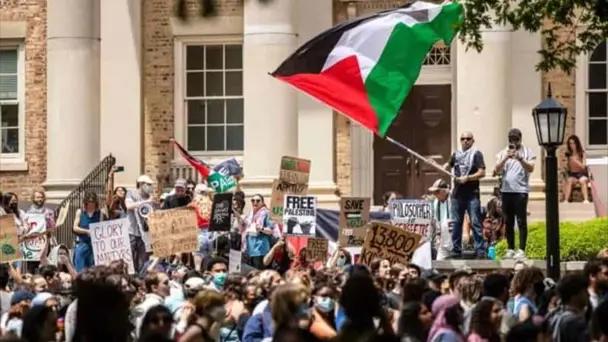
  3. Ruling issued in Northern District of California, holding actions unconstitutional under immigration law.

The ruling was issued by U.S. District Judge Noël Wise in San Jose, California, and it followed detentions that began with Columbia University graduate Mahmoud Khalil in March 2025.

Wise said that “freedom of speech belongs to the people, not the government,” and she criticized the U.S. Department of State and the Department of Homeland Security (DHS) after they attempted to deport noncitizens over protected speech.

The decision also targeted the administration’s use of the Immigration and Nationality Act, including a provision allowing the secretary of state to “exclude” foreign nationals if their presence could cause “potentially serious adverse foreign policy consequences for the United States.”

The case was brought by The Stanford Daily and others, and Khalil praised the ruling on Saturday in a post on social media: “No one should fear speaking up for Palestine.”

Campus fear and quotes

The CBS News report said Wise delivered a victory for The Stanford Daily and framed the ruling around the First Amendment, quoting Wise that “Freedom of speech is illusory if we are only 'free' to express complementary views about the government and its leaders.”

CBS also reported that Wise said the government’s tactics had sent a “chilling message” to noncitizen students that “speak out against Israel or in support of Palestinians and we will revoke your visa and deport you.”

In a statement, George Porteous, editor-in-chief of The Stanford Daily, responded on X that “The reporters in our newsroom shouldn't have to fear that writing a story will result in their deportation.”

Conor Fitzpatrick, a lawyer at the Foundation for Individual Rights and Free Expression (FIRE), praised the ruling, saying “In America, free speech doesn’t just belong to the people who say things the government agrees with,” as the case argued students were afraid to write or publish.

The Hill reported that Wise found the Trump administration’s use of existing immigration law to cancel foreign students’ visas and deport them violated constitutional rights, siding with the student newspaper’s claims about fear of deportation.

What comes next

The ruling’s immediate effect, as described by Al Jazeera, was to halt the administration’s effort to deport noncitizens tied to pro-Palestinian advocacy, after Wise said the record showed a “standardless” enforcement pattern for visa revocations.

Al Jazeera quoted Wise writing that “The secretary revokes visas when noncitizens are critical of the government or the causes or people it favors,” and it said the judge described this as “seriously discriminatory enforcement.”

The Hill reported that Wise stopped short of ordering the government to cease deportation threats because “only the Supreme Court has the authority to block that provision,” leaving the broader dispute over deportation policy unresolved.

The Hill also said the lawsuit challenged two provisions of the Immigration and Nationality Act, including the power for the secretary of state to authorize deportation if he determined speech jeopardized “a compelling foreign policy interest.”

Beyond the student cases, the same reporting noted that the Trump administration had faced other setbacks in immigration litigation, including a federal court striking down an immigrant visa suspension for 75 countries imposed earlier in the year.

Explore the original reporting

Compare all 29 sources

How each outlet frames it

Every outlet we compared, the headline it ran, and a link to the original article.

We scored these line by line

Our Watchdog read these 3 articles sentence by sentence. 0 means no framing found, 10 means severe. How we score.

PressTV
PressTV3.2 / 10

US judge rules Trump administration violated rights of pro-Palestinian international students

30 August, 2026

Al Jazeera
Al Jazeera1.7 / 10

US judge rules against Trump’s effort to deport pro-Palestinian students

29 August, 2026

Common Dreams

Judge Rules the Trump Admin Can't Deport International Students for Free Speech

31 August, 2026

West Asian

al-diyar
al-diyar

Trump tightens the screws on international students... a warning to American universities

28 August, 2026

Annahar
Annahar

Trump administration imposes new university restrictions... cuts international students' work authorization

28 August, 2026

Elnashra
Elnashra

Trump administration imposes restrictions on foreign student internship programs.

28 August, 2026

Roya News
Roya News

Judge rules Trump cannot deport students over opposition to 'Israel'

30 August, 2026

Other

Análisis Urbano
Análisis Urbano

Judge halts Trump: foreign students cannot be deported for criticizing Israel

01 September, 2026

Clarin
Clarin

Trump no puede deportar a estudiantes por criticar a Israel, dictamina jueza

29 August, 2026

El Imparcial
El Imparcial

Jueza de EEUU falla contra Trump por deportar a estudiantes que criticaron a Israel

29 August, 2026

El Nuevo Herald
El Nuevo Herald

Federal judge declares the deportation of students for criticizing Israel unconstitutional

31 August, 2026

Higher Ed Dive
Higher Ed Dive

Judge rules Trump policies deporting foreign students based on speech unconstitutional

31 August, 2026

News of the United States

Judge Rules Rubio’s Efforts to Deport Students Violated Their Right to Free Speech

29 August, 2026

NTN24
NTN24

Donald Trump expands the deportation program by sending migrants of diverse nationalities to third countries in Africa.

31 August, 2026

The Real Deal
The Real Deal

Poorer Chicago areas left behind by TIF-funded development, study finds

26 August, 2026

www.ecotvpanama
www.ecotvpanama

Trump expands deportations to third countries by sending Cubans or Afghans to Africa

31 August, 2026

XEVT
XEVT

Jueza frena intento del Gobierno de Trump de deportar a estudiantes pro Palestina

30 August, 2026

Western Mainstream

CBS News
CBS News

Trump cannot deport students for criticizing Israel, federal judge rules

30 August, 2026

news
news

Climate change parches Puerto Rico and Jamaica in rare early wet season drought

01 September, 2026

Reuters
Reuters

Judge deals blow to Trump moves to deport pro-Palestinian activists

29 August, 2026

The Hill
The Hill

Trump administration unjustly revoked pro-Palestinian foreign students’ visas, judge finds

31 August, 2026

The New York Times
The New York Times

A Tax Program for Development in Chicago Left Poor Areas Behind, Study Says

26 August, 2026

Western Alternative

Democracy Now!
Democracy Now!

You turn to us for voices you won't hear anywhere else.

28 August, 2026

Democracy Now!
Democracy Now!

You turn to us for voices you won't hear anywhere else.

01 September, 2026

Democracy Now!
Democracy Now!

You turn to us for voices you won't hear anywhere else.

27 August, 2026

Democracy Now!
Democracy Now!

You turn to us for voices you won't hear anywhere else.

28 August, 2026

Democracy Now!
Democracy Now!

You turn to us for voices you won't hear anywhere else.

01 September, 2026

Palestine Chronicle
Palestine Chronicle

US Judge Rules Trump Cannot Deport Foreign Students over Pro-Palestine Speech

30 August, 2026

Local Western

The New Republic
The New Republic

The Trump Administration’s Depraved Exploitation of Immigrant Children

01 September, 2026

Read stored source text: Al Jazeera

A United States federal judge has ruled that President Donald Trump’s administration violated the constitutional rights of international students when it sought to punish them for criticizing Israel’s genocidal war on Gaza. In California on Friday, District Judge Noel Wise criticized the U.S. Department of State and the Department of Homeland Security (DHS) after the agencies attempted to deport noncitizens over protected speech. Wise, who was appointed by former President Joe Biden, stated in her 90-page decision that, in the United States, freedom of speech belongs to the people, not the government. She added that speaking out about the government and its leaders is a sign of the health of the country’s democracy, and that strength is diminished when members of society—citizens and noncitizens alike—must self-censor and “behave” or suffer the government’s retaliation. The ruling focused on how the second Trump administration revoked visas and detained international students studying in the U.S. after they engaged in pro-Palestinian advocacy. The detentions began with Columbia University graduate Mahmoud Khalil in March 2025. Columbia had been a focal point of the student protest movement, and Khalil, a graduate student and permanent U.S. resident, had emerged as a key negotiator for the student groups. Khalil, who is challenging his deportation in a separate case, praised the ruling on Saturday in a post on social media, writing, “No one should fear speaking up for Palestine.” Arrests like Khalil’s formed the basis for the lawsuit against U.S. Secretary of State Marco Rubio, one of the defendants in the case. In August 2025, Stanford University’s independent student newspaper, the Stanford Daily, filed a complaint claiming that some of its noncitizen writers had chosen not to cover pro-Palestinian protests due to the administration’s actions. Two anonymous plaintiffs also joined the suit, identifying as foreign nationals with no criminal record, saying they too felt the need to self-censor for fear of losing their student visas. The Trump administration has, however, pointed to the Immigration and Nationality Act as justification for its deportation efforts. Part of that law allows the secretary of state to “exclude” foreign nationals from the country if their presence could cause “potentially serious adverse foreign policy consequences for the United States.” Critics have argued that the standard is largely untested in court and does not supersede the First Amendment of the Constitution, which protects free speech. In her ruling, Wise chastised Rubio for what she described as a “standardless” enforcement of his visa revocation policy. “The record does reveal one clear pattern in the enforcement actions the government has taken to revoke noncitizens’ visas since March of 2025,” the judge wrote. “The secretary revokes visas when noncitizens are critical of the government or the causes or people it favors. This exemplifies ‘seriously discriminatory enforcement.’” Conor Fitzpatrick, a lawyer at the Foundation for Individual Rights and Free Expression (FIRE), the nonprofit that filed the lawsuit, hailed the ruling as a win for First Amendment rights. “Today’s ruling proves that free speech isn’t a privilege, but the inalienable right of every man, woman, and child,” Fitzpatrick said in a statement. The Trump administration has faced other setbacks in its student deportation campaign as well. For example, in September 2025, a federal judge in Massachusetts ruled that U.S. officials had violated the First Amendment when they attempted to detain and deport noncitizen students and academics for pro-Palestinian advocacy. The case was brought by a coalition of education groups, which argued that the deportation policy had created “a climate of repression and fear on university campuses.” Al Jazeera has reached out to the State Department and DHS for comment.

Read stored source text: al-diyar

An memo issued by the administration of U.S. President Donald Trump aims to tighten restrictions on practical training permits for international students. The federal memorandum, dated August 24, states that the U.S. Immigration and Customs Enforcement's Student and Exchange Visitor Program has tracked an increase in training permits that are “suspected of violating regulatory requirements.” Regulations allow this type of training only when it forms a fundamental part of an accredited curriculum. The memo warned that noncompliance with the rules could result in the educational institution losing its accreditation to enroll foreign students. The memo prompted several universities to suspend some work permit applications submitted by international students, including the University of California campuses in Los Angeles and Berkeley. The move comes amid pressure from the Trump administration on universities through investigations and threats to cut funding, in the context of issues including protests in support of Palestine and against the Israeli assault on Gaza, diversity initiatives, climate programs, and policies affecting transgender people. The administration also canceled student visas for participants in protests in support of Palestine, after describing them as anti-Semitic. Advocates for civil rights expressed concerns about freedom of expression, academic freedom, and due process protections. Protesters, including some Jewish groups, contend that opposing the Israeli assault on Gaza and the occupation of Palestinian territories does not constitute anti-Semitism, and that defending Palestinian rights does not mean endorsing extremism.

Read stored source text: Annahar

Trump administration imposes new university restrictions... cuts international students' work authorization The administration of U.S. President Donald Trump issued a memo directed at universities aimed at imposing restrictions on issuing specific training work permits for international students, warning the federal government that universities that do not comply with the regulations may lose their foreign student registration status. Rise in training authorizations The federal memorandum, dated August 24, states that the U.S. Immigration and Customs Enforcement (ICE) Student and Exchange Visitor Program has “recorded an uptick in the practical training authorization that appears to violate regulatory requirements, which only allow curricular practical training when the training is an integral part of an approved academic curriculum.” The memo states that “noncompliance with the Student and Exchange Visitor Program regulations could result in the institution losing its accreditation to enroll international students.” As a result, some universities, including the University of California, Los Angeles (UCLA) and the University of California, Berkeley, have suspended some requests for international students’ work permits. Trump targets universities with investigations and threats to cut funding over issues such as pro-Palestinian protests against Israel’s assault on Gaza, diversity initiatives, climate programs, and transgender policies. Advocates for civil liberties express concerns about freedom of expression, academic freedom, and due process guarantees. Cancelation of visas for students who participated in protests in support of Palestine The Trump administration also canceled student visas for participation in protests in support of Palestinians, which it described as anti-Semitic and sympathetic to extremists. Protesters, including some Jewish groups, say that opposing the Israeli attack on Gaza and its occupation of Palestinian territories is not anti-Semitic, and defending Palestinian rights does not equate to supporting extremism. Key takeaways Most read During Zahr al-Din’s stop at a security checkpoint, after his identity was revealed, he drew his weapon, shot himself dead to avoid arrest; his companion in the car was arrested.

Read stored source text: Análisis Urbano

UNITED STATES August 30, 2026 – A federal judge in California ruled that the Trump administration violated constitutional rights by using immigration provisions to try to revoke visas and deport foreign students for expressing pro-Palestinian positions or criticisms of Israel and its actions in the Gaza war. The ruling was issued by U.S. District Judge Noël Wise, in San Jose, California, and represents a victory for The Stanford Daily, Stanford University’s student newspaper, which went to court arguing that government measures were creating fear and self-censorship among international collaborators. According to information published by El Nuevo Herald, the decision marks a new judicial limit to Trump administration actions against foreign students for political expressions related to Israel and Palestine. The controversy is framed within the measures taken by the Government against foreign individuals linked to pro-Palestinian protests or criticisms of Israeli actions in Gaza. According to Univision, foreign students associated with The Stanford Daily began to alter their journalistic activity for fear that certain publications could lead to visa-related consequences or even open the door to deportation procedures. Among the effects documented during the proceedings are collaborators who left roles, stopped publishing articles, rejected certain assignments, requested the removal of previously published texts, or asked to keep their identity confidential. The judge considered that scenario to be a constitutional problem because freedom of expression and press are fundamental guarantees and the Government’s migratory powers cannot be used as an instrument to punish certain political opinions. The ruling comes amid ongoing judicial challenges to the Trump administration over immigration measures applied to foreigners due to certain political expressions, especially those related to pro-Palestinian protests on American college campuses. Wise concluded that the challenged provisions raised issues related to freedom of expression and the lack of clarity in the criteria used to determine when certain manifestations could trigger immigration consequences. The magistrate found that those deficiencies conflicted with the guarantees established in the First and Fifth Amendments of the U.S. Constitution. According to Univision, the judge recalled actions taken since March 2025 against foreigners who expressed support for Palestinians or criticized Israel. The ruling concluded that using immigration status in response to certain opinions produced a chilling effect on expressions protected by the Constitution. Wise also noted that non-U.S. citizens may be protected by First Amendment protections and questioned whether foreign students should have to permanently determine which opinions could conflict with the Government’s foreign policy to know if they risk facing immigration consequences. The case also scrutinized the use of provisions of the Immigration and Nationality Act to cancel visas or initiate deportation proceedings when authorities consider that a foreign person’s presence or activities could have adverse consequences for U.S. foreign policy. The judicial decision states that those powers cannot be used to punish expressions protected by the Constitution simply because they are contrary or inconvenient to the positions defended by the Government. The ruling directly affects the strategy used by the Trump administration toward students and other foreigners involved in pro-Palestinian demonstrations, a policy that has sparked legal disputes about the boundaries between the Executive’s immigration powers and constitutional guarantees. California’s ruling aligns in core aspects with another ruling previously issued by a federal judge in Boston, who also questioned actions by the Trump administration directed at foreigners for expressions related to Palestine and Israel. Wise warned about the consequences of allowing the Government to determine which political positions can be expressed without fear of retaliation. In that scenario, other individuals could eventually become targets of government measures simply for voicing opinions contrary to the authorities. The judge’s analysis was not limited to the Israel-Palestine debate. Wise referenced the consequences suffered by some people due to critical comments about Charlie Kirk after the murder of Turning Point USA cofounder, within her argument about the risks of using government power to respond to certain expressions. The decision was celebrated by The Stanford Daily. Its editor-in-chief, George Porteous, emphasized the importance that newsroom members can practice journalism without having to consider that writing or publishing information could end up affecting their stay in the United States. Conor Fitzpatrick, attorney for the Foundation for Individual Rights and Expression (FIRE), an organization involved in the lawsuit, also defended the scope of the ruling and stated that freedom of expression cannot depend on an individual sharing the Government’s political positions. According to Univision, the Department of Justice had not responded to a request for comment on the ruling up to Saturday, after the ruling was publicly disclosed. The Trump administration has defended a stricter immigration policy toward certain foreign students and activists involved in university protests. The Executive argued that it has broad authority to decide who can keep a visa and remain in the country, especially when it considers there are implications related to foreign policy. Judge Wise’s ruling, however, sets a limit to those powers: the Government’s immigration powers cannot be used as a retaliatory mechanism against constitutionally protected expressions. The ruling is particularly significant for American universities, where many foreigners study. The possibility of losing a visa can affect not only those participating in demonstrations but also university journalists and students who write, research, or express positions on controversial political issues. The decision thus represents another judicial obstacle to the Trump administration’s measures against certain pro-Palestinian expressions. The key point of the ruling is that a person’s immigration status does not grant the Government absolute freedom to use the threat of deportation in response to constitutionally protected opinions. The Stanford Daily case ultimately raises a discussion that transcends the Israel-Palestine conflict: how far can the Executive’s immigration powers go when they conflict with rights such as freedom of expression and press freedom. Information from El Nuevo Herald and Univision. A.U.

Read stored source text: CBS News

Citing the importance of the First Amendment, a federal judge in California says the U.S. government is unconstitutionally silencing critics of Israel's and others as part of the Trump administration's quest to deport noncitizens who it says disrupted college campuses while expressing their views.Judge Noël Wise, in a ruling Friday, delivered a victory for The Stanford Daily, the student newspaper at Stanford University, which has said some international students were afraid to speak out because of the deportation threat. "Freedom of speech is illusory if we are only 'free' to express complementary views about the government and its leaders," the judge wrote. The decision largely piggybacks on from nearly a year ago by a U.S. district judge in Boston, who ruled that the Trump administration violated the Constitution when it targeted people who are not citizens for deportation solely for supporting Palestinians and criticizing Israel.Wise wrote that the freedoms of speech and the press are "foundational to America's enduring democracy." The judge cited free-speech and vagueness flaws that violate the First Amendment and Fifth Amendment as she struck down portions of the provisions that the federal government follows regarding deportations. Wise cited retaliation in March 2025 by U.S. immigration authorities against people who engaged in speech supporting the Palestinians and against Israel's actions — which a growing number of experts, including those commissioned by a U.N. body — have said amount to genocide. The judge also cited retaliation against people who were critical of Charlie Kirk after the Turning Point USA co-founder was last September."Tomorrow, or perhaps even today, targets may include anyone in the United States who exercises their freedom of speech to simply express opinions the government does not like," the judge in San Jose said. "This downward spiral is antithetical to our Constitution that recognizes our right to speak freely," she added. "Here you can simultaneously hate the content of a person's speech and love the country that cherishes the freedom to allow it. Zealous protection of our Constitutional right to free speech is a provocative demonstration of our country's powerful lack of fear." The Justice Department did not respond Saturday to a message seeking comment on the decision. George Porteous, the editor-in-chief of The Stanford Daily, responded to the ruling by saying on X: "The reporters in our newsroom shouldn't have to fear that writing a story will result in their deportation. Today's victory means they won't have to." Conor Fitzpatrick, an attorney with the Foundation for Individual Rights and Expression, which brought the lawsuit, praised the ruling. "In America, free speech doesn't just belong to the people who say things the government agrees with," Fitzpatrick said in a release. In her decision, Wise said it was clear that the government's tactics has had an effect on college campuses. "The government has offered a chilling message regarding protected speech - speak out against Israel or in support of Palestinians and we will revoke your visa and deport you. Behave. Noncitizen students heard the warning and heeded. And, as the idiom goes, the silence is deafening," the judge wrote. At The Stanford Daily, lawfully present noncitizens at the paper have quit, withheld articles, refused assignments, requested articles be taken down, and asked for anonymity due to fear of adverse immigration consequences, Wise noted. She said noncitizens have the same First Amendment rights as citizens and yet were left to guess what the U.S. foreign policy was at any given moment and on any given subject. "This is an incomprehensible standard," she said. "While the Court understands that the government has been granted considerable discretion on foreign policy and immigration matters, that discretion must nevertheless still ensure that ordinary people can understand what the law permits and prohibits." Wise added: "Our Constitutional right to freedom of speech guarantees people the right to express - through their words, actions, or assembly - opinions that may be repugnant, views that run counter to prevailing political norms, or beliefs that otherwise challenge the country's domestic or foreign policy, military engagement, or war."

Read stored source text: Clarin

SAN JOSÉ, California, EE.UU. (AP) — Una jueza federal de California, citando la importancia de la Primera Enmienda de la Constitución de Estados Unidos, afirma que el gobierno del país está silenciando de manera inconstitucional a críticos de la guerra de Israel en Gaza y a otras personas, como parte del empeño del gobierno del presidente Donald Trump por deportar a no ciudadanos que, según dice, alteraron los campus universitarios mientras expresaban sus opiniones. La jueza Noël Wise, en un fallo emitido el viernes, dio una victoria al periódico estudiantil de la Universidad de Stanford, que ha señalado que algunos estudiantes internacionales tenían miedo de pronunciarse debido a la amenaza de deportación. La decisión se apoya en gran medida en las conclusiones a las que llegó hace casi un año un juez federal de distrito en Boston, quien determinó que el gobierno de Trump violó la Constitución cuando apuntó a personas que no son ciudadanas para deportarlas únicamente por apoyar a los palestinos y criticar a Israel. Wise escribió que las libertades de expresión y de prensa son “fundamentales para que perdure la democracia en Estados Unidos”. La jueza citó fallas relacionadas con la libertad de expresión y con la imprecisión que violan la Primera y la Quinta Enmienda constitucionales, al anular partes de las disposiciones que sigue el gobierno federal en materia de deportaciones. La jueza mencionó las represalias ejercidas en marzo de 2025 por las autoridades migratorias de Estados Unidos contra personas que participaron en expresiones de apoyo a los palestinos y en contra de las acciones de Israel, que un número creciente de expertos, incluidos los comisionados por un organismo de la ONU, han señalado que equivalen a genocidio. La jueza también citó represalias contra personas que criticaron a Charlie Kirk después de que el cofundador de Turning Point USA fuera asesinado en septiembre pasado. “Mañana, o quizá incluso hoy, el objetivo podría ser cualquier persona en Estados Unidos que ejerza su libertad de expresión para simplemente manifestar opiniones que al gobierno no le gustan”, afirmó la jueza en San José. “Esta espiral descendente es antitética a nuestra Constitución, que reconoce nuestro derecho a hablar libremente”, agregó. “Aquí se puede odiar simultáneamente el contenido del discurso de una persona y amar al país que aprecia la libertad de permitirlo. La protección celosa de nuestro derecho constitucional a la libertad de expresión es una demostración provocadora de la poderosa ausencia de miedo de nuestro país”. Hasta el sábado, el Departamento de Justicia no había respondido a un mensaje en el que se solicitaban comentarios sobre la decisión. Conor Fitzpatrick, abogado de la Fundación para los Derechos Individuales y la Expresión, que presentó la demanda, elogió el fallo. “En Estados Unidos, la libertad de expresión no les pertenece solo a las personas que dicen cosas con las que el gobierno está de acuerdo”, afirmó en un comunicado. Sobre la firma Newsletter Clarín

Read stored source text: Common Dreams

SUBSCRIBE TO OUR FREE NEWSLETTER Daily news & progressive opinion—funded by the people, not the corporations—delivered straight to your inbox. 5 #000000 #FFFFFF Daily news & progressive opinion—funded by the people, not the corporations—delivered straight to your inbox. "A federal judge just ruled that the Trump admin's use of immigration law to deport me and other noncitizen students for pro-Palestinian speech is unconstitutional. No one should fear speaking up for Palestine," Mahmoud Khalil said. The Trump administration violated the Constitution when it moved to deport or rescind visas from international students who spoke up for Palestinian rights and criticized Israel's genocide in Gaza, a federal judge ruled on Friday. Northern District of California Judge Noël Wise, who was appointed by former President Joe Biden, said that the administration's actions violated both the First Amendment of the Constitution protecting free speech and the Fifth Amendment ensuring due process. "Stated plainly, in the United States, freedom of speech belongs to the people. It is not the government’s to take," Wise wrote. Mahmoud Khalil, a Columbia University student who was detained by Immigration and Customs Enforcement early in the second Trump administration despite holding a green card, celebrated the ruling on Saturday. Palestine," Khalil wrote on social media. The Council on American-Islamic Relations also welcomed the decision in a statement on Saturday: This ruling reaffirms a fundamental American principle that the government cannot deport people simply because it dislikes their political views. Students do not surrender their constitutional rights at the classroom door, and international students do not surrender their freedom of expression when they come to study in the United States. Criticizing the policies of a foreign government, including the genocidal government of Israel, is protected political speech. The lawsuit was brought by the Foundation for Individual Rights and Expression (FIRE) in August 2025 on behalf of The Stanford Daily, Stanford University's student newspaper, and an anonymous female plaintiff. The newspaper argued that student reporters on visas refrained from covering pro-Palestinian protests on campus out of fear of being deported, while the Jane Doe was a noncitizen who had spoken out on behalf of Palestine and now was worried about government retaliation. "The reporters in our newsroom shouldn’t have to fear that writing a story will result in their deportation. Today’s victory means they won’t have to," the paper's editor-in-chief George Porteous wrote on social media on Friday. In particular, the lawsuit challenged two provisions of the Immigration and Nationality Act that Secretary of State Marco Rubio used to justify seeking the deportations of Khalil, Columbia student Moshen Mahdawi, and Tufts University student Rümeysa Öztürk. The first allows the secretary of state to deport a noncitizen for speech if the secretary “personally determines” the speech “compromises a compelling foreign policy interest.” The second allows the secretary to revoke visas entirely at their own discretion. Wise agreed that the provisions violated the Constitution and offered a rousing defense of free speech. “In the United States, free speech, including the freedom to criticize the government and its leaders, is not a sign of our democracy’s fragility. It is evidence of its strength," she wrote. "That strength is diminished when members of our society—citizens and noncitizens alike—must self-censor and ‘behave’ or suffer the government’s retaliation.” FIRE said the decision was the "first in the country to squarely rule on the constitutionality of these statutes" and that it would "reverberate in similar proceedings around the country." “In America, free speech doesn’t just belong to the people who say things the government agrees with,” FIRE attorney Conor Fitzpatrick said in a statement Friday. “Today’s ruling proves that free speech isn’t a privilege, but the inalienable right of every man, woman, and child.”

Read stored source text: El Imparcial

Jueza de EEUU falla contra Trump por deportar a estudiantes que criticaron a Israel La jueza federal Noël Wise determinó que el gobierno de Trump violó la Primera y Quinta Enmiendas al utilizar normas migratorias contra personas por su expresión política. ESTADOS UNIDOS.- Una jueza federal de California determinó que el gobierno de Donald Trump violó la Constitución de Estados Unidos al utilizar facultades migratorias contra personas no ciudadanas por expresiones políticas protegidas, incluidas críticas a Israel y muestras de apoyo a los palestinos. La decisión fue emitida el viernes por la jueza Noël Wise, del Tribunal de Distrito de Estados Unidos para el Norte de California, en un caso presentado por The Stanford Daily, el periódico estudiantil de la Universidad de Stanford. El fallo señala problemas bajo la Primera y Quinta Enmiendas y cuestiona disposiciones de la legislación migratoria cuando se utilizan para sancionar a una persona por el contenido o punto de vista de su discurso, indicó AP. El caso tiene relevancia más allá de Stanford. La jueza concluyó que las medidas del gobierno habían generado un efecto de autocensura entre estudiantes y periodistas internacionales que temían perder sus visas o ser deportados por expresar determinadas opiniones. ¿Qué decidió la jueza Noël Wise? Wise determinó que el gobierno no puede utilizar determinadas disposiciones de la legislación migratoria para tomar represalias contra personas no ciudadanas debido a expresiones protegidas por la Constitución. El fallo se concentró en dos disposiciones de la Ley de Inmigración y Nacionalidad que habían sido utilizadas por funcionarios federales para revocar visas y considerar deportables a personas no ciudadanas. Una de ellas permitía al secretario de Estado, Marco Rubio, determinar que determinadas actividades de una persona podían comprometer un interés de política exterior de Estados Unidos. La jueza consideró que esas facultades presentan problemas constitucionales cuando se aplican para castigar a alguien por sus opiniones. Reuters explicó que Wise concluyó que, cuando el discurso de una persona no ciudadana es la razón para revocar su visa o iniciar una medida de deportación, el gobierno está dando un trato desfavorable a ese discurso por su contenido o punto de vista. ¿El fallo protege a todos los estudiantes extranjeros de una deportación? La decisión no significa que una persona con visa pueda incumplir las leyes migratorias sin consecuencias. El punto central es otro: el gobierno no puede utilizar determinadas facultades migratorias como mecanismo de represalia contra una persona únicamente por ejercer un discurso protegido constitucionalmente. La diferencia es importante porque el estatus migratorio y las reglas de ingreso y permanencia en Estados Unidos continúan sujetos a la legislación federal. El fallo se refiere específicamente al uso de esas disposiciones frente a expresiones protegidas y a la forma en que fueron aplicadas por el gobierno. ¿Qué tiene que ver Stanford con el caso? La demanda fue presentada por The Stanford Daily, junto con dos estudiantes internacionales. El periódico argumentó que algunos de sus colaboradores que no son ciudadanos estadounidenses habían comenzado a autocensurarse por temor a que sus publicaciones pudieran provocar consecuencias migratorias. De acuerdo con el expediente judicial, algunos estudiantes dejaron de publicar comentarios sobre Israel y Palestina, modificaron su actividad en redes sociales e incluso evitaron utilizar ropa que pudiera asociarse con una posición propalestina. El periódico sostuvo que ese temor también afectaba su trabajo periodístico. La jueza tomó en cuenta ese efecto al analizar las consecuencias de las políticas del gobierno. ¿Qué dijo la jueza sobre la libertad de expresión? Wise subrayó que la libertad de expresión y de prensa ocupan un lugar central en el sistema constitucional estadounidense. En su resolución escribió que estas libertades son “fundamentales para que perdure la democracia en Estados Unidos”. También advirtió sobre las consecuencias que puede tener utilizar el poder gubernamental para desalentar determinadas opiniones. La jueza escribió: “Mañana, o quizá incluso hoy, el objetivo podría ser cualquier persona en Estados Unidos que ejerza su libertad de expresión para simplemente manifestar opiniones que al gobierno no le gustan”. Y agregó: “Esta espiral descendente es antitética a nuestra Constitución, que reconoce nuestro derecho a hablar libremente”. Wise también sostuvo que la protección constitucional de la libertad de expresión incluye opiniones que pueden resultar ofensivas, contrarias a las posiciones predominantes o críticas de las políticas internas y exteriores del país. ¿Qué ocurrió con los estudiantes propalestinos desde 2025? El conflicto judicial tiene su origen en una serie de medidas adoptadas por la administración Trump desde marzo de 2025. El gobierno comenzó a detener, investigar y buscar la deportación de estudiantes y otros no ciudadanos relacionados con protestas y expresiones propalestinas. Uno de los casos más conocidos fue el del activista palestino Mahmoud Khalil, estudiante de posgrado de la Universidad de Columbia, cuya detención provocó una disputa legal sobre los límites de las facultades migratorias del gobierno. Reuters señaló que la administración utilizó disposiciones de la legislación migratoria para actuar contra estudiantes que habían participado en actividades relacionadas con el movimiento propalestino. La administración argumentó que algunas de esas actividades afectaban los intereses de política exterior de Estados Unidos. Los demandantes sostuvieron que esas facultades estaban siendo utilizadas para castigar opiniones políticas. Un juez de Boston ya había emitido una resolución similar El fallo de California no surgió de manera aislada. Wise se apoyó ampliamente en una resolución emitida casi un año antes por el juez federal de Massachusetts William Young. Ese tribunal había determinado que la administración Trump violó la Primera Enmienda al aplicar una política dirigida contra estudiantes y profesores extranjeros que apoyaban a Palestina o criticaban a Israel. La resolución de Boston también concluyó que las medidas del gobierno podían producir un efecto de silenciamiento entre quienes temían consecuencias migratorias por sus opiniones. El caso de Massachusetts continúa su propio proceso judicial. ¿Qué dicen la Primera y la Quinta Enmiendas? La Primera Enmienda protege, entre otros derechos, la libertad de expresión y de prensa. La Quinta Enmienda establece garantías relacionadas con el debido proceso y la protección frente a determinadas actuaciones arbitrarias del gobierno. En este caso, Wise consideró que las disposiciones migratorias cuestionadas presentaban problemas relacionados tanto con la libertad de expresión como con la falta de claridad sobre qué conductas podían generar consecuencias migratorias. El problema, según la jueza, no era solamente qué facultades tiene el gobierno en materia de inmigración, sino cómo puede utilizarlas cuando la conducta protegida consiste en expresar una opinión. ¿Por qué la jueza habló de autocensura? El concepto de “efecto inhibidor” o chilling effect es central en el caso. Se refiere a una situación en la que las personas dejan de ejercer un derecho porque temen consecuencias negativas. En el caso de Stanford, la demanda sostenía que estudiantes internacionales habían reducido o evitado determinadas expresiones por miedo a perder su estatus migratorio. Wise concluyó que las acciones del gobierno habían enviado un mensaje que podía interpretarse como una advertencia: expresar determinadas opiniones podía provocar la revocación de una visa o una deportación. La jueza escribió que los estudiantes no ciudadanos habían recibido ese mensaje y habían modificado su comportamiento. ¿La decisión solo se refiere a las críticas contra Israel? Aunque el caso surgió a partir de las expresiones relacionadas con Israel, Palestina y la guerra en Gaza, la preocupación de la jueza fue más amplia. Wise advirtió que el problema constitucional aparece cuando el gobierno utiliza sus facultades para castigar opiniones que considera inconvenientes. Por ello, la resolución también menciona represalias contra personas que expresaron críticas hacia Charlie Kirk, cofundador de Turning Point USA, después de su asesinato en septiembre de 2025. La jueza utilizó ese ejemplo para advertir que el criterio podría extenderse a otros asuntos políticos. ¿Qué dijo el gobierno de Trump? Hasta el sábado, el Departamento de Justicia no había respondido a las solicitudes de comentarios sobre la decisión. La administración Trump ha defendido en otros casos su facultad para aplicar las leyes migratorias y ha sostenido que algunas actividades vinculadas con las protestas universitarias pueden afectar los intereses de política exterior y seguridad nacional de Estados Unidos. La controversia judicial consiste precisamente en determinar hasta dónde llegan esas facultades cuando las conductas cuestionadas corresponden a expresiones protegidas. ¿Qué dijo la organización que presentó la demanda? La Foundation for Individual Rights and Expression (FIRE) participó en la demanda en representación de The Stanford Daily. Conor Fitzpatrick, abogado de la organización, celebró la resolución. “En Estados Unidos, la libertad de expresión no les pertenece solo a las personas que dicen cosas con las que el gobierno está de acuerdo”. Fitzpatrick consideró que la decisión confirma que las autoridades no pueden utilizar el poder migratorio para castigar a quienes expresan opiniones que contradicen al gobierno. El editor en jefe de The Stanford Daily, George Porteous, también celebró el fallo y sostuvo que los periodistas del periódico no deberían tener que temer que una publicación pueda provocar su deportación. ¿Qué significa el fallo para los estudiantes internacionales? La resolución representa una protección judicial importante para los estudiantes no ciudadanos que ejercen derechos de expresión en Estados Unidos. El fallo deja claro que la Primera Enmienda no desaparece por el hecho de que una persona no tenga ciudadanía estadounidense. Sin embargo, no elimina las leyes migratorias ni convierte cualquier conducta de una persona con visa en una actividad protegida. El punto establecido por Wise es que el gobierno no puede utilizar las facultades migratorias cuestionadas para tomar represalias contra una persona por una expresión constitucionalmente protegida. Te puede interesar: Mexicanos deportados por ICE generan ganancias para Honduras y Guatemala tras recibirlos luego de vuelos desde Estados Unidos ¿Qué sigue después de esta decisión? El gobierno federal todavía puede recurrir la resolución. Por ello, el caso podría continuar en tribunales superiores y eventualmente llegar a la Corte de Apelaciones del Noveno Circuito. Además, existen otros procesos relacionados con las políticas migratorias de la administración Trump y la actividad propalestina en universidades. La decisión de Wise se suma a ese conjunto de litigios y aumenta el escrutinio judicial sobre el uso de las leyes migratorias frente a expresiones políticas. Por ahora, el mensaje central del fallo es que las facultades del gobierno en materia migratoria no son ilimitadas cuando entran en conflicto con derechos constitucionales protegidos. La resolución también coloca en el centro un principio que trasciende el debate sobre Israel, Palestina o las universidades: la libertad de expresión debe proteger también las opiniones que el gobierno considera incómodas o contrarias a sus posiciones.

Read stored source text: El Nuevo Herald

A federal judge in Northern California ruling that the Trump administration's effort to deport international students for expressing criticisms of the government of Israel is unconstitutional. Judge Noël Wise of the United States District Court for the Northern District of California determined that the White House's attempts to deport foreigners for their political expressions violate the First and Fifth Amendments of the Constitution. "The text of the Amendment makes clear that it is not the government that grants freedom of speech to the people. Rather, that freedom is inherent in the people, and the Congress shall not make any law" that restrains it, Wise wrote in her 90-page ruling. With her ruling, the judge sided with Stanford University’s student newspaper, The Stanford Daily, which sued the Government and Secretary of State Marco Rubio, arguing that its student journalists were resigning or self-censoring for fear of government reprisals. The Foundation for Individual Rights in Education (FIRE), which represents the newspaper, challenged in the legal complaint two provisions enacted last year by Rubio, which gave him unlimited power to revoke visas of legal immigrants and deport them for expressing protected opinions. The first provision allowed the Secretary of State to initiate deportation proceedings against any foreigner for expressing themselves freely if he determined (Rubio) that said speech compromised an imperative foreign policy interest. The second measure authorized the State Department to revoke the visa of any foreigner at any time and for any reason. Conor Fitzpatrick, FIRE’s attorney, said in a statement that the ruling shows that freedom of expression is not a privilege but an inalienable right for every man, woman, and child, regardless of their legal status. "In the United States, freedom of expression does not belong solely to those who say things the government agrees with," he stated. The ruling is the latest in a series of legal setbacks against the Trump administration’s immigration policy. Last week a federal court struck down the immigrant visa suspension for 75 countries imposed earlier in the year. Immigration ICE detains in Miami a Grammy-winning Cuban percussionist seeking asylum August 26, 2026 6:12 PM United States US temporarily suspends immigrant visa appointments for applicants worldwide August 26, 2026 5:17 AM United States US plans to revoke tourist and business visas for up to 200,000 foreigners, per AP August 24, 2026 6:50 PM Immigration Federal judge overturns Trump visa ban for 75 countries August 24, 2026 6:19 PM Legal Affairs Stiff setback for Trump and Rubio over immigrant visas for Cuba and 74 other countries: what changes now? August 22, 2026 10:37 AM

Read stored source text: Elnashra

The administration of U.S. President Donald Trump issued a memo directed at universities aimed at imposing restrictions on issuing certain STEM internship work permits for international students, warning the federal government that universities that do not comply with the regulations could lose their foreign student enrollment certification. The federal memorandum dated August 24 states that the Student and Exchange Visitor Program (SEVP) of U.S. Immigration and Customs Enforcement “has observed a rise in systemic practical training permits that appear to violate regulatory requirements that allow practical training only when it is an integral part of an approved curriculum.” The memo stated that “noncompliance with the SEVP regulations may lead to a loss of the institution’s accreditation for enrolling foreign students.” As a result, some universities, including the University of California, Los Angeles, and the University of California, Berkeley, have suspended certain requests for work authorizations for international students. Trump targets universities with investigations and threats to cut funding over issues such as protests in support of Palestinians against Israel’s assault on Gaza, diversity initiatives, climate programs, and transgender policies. Advocates for rights express concerns about freedom of expression, academic freedom, and due process protections. The Trump administration has also revoked student visas for participation in protests in support of Palestinians, describing them as anti-Semitic and sympathetic to extremists. protesters, including some Jewish groups, say that opposing Israel’s assault on Gaza and its occupation of Palestinian territories is not anti-Semitic, and that defending Palestinian rights does not mean endorsing extremism.

Read stored source text: Higher Ed Dive

Dive Brief: - Policies used by the Trump administration to deport legal immigrants because of their speech are unconstitutional, a federal judge ruled Friday. - The Trump administration has revoked hundreds of student visas and sought to deport noncitizen students in the U.S. legally by invoking two provisions of the Immigration and Nationality Act. - But in her decision last week, U.S. District Judge Noël Wise said the administration's use of INA policies in many cases violated the First Amendment and due process rights. “In the United States, freedom of speech belongs to the people," Wise said. "It is not the government’s to take." Dive Insight: Last August, Stanford University’s independent student newspaper sued top Trump officials, arguing that the administration was unconstitutionally deporting those it deems to have “anti-American or anti-Israel” views, creating a “pall of fear” that is “incompatible with American liberty.” Free speech and due process rights apply to all people in the U.S., not just American citizens. Early in President Donald Trump's first year back in office, his administration began targeting noncitizens studying at U.S. colleges, citing the INA. Under the act, U.S. Secretary of State Marco Rubio can revoke student visas and deem a noncitizen eligible for deportation if their statements or associations “compromise a compelling United States foreign policy interest.” Some of the most high-profile cases include students such as Mahmoud Khalil and Rümeysa Öztürk who participated in pro-Palestinian campus protests or published commentary criticizing Israel in the wake of the Israel-Hamas war. In its complaint, The Stanford Daily said student visa holders at the publication have said no to covering stories related to the conflict out of concern that it would endanger their immigration status. Other international students asked to have their articles taken down or quit the newspaper altogether, while still others on campus largely stopped speaking to student reporters on the record or at all. Wise sided with the plaintiffs. “Free speech, including the freedom to criticize the government and its leaders, is not a sign of our democracy’s fragility,” she wrote in her decision. “It is evidence of its strength. That strength is diminished when members of our society — citizens and noncitizens alike — must self-censor and ‘behave’ or suffer the government’s retaliation.” The judge also noted the government has targeted people over their speech related to Trump's peace deal negotiations with Iran and regarding right-wing commentator and political organizer Charlie Kirk following his murder on Utah Valley University’s campus last year. "Tomorrow, or perhaps even today, targets may include anyone in the United States who exercises their freedom of speech to simply express opinions the government does not like," she said. "This downward spiral is antithetical to our Constitution that recognizes our right to speak freely." In addition to infringing on students' free speech rights, the Trump administration's policies are unconstitutionally vague and violate the Fifth Amendment, Wise ruled. The State Department left noncitizens to guess at what conduct could result in their deportation, resulting in self-censorship, she wrote in her decision. George Porteous, editor-in-chief of the Stanford Daily, praised the decision on Saturday. "The reporters in our newsroom shouldn't have to fear that writing a story will result in their deportation," Porteous said on social media. "The Court’s decision will enable our reporters to focus on what they do best: asking tough questions and reporting the truth." He thanked other student newsrooms that supported The Stanford Daily and the Foundation for Individual Rights and Expression, which represented the publication. The U.S. department of State and Homeland Security on Monday did not immediately respond to questions about the decision and if the federal government intends to appeal.

Read stored source text: News of the United States

The Trump administration violated the Constitution when it revoked visas and sought to detain noncitizen students for expressing dissent, particularly while condemning Israel’s actions in Gaza, a federal judge in California ruled Friday. U.S. District Judge Noël Wise ruled that Secretary of State Marco Rubio violated the First Amendment and the Fifth Amendment when he invoked the Immigration and Nationality Act to cancel student visas and initiate deportation proceedings. Rubio vowed in March 2025 to crack down on pro-Palestinian international students, saying in a news conference at the time, “Every time I find one of these lunatics, I take away their visa.” Tensions escalated last year after federal immigration authorities detained Mahmoud Khalil, a student protest leader at Columbia University, and Rümeysa Öztürk, a doctoral student at Tufts University who wrote an opinion piece for the student newspaper. Those arrests and others spurred criticism from free-speech advocacy organizations. Stanford University’s student-run newspaper and an unnamed female student with an F-1 visa sued Rubio in August 2025, arguing that his policy was stifling free speech on college campuses. The Stanford Daily said in the lawsuit that international students were afraid to write news stories or opinion pieces in fear of having their visas revoked. Trending In her 90-page ruling Friday, Wise said “freedom of speech belongs to the people. It is not the government’s to take.” She said President Donald Trump’s administration has followed a pattern of targeting dissent, including pro-Palestinian support, critiques of conservative political activist Charlie Kirk after he was fatally shot, and opinions about the Iran war. “This downward spiral is antithetical to our Constitution that recognizes our right to speak freely,” wrote Wise, a Joe Biden appointee. “Here you can simultaneously hate the content of a person’s speech and love the country that cherishes the freedom to allow it. Zealous protection of our Constitutional right to free speech is a provocative demonstration of our country’s powerful lack of fear.” The State Department did not immediately respond to a request for comment Saturday on Wise’s ruling. The Foundation for Individual Rights and Expression, a civil rights organization that helped litigate the case, said in a statement that Wise’s ruling “proves that free speech isn’t a privilege, but the inalienable right of every man, woman, and child.” While Wise’s ruling found the Trump administration’s actions to be unconstitutional, she stopped short of ordering the government to cease its deportation threats because only the Supreme Court has the authority to block that provision.

Read stored source text: Palestine Chronicle

ByPalestine Chronicle Staff A US federal judge ruled on Friday that the Trump administration violated constitutional protections by targeting non-American university students for visa revocation and deportation because of their support for Palestinians and criticism of Israel. District Judge Noël Wise of the US District Court in San Jose, California, issued the strongly worded ruling on Friday, criticizing the State and Homeland Security Departments for using federal immigration law to target non-citizens because of political views the administration sought to suppress. Wise stressed that freedom to criticize the government and its policies was evidence of democratic strength rather than a threat to it. “That strength diminishes when members of our society, whether citizens or non-citizens, are forced to censor themselves and adhere to a certain behavior, or face government retaliation,” she wrote. The judge warned of broader consequences if the government were permitted to punish people on the basis of protected political expression. Those targeted, she cautioned, could eventually include “anyone in the United States exercising their right to free speech simply for expressing opinions that the government does not like.” “This dangerous slide is contrary to our Constitution, which recognizes our right to free expression,” Wise wrote. “In this country, you can reject the content of what someone says, and at the same time love the homeland that cherishes the freedom that allows you to say so.” 🚨 UPDATE: ONE BIDEN JUDGE just stepped in and ruled AGAINST Sec. Marco Rubio having noncitizen students deported if they advocate for Islamism and other anti-American ideology Judge Noël Wise just said those students have to stay here under the 1st Amendment. UNBELIEVABLE!…pic.twitter.com/HXtYSw58Z6 — Eric Daugherty (@EricLDaugh)August 29, 2026 The ruling represents a victory for The Stanford Daily, Stanford University’s student newspaper, which filed the lawsuit in August 2025. The newspaper argued that the administration’s immigration policies had created a chilling effect among international students holding US visas. Some student journalists, it said, had become afraid to cover pro-Palestinian demonstrations or publicly address Palestine and Israel because they feared that their reporting or political expression could result in immigration consequences. The case followed actions by US immigration authorities beginning in March 2025 against foreign students and other non-citizens involved in pro-Palestinian activism. The Trump administration sought to revoke visas and initiate deportation proceedings against a number of international students following their participation in protests or other Palestine-related political activities. UPDATE: A U.S. federal judge has ruled against the Trump administration’s efforts to deport international students over speech criticizing Israel’s war on Gaza. Judge Noel Wise said the efforts violated the students’ constitutional rights.pic.twitter.com/ROlGDgrapF — Hortabin Media (@HortabinMedia)August 30, 2026 Wise found that immigration status did not give the government unrestricted authority to retaliate against non-citizens for constitutionally protected expression. Her ruling rejected the use of provisions of federal immigration law as a mechanism for suppressing political viewpoints disfavored by the administration. The California decision follows a similar ruling by a federal judge in Boston, who found that the Trump administration had violated constitutional protections by targeting non-citizens because of their support for Palestinians and criticism of Israel. The cases have emerged from the administration’s broader crackdown on Palestine solidarity activism at American universities. The latest ruling directly challenges the government’s ability to use immigration enforcement against foreign students based on their political expression. (PC, AA, US Media) Israel’s lower-level team arrived in Egypt for indirect negotiations on Trump’s Gaza plan, as Hamas’s senior leadership, led by Khalil al-Hayya, takes part in the talks. Israel announced on Sunday that a negotiating team would[…] By Palestine Chronicle Staff   US envoy Steve Witkoff announced the second phase of the Gaza ceasefire plan, including a committee, disarmament, and reconstruction, as factions and mediators expressed support. US envoy Steve Witkoff announced[…] By Jamal Kanj Epstein is dead. The system isn’t. He was its asset before he was expendable. Like Oswald, like Maxwell, like Shapiro. His demise does not change anything. The Epstein scandal is not just[…]

Read stored source text: PressTV

A US federal judge has ruled that the Trump administration violated the constitutional rights of international students by seeking to revoke their visas and deport them over pro-Palestinian advocacy and criticism of the Israeli regime’s war of genocide on Gaza. US District Judge Noel Wise issued the 90-page ruling in California on Friday, criticizing the Department of State and Department of Homeland Security (DHS) for attempting to use immigration measures against non-citizens over speech protected by the First Amendment. “Stated plainly, in the United States, freedom of speech belongs to the people,” Wise said in her decision. “It is not the government’s to take.” Wise, who was appointed by former President Joe Biden, said that the ability to criticize the government and its top officials was an indication of the strength of democracy. “That strength is diminished when members of our society — citizens and non-citizens alike — must self-censor and ‘behave’ or suffer the government’s retaliation,” she said. The ruling focused on actions taken by the second Trump administration to revoke the visas and detain international students in the US after they participated in pro-Palestinian advocacy. The campaign drew widespread attention after the detention of Columbia University graduate student Mahmoud Khalil in March 2025. Khalil, a graduate student and permanent US resident, had become a prominent figure in the student protest movement at Columbia University and served as a key negotiator for student groups. He is separately challenging his deportation. On Saturday, Khalil welcomed Wise’s ruling in a post on X. “No one should fear speaking up for Palestine,” Khalil wrote. Actions such as Khalil’s arrest became part of the basis for a lawsuit against US Secretary of State Marco Rubio, who was named as one of the defendants. In August 2025, The Stanford Daily, an independent student newspaper at Stanford University, filed a complaint, arguing that some of its non-citizen writers had stopped covering pro-Palestinian protests because of the administration’s actions. Two anonymous plaintiffs also joined the case. They identified themselves as foreign nationals with no criminal records and said they had felt compelled to self-censor because they feared losing their student visas. The lawsuit was filed by the Foundation for Individual Rights and Free Expression (FIRE). The Trump administration has tried to defend its deportation efforts by citing “provisions of the Immigration and Nationality Act.” One provision gives the secretary of state authority to “exclude” foreign nationals if their presence could result in “potentially serious adverse foreign policy consequences for the United States.” Critics of the administration’s approach have argued that the “provision” has received limited judicial testing and does not override the First Amendment’s protection of free speech. Wise, in her ruling, criticized Rubio’s implementation of the visa revocation policy, describing its enforcement as “standardless.” “The record does reveal one clear pattern in the enforcement actions the government has taken to revoke non-citizens’ visas since March of 2025,” the judge wrote. “The secretary revokes visas when non-citizens are critical of the government or the causes or people it favors. This exemplifies ‘seriously discriminatory enforcement.’” Conor Fitzpatrick, a lawyer with FIRE, described the decision as a victory for First Amendment protections. “Today’s ruling proves that free speech isn’t a privilege, but the inalienable right of every man, woman, and child,” Fitzpatrick said in a statement. The Trump administration has encountered other judicial challenges to its efforts involving non-citizen students and academics who engaged in pro-Palestinian advocacy. In September 2025, a federal judge in Massachusetts ruled that US officials had violated the First Amendment when they attempted to detain and deport non-citizen students and academics over such advocacy. That case was brought by a coalition of education groups, which argued that the administration’s deportation policy had created “a climate of repression and fear on university campuses.”

Read stored source text: Reuters

Aug 28 (Reuters) - A federal judge on Friday ruled that laws that President Donald Trump's administration used to cancel visas and initiate deportation proceedings against noncitizen college students based on their pro-Palestinian advocacy and criticism of Israel are unconstitutional. U.S. District Judge Noel Wise in San Jose, California in a blistering ruling chastised the U.S. State Department and U.S. Department of Homeland Security for how they had deployed provisions of federal immigration law to target non-citizens for deportation for expressing views they wanted to suppress. Sign up here. The judge, an appointee of Democratic President Joe Biden, said that in the United States, free speech, including the freedom to criticize the government and its leaders, was evidence of the strength of the country's democracy. "That strength is diminished when members of our society – citizens and noncitizens alike – must self-censor and 'behave' or suffer the government’s retaliation," she said. The State Department and DHS did not immediately respond to requests for comment. Wise's ruling focused on how the Trump administration, from March 2025, began revoking visas and detaining non-citizens who engaged in pro-Palestinian advocacy on campus, starting with the arrest of Columbia University graduate Mahmoud Khalil, who is fighting separately to avoid being deported. Those arrests formed the basis of a lawsuit that was filed in August 2025 by Stanford University’s student newspaper, The Stanford Daily, which alleged that some of its writers with student visas had refrained from covering pro-Palestinian student protests and topics related to the Middle East conflict as a result of the administration's policies. The newspaper's lawyers argued that two provisions of the Immigration and Nationality Act that the administration relied upon to cancel student visas and initiate deportation proceedings violated the U.S. Constitution's First and Fifth Amendments as applied to constitutionally protected speech. Those laws allowed Secretary of State Marco Rubio to render noncitizens deportable if he personally determined someone's action “compromises a compelling foreign policy interest" and allowed him to revoke someone's visa at his discretion. Wise agreed with the newspaper, saying that when a noncitizen's speech is the reason behind a visa revocation and deportation determination, "the government is singling out that speech for disfavored treatment based on its viewpoint or content." Conor Fitzpatrick, whose group Foundation for Individual Rights and Expression represented the student newspaper, in a statement said the ruling "proves that free speech isn’t a privilege, but the inalienable right of every man, woman, and child." The ruling was similar to a decision last year by Boston-based U.S. District Judge William Young, who similarly found the administration had acted unconstitutionally by adopting a policy of revoking visas, arresting, detaining and deporting foreign students and faculty engaged in pro-Palestinian advocacy. Wise in her ruling expressed concern the administration had moved on to target people for expressing other types of views it disfavored, saying eventually the "targets may include anyone in the United States who exercises their freedom of speech to simply express opinions the government does not like." "This downward spiral is antithetical to our Constitution that recognizes our right to speak freely," she wrote. "Here you can simultaneously hate the content of a person’s speech and love the country that cherishes the freedom to allow it." (This Aug 28 story has been repeated with no changes to text.) Reporting by Nate Raymond in Boston; Editing by Stephen Coates Our Standards: The Thomson Reuters Trust Principles.

Read stored source text: Roya News

Note: AI technology was used to generate this article’s audio. A United States federal judge has ruled Friday that US President Donald Trump’s administration violated the constitutional rights of international students by revoking their visas and attempting to deport them for opposing 'Israel's' ongoing military aggression in Gaza. In a 90-page decision issued Friday in California, US District Judge Noel Wise criticized the US Department of State and the Department of Homeland Security (DHS) for retaliating against noncitizens over protected political speech. “Stated plainly, in the United States, freedom of speech belongs to the people,” wrote Judge Wise. “It is not the government’s to take. That strength is diminished when members of our society — citizens and noncitizens alike — must self-censor and ‘behave’ or suffer the government’s retaliation.” The lawsuit centered on executive actions initiated in March 2025, when the Trump administration began revoking student visas and detaining foreign scholars involved in pro-Palestinian advocacy across US university campuses. The crackdown intensified following the arrest and attempted deportation of Columbia University graduate student Mahmoud Khalil, a key negotiator for student groups protesting against the 'Israeli' assault on Gaza. Khalil, who is separately challenging his deportation, welcomed Friday's ruling on social media, writing: “No one should fear speaking up for Palestine.” The ruling represents another legal blow to the US government's campaign to suppress campus activism against 'Israeli' war crimes. A federal judge in Massachusetts similarly ruled that US officials violated the First Amendment when attempting to detain and deport international academics and students participating in pro-Palestinian demonstrations.

Read stored source text: The Hill

bySarah Davis08/29/26 01:15 PM ET Editor’s note:This story has been corrected to accurately reflect U.S. District Judge Noël Wise’s gender. A federal judge in California ruled Friday the Trump administration unconstitutionally sought to deport international students for pro-Palestinian activism and criticism of Israel. In a90-page ruling, U.S. District Judge Noël Wise found the Trump administration’s use of existing immigration law to cancel foreign students’ visas and deport them violated their constitutional right to free speech. “In the United States, free speech, including the freedom to criticize the government and its leaders, is not a sign of our democracy’s fragility. It is evidence of its strength,” Wise wrote. “That strength is diminished when members of our society—citizens and noncitizens alike—must self-censor and ‘behave’ or suffer the government’s retaliation,” she continued. The casestems from a lawsuitfiled by Stanford University’s independent student newspaper, The Stanford Daily, last year. The paper claimed some of its writers in the U.S. on student visas had declined to cover pro-Palestinian protests or report on topics related to Israel’s military action in Gaza for fear they would face deportation. In alegal complaintfiled last August, the student paper — along with two anonymous plaintiffs not affiliated with the Daily — accused Secretary of State Marco Rubio and then-Secretary of Homeland Security Kristi Noem of violating students’ constitutional rights with their immigration enforcement operations. TheImmigration and Nationality Act(INA), first enacted in 1952, grants the secretary of State the power to authorize a person’s deportation if he determined they jeopardized “a compelling foreign policy interest.” Wise found that Rubio, along with other White House officials, used this provision to justify retaliation against non-U.S. citizens opposing the government’s stances. The ruling memo cites several instances in which Trump administration officials labeled pro-Palestinian protesters “sympathizers” of Hamas, the militant group that orchestrated the Oct. 7, 2023, attack in Israel. For the past year and a half, President Trump and his allies repeatedly threatened to deport and revoke visas of college campus demonstration participants. Thedocument also referencesa January 2025 White House memo, which read, “To all the resident aliens who joined in the pro-jihadist protests, we put you on notice: come 2025, we will find you, and we will deport you. I will also quickly cancel the student visas of all Hamas sympathizers on college campuses, which have been infested with radicalism like never before.” Wise, who was appointed by former President Biden to the Northern District of California, sided with the student paper. She found the Trump administration violated students’ First and Fifth Amendments when it relied on two provisions of the INA to use their speech as a basis for deportation. A spokesperson for the State Department said the department does not comment on pending litigation. The Hill has reached out to the Department of Homeland Security for comment. George Porteous, the student newspaper’s editor-in-chief, celebrated the ruling in astatement shared on social mediaFriday. “The reporters in our newsroom shouldn’t have to fear that writing a story will result in their deportation,” he wrote. “Today’s victory means they won’t have to.” Attorney Conor Fitzpatrick, whose organization Foundation for Individual Rights and Expression represented the paper in this lawsuit,said in a statementthat the ruling “proves that free speech isn’t a privilege, but the inalienable right of every man, woman, and child.” Updated at 6:53 p.m. EDT

Read stored source text: XEVT

Jueza frena intento del Gobierno de Trump de deportar a estudiantes pro Palestina Demanda de estudiantes de Stanford frenó medidas de deportación por discurso político Una jueza federal del Tribunal de Distrito de California determinó que la política del Gobierno de Donald Trump para deportar a estudiantes internacionales por expresar apoyo a la causa palestina y críticas a Israel es inconstitucional. En un fallo de 90 páginas, la jueza Noël Wise concluyó que intentar expulsar a ciudadanos extranjeros por sus expresiones políticas vulnera los derechos protegidos por la Primera y Quinta Enmiendas de la Constitución de Estados Unidos. Wise subrayó en su resolución que la libertad de expresión no es una concesión del Estado y señaló que "el texto de la Enmienda deja claro que no es el gobierno quien otorga la libertad de expresión al pueblo. Por el contrario, esa libertad es inherente al pueblo, y el Congreso no promulgará ninguna ley que la restrinja". La resolución deriva de una demanda presentada por la Fundación para los Derechos Individuales y la Expresión (FIRE) en representación de The Stanford Daily, periódico estudiantil de la Universidad de Stanford. La querella argumentaba que los estudiantes periodistas recurrían a la autocensura o abandonaban el medio por temor a posibles represalias de la administración de Trump. En particular, la demanda impugnaba dos medidas impulsadas por el secretario de Estado, Marco Rubio: la primera permitía iniciar procesos de deportación contra extranjeros cuando se considerara que sus expresiones afectaban un "interés imperioso de política exterior"; la segunda otorgaba facultades discrecionales al Departamento de Estado para cancelar visas en cualquier momento y sin necesidad de justificar la decisión. La sentencia representa un nuevo revés judicial para las políticas migratorias de Trump y se suma a la decisión emitida la semana pasada que dejó sin efecto la suspensión de visados que afectaba a ciudadanos de 75 países.