Zelensky Announces Major Armed Forces Reform as Putin Proposes Short Ceasefire
Key Takeaways
- Ukrainian drones hit multiple Russian oil refineries, including Perm, more than 1,500km from front.
- Putin proposed a brief ceasefire around Victory Day.
- Tuapse refinery strikes caused toxic pollution and fires, triggering environmental warnings.
Ceasefire talk and reforms
On May 1, President Volodymyr Zelensky announced a major reform of Ukraine’s armed forces, focusing on increasing pay for soldiers and changing recruitment and service rules, with implementation set to begin in June.
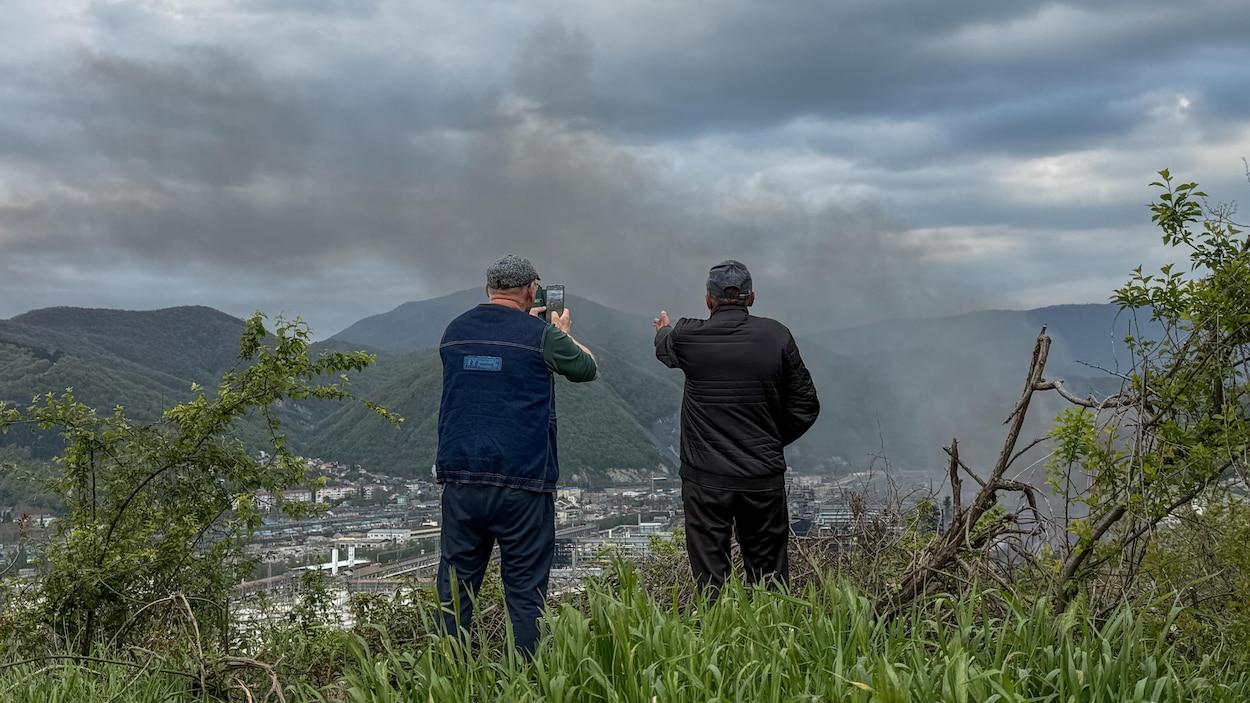
“When cleanup volunteer Sergei Solovev arrived in the town of Tuapse, on Russia’s Black Sea coast, an unpleasant odour hung in the air and everything was coated in a layer of black grime”
Zelensky said the updated contracts are expected to allow previously mobilized soldiers to leave service, while Dmytro Lytvyn, the president’s communications adviser, told journalists on May 1 that the Defense Ministry and the General Staff will provide details and timelines on the discharge of military personnel.

Zelensky instructed officials to significantly raise salaries, prioritizing fairness based on combat duties, experience, and effectiveness, and he set a minimum salary for rear positions of no less than Hr 30,000 (around $680).
For infantry troops, Zelensky said compensation should range from Hr 250,000 to Hr 400,000 (approximately $5,600-$9,000), depending on combat tasks.
The reform also aims to expand contract-based service to make service terms clearer and more predictable, and Zelensky said the first “tangible” changes are expected to take effect by June.
In parallel, the Kremlin spokesman Dmitry Peskov said on Thursday that “For now, no concrete decision had been made,” referring to a Russian proposal for a short-term ceasefire.
Reuters reported that Putin proposed a ceasefire on May 9 to coincide with “victory day” in Russia in a phone call with Donald Trump, and Zelenskiy said he was seeking details of the proposal in a post on Telegram.
Tuapse strikes and oil fires
Ukrainian drone attacks continued to hit Russian energy infrastructure, with Tuapse emerging as a recurring target and prompting repeated fires and emergency measures.
The Kyiv Independent reported that Ukrainian drones “hammer Russia's Tuapse oil refinery for 4th time,” with the Security Service of Ukraine (SBU) and the General Staff confirming the May 1 attack and saying it was carried out by the Security Service of Ukraine’s “Alpha” Special Operations Center in cooperation with military intelligence (HUR) and the Unmanned Systems Forces.
The Kyiv Independent said the attack “sparked a fire in oil tanks, sending a column of black smoke above the oil refinery,” and it added that the extent of the damage was still being assessed.
CNN described the Tuapse refinery as being hit again by Ukrainian drones, saying “For the third time in 12 days, the Russian Black Sea town of Tuapse woke up Tuesday to apocalyptic scenes,” and it quoted Elmira Ayrapetyan saying, “Oil is literally falling from the sky. We can’t breathe. The entire city reeks of fuel oil, dripping onto cars.”
France 24 reported that the most recent attack, “in the night from Monday to Tuesday,” led to the local declaration of a state of emergency and a thick plume of smoke, and it quoted Vladimir, a 63-year-old Tuapse retiree, saying, “The river was on fire.”
Multiple outlets tied the strikes to environmental and public health concerns, with Al Jazeera describing “black rain” and reporting that an analysis found concentrations of benzene, xylene, and soot were “three times above safe levels.”
NBC News said residents were warned not to leave homes or open windows as authorities tackled intense fires, and it quoted Svetlana saying, “You can smell it anywhere in the town,” as she described seeing smoke from her window even though she lived far from the refinery.
Environmental cleanup and health fears
As fires and oil contamination spread around Tuapse, residents and volunteers described the immediate effects of the strikes, while officials and experts debated the scale and timing of health risks.
“- Published Ukrainian drones have again hit oil infrastructure in the city of Perm in central Russia, more than 1,500km from the front line”
Al Jazeera reported that when cleanup volunteer Sergei Solovev arrived, “an unpleasant odour hung in the air and everything was coated in a layer of black grime,” and it quoted him saying, “I saw train carriages covered in residue from the black rain and animals. It’s all very toxic,” and “And the smell was oily.”
Al Jazeera said volunteers collected distressed animals, including “cats, dogs and birds,” to wash away the muck before sending them to shelters, and it described booms installed on beaches to contain the spill while emergency crews and volunteers cleared stony beaches with excavators.
NBC News said residents were warned not to leave homes or open windows and that the town’s schools were shuttered since Tuesday, while it quoted Svetlana saying she evacuated her young daughter so she doesn’t breathe in the pollution.
CNN reported that by Thursday morning authorities said the fire had been extinguished, but it emphasized that fires from the two previous attacks “also took days to put out,” with toxic substances pouring down in black rain and blanketing cars and streets.
CNN quoted ecologist and opposition political activist Yevgeny Vitishko saying, “It’s a real environmental catastrophe, regional in scale at a minimum. There hasn’t been anything like this for several years,” and it quoted Russian ecologist Dmitry Lisitsyn saying, “This is a highly complex environmental disaster, the true scale of which is still difficult to assess at this stage.”
Al Jazeera added that after the third and final strike on Tuesday, conditions became so unbearable that the town was evacuated, and it quoted Ruslan Khvostov warning that long-term consequences “could be serious and last for years.”
Russia’s response and accusations
Russian officials and state messaging framed the Tuapse strikes as “terrorist” attacks and argued that there were no serious threats to residents, while Ukrainian officials and outlets emphasized targeting energy and military sites.
CNN reported that President Vladimir Putin used the disaster as an opportunity to repeat accusations against Ukraine of “terrorist attacks” against Russian civilians and energy infrastructure, and it quoted him saying that strikes on Tuapse “could potentially cause serious environmental consequences” but adding that “it seems there are no serious threats; people are dealing with the challenges they face on the spot.”
NBC News likewise described Putin accusing Kyiv of resorting to “terror” strikes and intensifying drone attacks “against civilian infrastructure,” and it quoted Putin saying, “The latest example is the strikes on energy facilities in Tuapse, which could potentially cause serious environmental consequences.”
NBC News also reported that Putin said later Tuesday that “there don’t seem to be any serious threats” to the town, and it described how the Russian emergencies minister said the situation was “under control” and oil was no longer escaping from the refinery.
CNN said the Kremlin acknowledged the situation for the first time on Tuesday and that Putin dispatched his emergencies minister Aleksandr Kurenkov to coordinate the fire response, quoting the minister: “The situation is not easy, but it’s controllable.”
France 24 reported that Kyiv said it only targets military and energy sites to reduce Moscow’s ability to fund its war effort, and it quoted the Russian president condemning Kyiv on Tuesday for using “clearly terrorist methods” and intensifying drone attacks against civilian infrastructure.
RaiNews reported that Putin told Donald Trump that “Kiev sta ricorrendo a metodi apertamente terroristici attaccando obiettivi puramente civili sul territorio russo,” and it said Putin insisted that for a peaceful solution through diplomacy, Zelensky must accept proposals previously outlined.
Ceasefire proposal and diplomatic friction
The ceasefire proposal tied to May 9 “victory day” and the diplomatic messaging around it ran alongside continued strikes and military changes inside Ukraine.
“For the third time in 12 days, the Russian Black Sea town of Tuapse woke up Tuesday to apocalyptic scenes”
RaiNews said Putin “ha sentito al telefono il suo omologo americano Donald Trump” and “si è detto pronto a dichiarare una tregua per il periodo del Giorno della Vittoria,” the 9 May date, as reported by Tass.

The Irish Times reported that Zelenskiy said he was seeking details of the short-term ceasefire Russia proposed to Trump, and it quoted Zelenskiy: “We have instructed our representatives to contact the United States president’s team and clarify the details of the Russian proposal for a short-term ceasefire.”
The Irish Times also quoted Kremlin spokesman Dmitry Peskov saying, “For now, no concrete decision had been made,” and it said it would be for Putin to decide on the specific terms.
Zelenskiy said Ukraine is proposing a longer-term ceasefire, and he told Telegram, “We will find out exactly what is being discussed, whether it’s a few hours of security for a parade in Moscow or something more.”
In the same Reuters-linked reporting, the Irish Times described Russian attacks in the early hours of Thursday killing one person in Dnipro and wounding dozens more in Odesa, while Ukraine continued to strike industrial facilities and oil infrastructure inside Russian territory for a second day in a row.
The Irish Times also included Dmitry Medvedev’s comments that the United States is unlikely to serve as an effective mediator, quoting him: “It is hardly possible to consider that a country which kidnaps presidents and starts conflicts just like that can act as an effective mediator in all situations,” and it said Medvedev appeared to refer to the Iran war and to a US special forces operation ordered by Trump in January to capture Nicolás Maduro.
More on Ukraine War

Trump Arrives In Évian-Les-Bains For G7 Summit As Ukraine War Looms Large
30 sources compared

Russian Strikes Set Kyiv’s Dormition Cathedral Ablaze, Killing at Least 11
17 sources compared
Zelensky Offers Putin Talks in US After Trump Marks 80th Birthday
22 sources compared

Russian Strike Hits Kyiv Pechersk Lavra, Killing Four and Burning UNESCO Site
11 sources compared