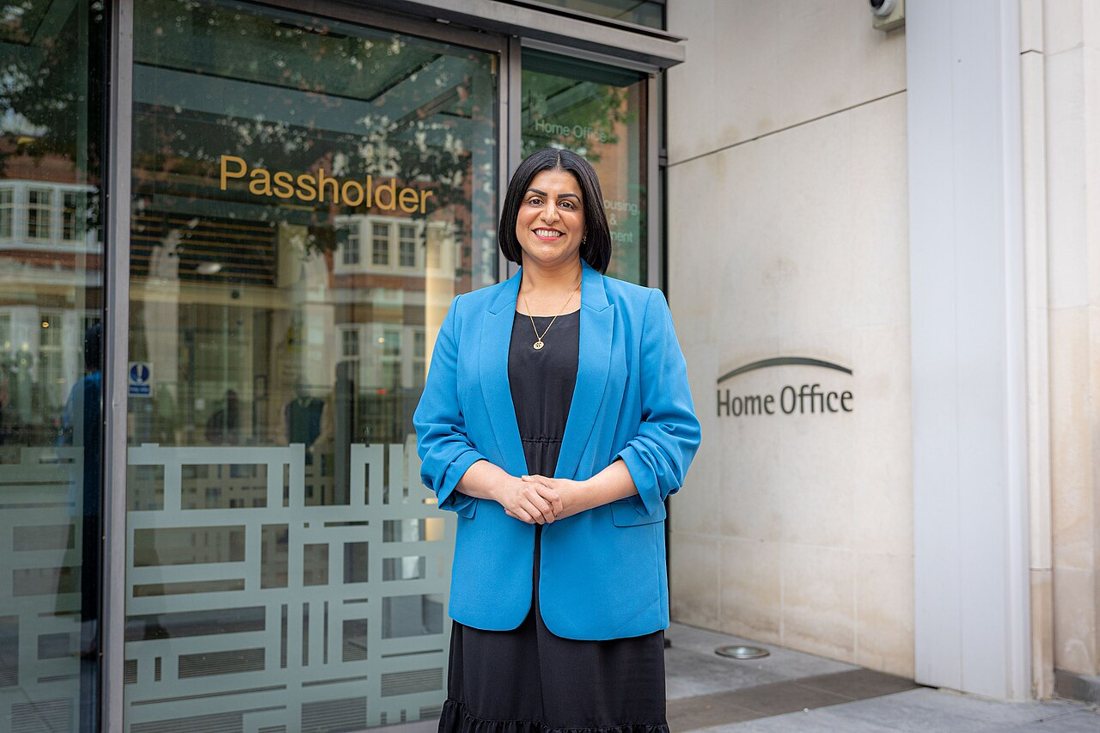
The reality of what the Home Secretary announced on Monday: the right to live in Britain for good will now depend on how much you earn and how you got here.
Shabana Mahmood called it "earned settlement". Earn over £50,271 and you can settle after five years. Earn less, as almost four in five British taxpayers do, and you wait ten. Come to Britain as a refugee on a small boat and you can wait 30.
It builds a two-tier Britain into the immigration rules: a short path for the well paid and the well connected, and a much longer one for everybody else. And it is a Labour government doing it.
What Mahmood announced
- Earn over £50,271 a year, the line where higher-rate tax starts: settle after five years.
- Earn over £125,141, the top rate of tax: settle after three.
- Earn less than £50,271: wait ten years. Until Monday it was five.
- Work as a doctor, nurse, teacher or social worker: keep five years. Care workers who came before May 2025 and earn £25,000 keep five years too. Care workers who came after wait ten.
- Claimed benefits in the five years before you apply: wait 20 years, unless you then go five years without them.
- Broke an immigration rule as an adult, such as overstaying a visa: wait 20 years.
- Have any criminal record in the UK, down to a court fine or a conditional discharge: refused.
- Speak English at B2, the level of an A level in a foreign language: required. Until now it was B1, the level of a GCSE.
- Claimed asylum here and were recognised as a refugee: wait 20 years, or ten once you are in work or study, counted from the day you start.
- Came by small boat, or entered without permission any other way: add ten more years. Up to 30.
- Spent ten lawful years here as a student or graduate: those years no longer count. The long residence route closes.
- Already living here on the five-year path: the new rules apply to you. More than 500,000 people will now settle later than the rules they came under.
Read that list again with no party's name on it.
Four statements, one after another. This isn't a Reform manifesto. This isn't Kemi Badenoch's Tory manifesto. This isn't even Keir Starmer's plan any more: his government drew it up in 2025, and he left Downing Street in July 2026. This is about to become the rules under Andy Burnham, introduced by Shabana Mahmood, announced in the House of Commons on Monday 2 November 2026.
Where these ideas came from
Most of that list was a Conservative proposal first. Kemi Badenoch set out the core of it on 5 February 2025. Theresa May's Home Office tied settlement to salary in 2012. Priti Patel made refugees who arrived without permission wait longer in 2022.
Who proposed it first, and what Labour has done with it
Swipe or scroll sideways to compare columns. The first column stays in view.
So a Labour Home Secretary has taken Kemi Badenoch's plan, tied it to salary the way Theresa May once did, and made refugees who came by small boat wait up to three times as long as any Conservative government ever made them wait.
Your salary decides when you belong
For most of the last 50 years, how long you waited to settle from a work visa did not depend on what you were paid. It was four years from 1973. Tony Blair's government made it five in April 2006, and five it has stayed, according to the Immigration Law Practitioners' Association's history of the rules.
One government tied it to pay. In 2012 Theresa May's Home Office said skilled workers could settle after five years only if they earned over £35,000, and those under the line had to leave after six. The Migration Advisory Committee found that starting pay in some public sector jobs, and in some parts of the country, sat below the line. Boris Johnson's government dropped it in December 2020.
Mahmood has brought it back at £50,271, the line where higher-rate tax starts. The median full-time worker in Britain earned £39,039 in April 2025. HMRC projected that 78.7% of income taxpayers would pay no more than the basic rate in 2025-26. Most British workers would not reach Mahmood's line.
Now look at what the government lets people in on. The Skilled Worker visa asks for a salary of £41,700. So the Home Office brings a worker in at £41,700, then tells them it is not enough to settle in five years.
The Home Office's own figures say that worker is good for Britain. In the document Mahmood published on Monday, a skilled worker on £41,700 pays in around £347,000 more than they take out over their lifetime. They still wait ten years.

The BBC reported that Ashfak Juned, a Bangladeshi chef in Birmingham, will now wait until 2033.
Two tiers, written into the rules
Line people up by how long they now wait, and you can see who these rules are written for.
Years before you can settle in Britain
Minimum wait in years, for someone who meets every other requirement. A refugee's ten years on the work and study route start only when they move onto it.
See the figures
| Who | Rules until 2 November 2026 | Mahmood's rules |
|---|---|---|
| Earns £125,141 or more | 5 | 3 |
| Earns £50,271 or more | 5 | 5 |
| Doctor, nurse, teacher or social worker | 5 | 5 |
| Commonwealth citizen with a UK-born grandparent | 5 | 5 |
| Refugee brought in on a UK resettlement scheme | 5 | 5 |
| Skilled worker on £41,700, the visa's own minimum | 5 | 10 |
| Care worker who came after May 2025 | 5 | 10 |
| Refugee who claimed asylum here, in work or study | 5 | 10 |
| Overstayed a visa as an adult | 5 | 20 |
| Refugee who claimed asylum here, not in work or study | 5 | 20 |
| Refugee who came by small boat, in work or study | 5 | 20 |
| Refugee who came by small boat, not in work or study | 5 | 30 |
Swipe or scroll sideways to compare columns. The first column stays in view.

The five-year path also stays open to people the rules count as having a British connection: the partners, parents and children of British citizens, and Commonwealth citizens with a grandparent born in the UK. A Commonwealth citizen on £30,000 with a British-born grandparent settles in five years. A skilled worker on £41,700 with no British grandparent waits ten.
Your salary and your grandparents decide how soon you belong, and the rules call it contribution.
Ask for help and wait 20 years
Most people on visas cannot claim benefits in the first place. Their visas say so, and the government's response admits it: "most immigration routes restrict access to public funds".
So this rule falls on the people who are allowed to claim. That means refugees, and people the Home Office has itself agreed can claim, which it does when they are "destitute or at imminent risk of destitution", when a child's welfare is at stake, or when they face exceptional circumstances with their income. The people with the least are the people it hits.
The government says that, to begin with, it will use the existing definition of public funds. That covers Universal Credit, Child Benefit, Personal Independence Payment for disabled people, Carer's Allowance, council tax reduction, social housing and help when you are homeless.
Think about what that means for someone who is really struggling. A refugee is eight years into her ten-year wait. She loses her job and claims Universal Credit for three months while she finds another. Under these rules she cannot apply to settle until five years after that claim: year 13, not year ten. If she keeps needing help, she waits 20.
So the rule puts a choice in front of people at the worst moment of their lives: take the help you are entitled to, or keep your place in the queue to settle. A mother behind on her rent can ask the council for help and add years to her wait, or fall into arrears and keep her date. A disabled refugee can claim the disability benefit she qualifies for, or go without it to settle sooner.
Many will go without. We know that, because it has been tried.
In 2018 Donald Trump's administration proposed counting the benefits people used against them when they applied for a green card, the American version of settling. Before the rule had even come in, the Urban Institute found that one in seven adults in immigrant families (13.7%) had kept themselves or a family member away from a benefit programme that year, for fear of risking a future green card. In low-income immigrant families it was more than one in five (20.7%).
The fear reached people the rule could never touch. In families where every foreign-born member was already a US citizen, 9.3% still pulled back. The United States stopped applying the rule in March 2021.
The Home Office was warned. Its own response records respondents arguing that "migrants who pay tax should not face additional penalties for accessing support when needed". It kept the rule anyway, and says the safeguards for vulnerable people will be "set out before implementation".
A British citizen who loses their job and claims Universal Credit loses nothing else. A refugee who does the same pushes back the day she can settle by years.
One court fine and you are refused
Until now, settlement was refused outright for a prison or suspended sentence of 12 months or more, for repeat offending, or for an offence that caused serious harm. Anything less was left to the caseworker. Now it is this:
“Any adult applicant with a criminal record in the UK will be refused settlement. A criminal record includes custodial or suspended sentences, out-of-court disposals such as absolute and conditional discharges, conditional cautions, court-imposed fines, community sentences, detention and training orders, and civil orders where there has been a conviction.”
Home Office, A Fairer Pathway to Settlement: Government response, 2 November 2026Read the original
A conditional discharge is what a court gives when it decides not to punish someone, as long as they do not offend again. A magistrates' court fine counts too, including one for not having a TV licence.
A British citizen with the same fine keeps their right to live here. Under these rules, a migrant with it is refused settlement.
Ten lawful years that no longer count
Until now, anyone with ten years of continuous lawful residence could apply to settle, and time as a student or a graduate counted towards it. Mahmood's rules close that route. Time on a student, graduate, youth mobility or seasonal worker visa no longer counts towards settling at all.
A student who came here at 18, took a three-year degree and then worked on a graduate visa has spent years living here lawfully. Under these rules, none of that time counts towards settling.
Refugees: from settlement on arrival to 30 years
From 1998 until August 2005, a refugee recognised in Britain was given settlement straight away. Tony Blair's government changed that, and from 30 August 2005 refugees got five years' leave first.
In 2022 Priti Patel's Nationality and Borders Act put refugees who arrived without permission on a ten-year route. Her own party dropped it the next year. Robert Jenrick announced the end of it on 8 June 2023.
Mahmood's rules start a refugee who claimed asylum here at 20 years, and a refugee who came by small boat at 30. Finding work or a place to study brings that down to ten, or 20 by small boat, counted only from the day they start. The Home Office says 58% of people who claimed asylum between 2021 and 2025 came by what it calls illegal entry routes.

The extra ten years does not apply to refugees protected by Article 31 of the Refugee Convention, which protects refugees who came directly to the UK, among other conditions.
The five-year path is kept for refugees the government chooses to bring in itself, on resettlement schemes. The Home Office expects 4,000 of them to settle between 2026 and 2030, not counting the Afghan schemes. It expects 133,000 refugees who claimed asylum here to reach settlement in the same years. They now wait ten years or more.
Where the Home Office has asked a refugee to repay asylum support, they must pay it back, or keep up a repayment plan, before they can settle. The Refugee Council's Imran Hussain called the 30-year wait "unfair and unworkable".
Moving the goalposts on 500,000 people already here
These rules are not only for people who arrive next year. They apply to everyone already here who has not yet settled. The government's response says:
“Being in the UK does not give someone an automatic right to settle under the rules that existed when they first arrived.”
Home Office, A Fairer Pathway to Settlement: Government response, 2 November 2026Read the original
By the Home Office's own estimate, 1.9 million people would have settled between 2026 and 2030 under the old rules. Under the new ones, 1.4 million. More than 500,000 people who came here on a five-year path will now wait longer, among them 146,000 skilled workers and 85,000 of their family members moved to ten years.
In March, before she was back in the cabinet, Angela Rayner said what she thought of doing this to people already here.
“We cannot talk about earning a settlement if we keep moving the goalposts. Because moving the goalposts undermines our sense of fair play. It's un-British.”
Angela Rayner, BBC, 18 March 2026Read the original
In July, Andy Burnham made her Housing Secretary. On Monday, the government she sits in kept the goalposts moved for more than 500,000 people.
Mahmood says settling buys the NHS. Migrants already pay for it
“At settlement, a migrant receives the right to free education, our NHS, and – should they fall upon it – the welfare state.”
Shabana Mahmood, House of Commons, 2 November 2026Read the original
Every adult on a work or family visa already pays the Immigration Health Surcharge up front, when they apply. It is £1,035 a year for most adults, on top of income tax and National Insurance. Health and care workers are exempt. Over a ten-year wait, an adult on a Skilled Worker visa pays £10,350 in surcharge alone, for a health service they already pay for in tax.
This is Andy Burnham's government
Keir Starmer's government drew this up. Its White Paper of 12 May 2025 set the ten-year default. Mahmood's asylum plan of 17 November 2025 set the 20-year wait for refugees. Her consultation of 20 November 2025 added the salary tiers, the benefits penalty and a 15-year path for workers in jobs below degree level.
Andy Burnham replaced Starmer on 20 July 2026 and kept Mahmood at the Home Office. On 26 October he told ITV's Good Morning Britain that she was right to bring forward changes based on the idea that
“settlement is a right to be earned, not just something that is granted automatically.”
Andy Burnham, ITV Good Morning Britain, reported by Reuters, 26 October 2026Read the original
On Monday his government dropped the 15-year path and kept five years for care workers who came before May 2025. These stayed: the ten-year default, the £50,271 line, 20 years for claiming benefits, refusal for any criminal record, 20 and 30 years for refugees, and new rules for the 500,000 people already here.
Mahmood told MPs why a Labour Home Secretary is doing this.
“I do not think this despite being a Labour politician. I think this because I am a Labour politician.”
Shabana Mahmood, House of Commons, 2 November 2026Read the original
Nigel Farage's reply was that she had "u-turned at the first sign of trouble", because care workers who came before May 2025 keep five years. Chris Philp, the Conservative shadow home secretary, called it a U-turn too. That is where the argument now sits: a ten-year wait for most people and 30 years for a refugee, and Reform and the Conservatives say she backed down.
How the wait to settle has changed
1973
Four years to settle from a work permit
Rules under the Immigration Act 1971 set the wait at four years.
1998
Refugees settle on recognition
A recognised refugee is given settlement straight away.
30 August 2005
Blair's government: refugees wait five years
Refugees get five years' leave before they can settle.
3 April 2006
Blair's government: five years for work routes
The wait to settle from work rises from four years to five.
2012
Theresa May ties settlement to £35,000
Skilled workers under the line must leave after six years. It takes effect in April 2016.
1 December 2020
Boris Johnson's government drops the salary line
The new points-based system keeps five years and drops the £35,000 settlement threshold.
28 June 2022
Priti Patel: ten years for refugees who arrive without permission
The Nationality and Borders Act creates "Group 2" refugees.
8 June 2023
The Conservatives drop it
Robert Jenrick announces the end of the Group 2 policy.
5 February 2025
Kemi Badenoch proposes ten years
No settlement for anyone who has claimed benefits or has a criminal record, and 15 years before citizenship.
12 May 2025
Keir Starmer's White Paper
The default wait to settle will rise from five years to ten.
22 September 2025
Reform UK
Scrap settlement, renew visas every five years, and ban most non-citizens from benefits.
17 November 2025
Mahmood's asylum plan
A 20-year wait to settle for refugees on "core protection".
20 November 2025
Mahmood's earned settlement consultation
Salary tiers, a benefits penalty and a 15-year path for workers in jobs below degree level.
18 March 2026
Angela Rayner calls it un-British
She says moving the goalposts on people already here "undermines our sense of fair play".
20 July 2026
Andy Burnham becomes Prime Minister
He keeps Shabana Mahmood as Home Secretary and makes Rayner Housing Secretary.
26 October 2026
Burnham backs Mahmood
He says "settlement is a right to be earned".
2 November 2026
Mahmood announces earned settlement
Ten years as the default, five for £50,271, three for £125,141, up to 30 for refugees.
Three years for a salary of £125,141. Thirty years for a refugee who came by small boat and is not in work or study. That is the Britain Andy Burnham's government announced on Monday.
Sources: Shabana Mahmood, statement to the House of Commons, 2 November 2026; Home Office, A Fairer Pathway to Settlement: Government response to the consultation (CP 1707), November 2026; Home Office, A Fairer Pathway to Settlement consultation (CP 1448), November 2025; Bernard Ryan for ILPA, Earned Settlement: A Policy without Precedent, July 2026; ONS, Annual Survey of Hours and Earnings 2025; HMRC, Income Tax liabilities statistics 2022-23 to 2025-26; Urban Institute, One in Seven Adults in Immigrant Families Reported Avoiding Public Benefit Programs in 2018, May 2019; Kemi Badenoch's proposals as reported by PA in The Irish News, 5 February 2025; Reform UK's plan as reported by Channel 4 News, 22 September 2025; Andy Burnham as reported by Reuters, 26 October 2026; Angela Rayner as reported by the BBC, 18 March 2026; reactions to Monday's statement as reported by the BBC, 3 November 2026. Read how 35 outlets reported Monday's announcement on our story page.
Conversation
Be specific, respectful and constructive. Comments are public to readers who can access this article. Publishers can hold or remove comments.
Loading the conversation…