
A diary of war from an unlikely author: Son of Iran's president
Key Takeaways
- Yousef Pezeshkian, 44, adviser to the president, hadn't spoken since the war began.
- Masoud Pezeshkian briefly appeared in public to greet citizens at an anti-Israel rally.
- The country's leadership went underground as the war broke out.
Diary intro and role
When Masoud Pezeshkian, the president of Iran, appeared in public very briefly to greet citizens at an anti-Israel rally last week, another member of his family was also there.
“When Masoud Pezeshkian, the president of Iran, appeared in public very briefly to greet citizens at an anti-Israel rally last week, another member of his family was also there”
Yousef Pezeshkian, the president's 44-year-old son, who serves as his adviser, had not spoken to his father since the war broke out and the country's leadership went underground.
He was hoping to get a glimpse of him.
In a diary he has been posting on a Telegram channel, he lamented that it had been to no avail.
The son, who is a college professor, has kept a daily diary of the war, mixing reflections, both personal and political.
The diary offers a rare glimpse into how Iran's political figures are faring as the war rages - and closes in on them.
And perhaps inadvertently, Yousef at times takes his readers into the arguments and deliberations of Iran's leadership.
War impact on leadership
While Iran's leaders have projected defiance in public statements, the younger Pezeshkian writes of the fear underneath the facade as multiple leaders are targeted and killed in Israeli bombings.
"I think some political figures are panicking," he wrote on the sixth day of the war, in early March.
"The people are stronger and more resilient than our pundits and political leaders. We have to keep reminding ourselves that defeat will only come when we feel defeated."
He wrote that he and his two siblings could not wait for the two remaining years of the presidency to end so "we can all get back to normal lives".
Strategic priorities and diary cadence
As war enters the fourth week, with many leaders killed, those who remain have all retreated to what they hope will prove secure locations.
“When Masoud Pezeshkian, the president of Iran, appeared in public very briefly to greet citizens at an anti-Israel rally last week, another member of his family was also there”
Yousef wrote in his diary that protecting the lives of officials has become the top priority for the country.
Stopping the targeted killings, he said, "is a matter of honour.".
Yousef has posted diary entries on his Telegram page nearly every day since the war started, continuing a practice that dates back at least a year.
He has linked some of the entries to his other official social media pages, like Instagram.
Authenticity and diary content
Yousef recounted attending a meeting with govt officials in the first week of the war at which disagreements about strategy surfaced.
"The biggest serious disagreement we have is: How long are we supposed to fight?" he wrote.
"Forever? Until Israel is destroyed and America retreats? Until Iran is in complete ruins and we surrender? We have to study the different scenarios."
Yousef did not respond to a request for comment.
Two Iranian officials and a former senior official who know him and work with him in his father's administration said that the social media pages were authentic and that he wrote the entries.
Iranian media have sometimes referred to his writings.
In the diaries, Yousef says that he keeps receiving messages about the war.
Occasionally, he said, "the messages call for us to surrender and return the power to the people," a notion that he dismissed as "ignorant and delusional."
He did say that he worried that Iran's attacks on Arab countries might backfire.
"It's so sad that to defend ourselves we have to attack US bases in friendly countries," he wrote.
"I don't know if they will understand our situation or not."
Yousef defended his father for apologising to Arab countries for the strikes.
"Apologising to neighbours is an ethical duty," he wrote.
He said that people living in Arab countries were not at fault but their lives had been upended.
But in his diary, he says, that unless Iran can stop the targeted killings, "we will lose the war".
More on Iran
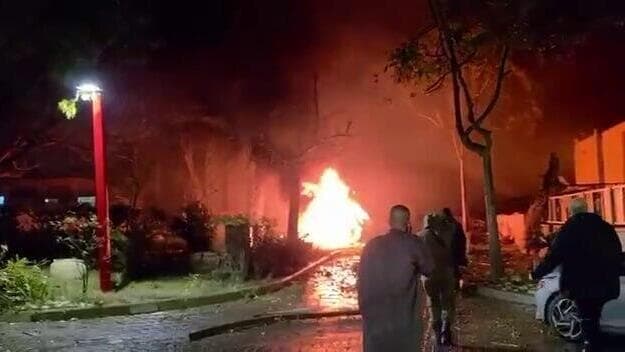
Iran Attacks Israeli Towns Dimona and Arad Near Israel's Main Nuclear Research Center, Dozens Wounded
43 sources compared
Iran Attacks Dimona in Retaliation for Natanz Strike
44 sources compared

Iran Attacks Diego Garcia with Long-Range Missiles, Targeting U.S.-UK Base
82 sources compared
Trump Defends Iran War by Citing Pearl Harbor
12 sources compared