USAupdated 54m ago3 min read
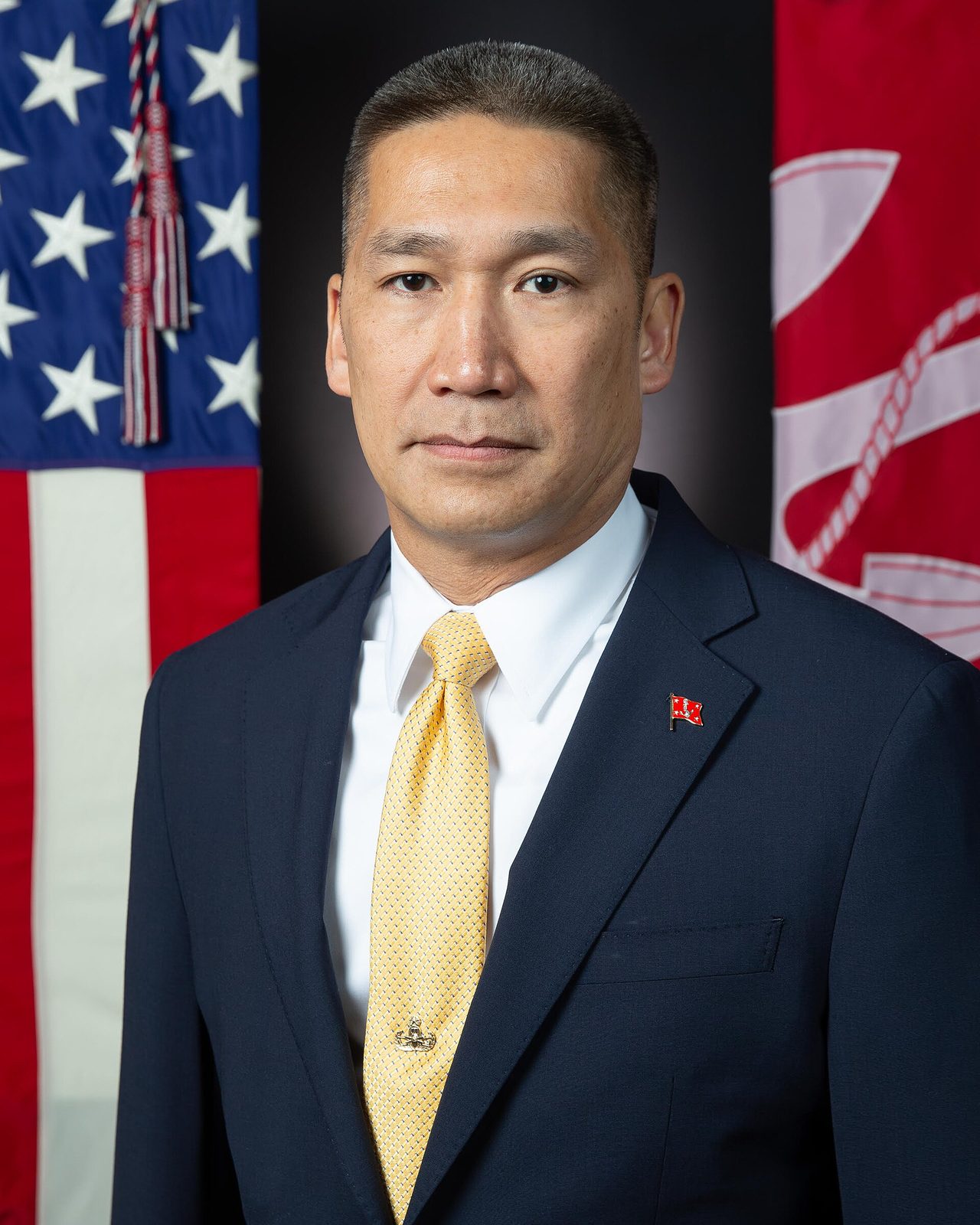
Archive photo · 4 October 2025Acting Navy Secretary Hung Cao Tells Senate Iran War Strains Navy Resources
2 Other2 Western Mainstream1 Local Western2 Other source typesPhoto: U.S. Navy / US federal government, Public domain · Cropped for layout
This article is an automated aggregation of coverage from news outlets. Our editorials offer in-depth analysis curated by the NewsCord team.
Iran war strains Navy resources amid extended deployments and dwindling stockpiles. Senate hearing notes resource shifts from Asia-Pacific to other theaters.
Save coverage image
The National was read line by line by the Watchdog: 3.0. See the score →
Navy chief cites strain
United States Acting Navy Secretary Hung Cao told the Senate Armed Services Committee that the Iran war is “a strain on our navy,” as he faced bipartisan questions about extended ship deployments and dwindling weapons stockpiles. Senator Jack Reed of Rhode Island pressed Cao on “your leadership record as acting secretary,” and Reed also asked whether Cao would “defend the military leaders in the future from partisan meddling in their careers”. Cao said the Navy’s joint efforts have “really set China back on their heels,” while lawmakers raised concerns about resources being shifted away from the Asia-Pacific.
Cao also addressed the USS Abraham Lincoln’s record-breaking 265-day deployment, and the ship returned to Naval Air Station North Island in San Diego, California, in early October after the USS George Washington arrived to relieve it. The hearing came as the Democratic-controlled 120th Congress is scheduled to be sworn in on January 3, 2027, and Cao is seeking US Senate confirmation for the permanent top civilian job.
Mental health and firings
Senator Richard Blumenthal argued that Cao was “failing these sailors and their families,” and Blumenthal said his “confrontation with them leaves me with the clear impression that you simply don’t care”. Cao pushed back by declaring that he does not control deployment lengths that have crept steadily closer to a full year at sea, and Cao also told Blumenthal that what he saw “as eight suicide attempts, I see as eight suicide mitigations.” Democratic lawmakers criticized the US Navy for bypassing standard congressional notification after it quietly relieved the entire leadership team of the nuclear-powered attack submarine USS South Dakota following an October underwater collision with the seabed.
Cao defended the Navy’s approach by saying, “We relieve commanding officers for everything from negligence to even just fraternisation or, you know, harassment,” and Cao added that he wanted “to make sure that we’re protecting their livelihood afterwards as well.” Reed countered that privacy does not justify shielding information from congressional oversight, and Cao replied that the USS South Dakota’s squadron commodore relieved the commanding officer, executive officer, and command master chief.
Carriers and shipping risks
The USS Theodore Roosevelt arrived in the Middle East and entered the U.S. Central Command jurisdiction on Sunday, joining the USS George H.W. Bush and the USS George Washington as the US reinforced its military presence near Iran.
The National said the UK Maritime Trade Operations received a report of a vessel being struck by an unknown projectile while transiting out of the Strait of Hormuz, resulting in a fire but no casualties, and the report came shortly after the Islamic Revolutionary Guard Corps said two more tankers struck sea mines.
The National also quoted the IRGC Navy warning shipping companies against using what it described as an American-backed southern route through the strait, calling it a “minefield of fire”.
United Against Nuclear Iran said the International Maritime Organisation confirmed 137 maritime incidents involving commercial vessels across the Persian Gulf, Strait of Hormuz, and Gulf of Oman since the start of the Iran War, and the IMO said those incidents resulted in 25 seafarer deaths.
UANI reported that U.S.-facilitated transits through the Strait of Hormuz averaged 27.7 vessels per day with 83 transits recorded during the latest 72-hour period, and UANI said the cumulative campaign total has lifted past 3,500 to 3,524 transits.