Financeupdated 40m ago3 min read
MapAfrica Energy Bank Launches In Abuja With $5 Billion To Finance Oil And Gas Projects
“focused on oil and gas projects, as the continent tries to break its costly dependence on fuel imports”
“tasked with financing oil and gas projects across the continent as global lenders retreat from such investments due to climate concerns”
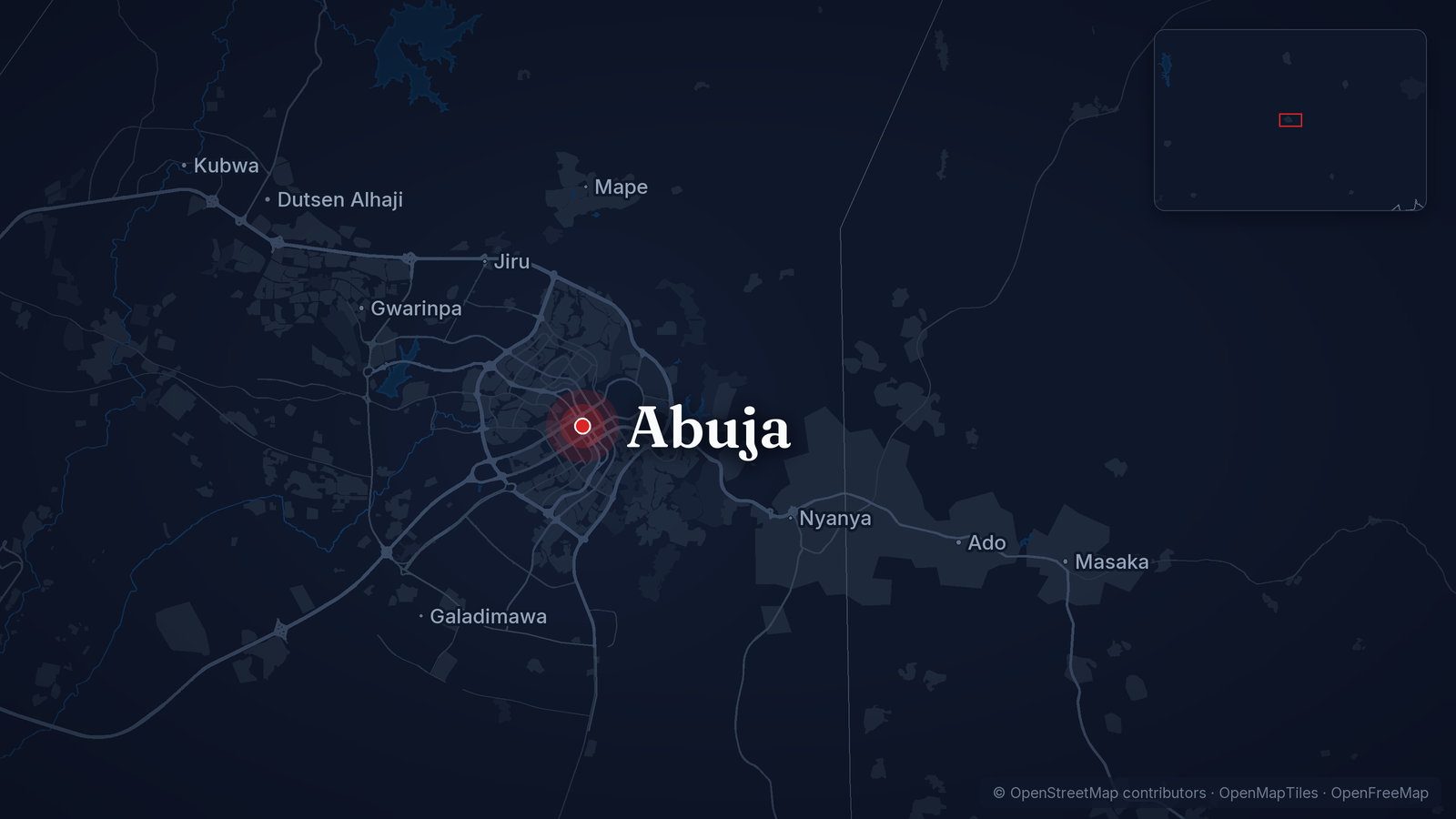
Map: © OpenStreetMap contributors, ODbL · Cropped for layout
This article is an automated aggregation of coverage from news outlets. Our editorials offer in-depth analysis curated by the NewsCord team.
Africa Energy Bank launched in Abuja to fund oil, gas, and broader energy projects. Established by Afreximbank and APPO, announced at the inaugural general meeting on Oct 31, 2026.
Save coverage image
A bank in Abuja
The Africa Energy Bank (Africa Energy Bank, AEB) was officially established in Abuja after the member states of the African Petroleum Producers Organization (APPO) and Afreximbank reunited on October 31, 2026 for their first general assembly. The new institution was endowed with an authorized capital of $5 billion to finance oil, gas, and more broadly energy projects on the continent, and it positioned itself as a sovereign instrument as Western donors withdraw more rapidly from African hydrocarbons. APPO said the AEB was created in response to a sharp contraction in international financing for hydrocarbon projects, even as the continent’s cumulative investment needs in the sector were estimated at nearly $200 billion.
The initial roundtable envisioned an initial released capital of about $500 million, with an objective to progressively rise to $10 billion by the end of 2027 to support upstream oil and gas and associated transportation and processing infrastructures. The AEB statutes authorized it to finance refineries, terminals, pipelines, and liquefied natural gas (LNG) projects, as well as associated electric infrastructure, with the stated objective of retaining more value added on African soil and supporting intra-African trade in oil-and-gas products.
Governance and timetable
The Abuja founding assembly appointed the Ivorian Minister of Mines, Petroleum and Energy, Mamadou Sangafowa-Coulibaly, to chair the General Assembly for a one-year term, while executive management was entrusted to Egyptian banker Helmy Ghazi, former head of HSBC Egypt. The formal creation of the bank followed a process that began on June 4, 2024 in Cairo, when APPO and Afreximbank signed the Establishment Agreement and the Africa Energy Bank Charter. The bank’s promoters said the initial launch planned for 2023 slipped to November 2026 to finalize the legal structuring and to locate the headquarters in Abuja.
The operational start of activities was scheduled for January 4, 2027, when the Africa Energy Bank was to be presented to the business community and African public authorities at the International Exhibition on Extractive Resources and Energy (SIREXE) planned in Abidjan. The roadmap assigned to the new leadership team aimed to mobilize remaining capital commitments, build a first portfolio of bankable projects, and demonstrate its ability to operate across the entire energy value chain, with first financing decisions expected in 2027.
Financing gap and stakes
Climate Home News said the Africa Energy Bank was tasked with financing oil and gas projects across the continent as global lenders retreat from such investments due to climate concerns, after repeated delays. The bank’s launch statement at a meeting in Abuja said, “The creation of the Africa Energy Bank reaffirms African governments’ determination to secure their own energy future,” and it added that the bank’s founders believed oil and gas remained vital to the continent’s energy systems. The New Times said the African Export-Import Bank (Afreximbank) and the African Petroleum Producers’ Organisation (APPO) announced the establishment of the Africa Energy Bank, which aimed to finance key energy projects across the energy value chain including exploration and production, transportation, processing, refining, and distribution.
Capmad | Local Western framed the challenge for Nigeria as a structural anomaly, saying about 75% of Africa’s crude oil production is exported while around 70% of refined products consumed are imported, and it said the dependence weighs on the balance of payments, increases subsidies, and exposes Abuja to international price shocks. Capmad | Local Western said the credibility test would be the bank’s ability to cross the “financing wall” that African producers have described for several years, with priority given to projects in host countries of major regional markets such as Nigeria, Angola, and Libya.