
Full story
Amnesty targets cyber law
Amnesty International urged Syrian authorities to suspend the Electronic Crimes Law enacted in 2022 and to make substantive amendments to align it with Syria’s obligations under international human rights law.
“Amnesty International has called on the Syrian authorities to suspend the Electronic Crimes Law”
The organization said it documented five cases of detention of journalists and activists for expressing their views online between January and June of last year, with detention periods reaching seven days under the 2022 Electronic Crimes Law during the Assad regime.

Amnesty International warned that the law criminalizes peaceful online expression through broadly worded offenses including “detracting from the prestige of the state,” “undermining the state’s financial standing,” and “online slander and defamation.”
It also said two of the detainees face criminal prosecutions that could lead to harsh prison sentences, and it argued that the law enables broad censorship through Article 37, which authorizes courts to block websites or information systems for periods starting at three months and possibly lasting until a permanent ban.
Amnesty International’s regional director for the Middle East and North Africa, Hiba Maraif, said the fall of the Assad government enabled Syrian civil society to create space for freedom of expression despite the “repressive legislative framework in place.”
Damascus issues procedural controls
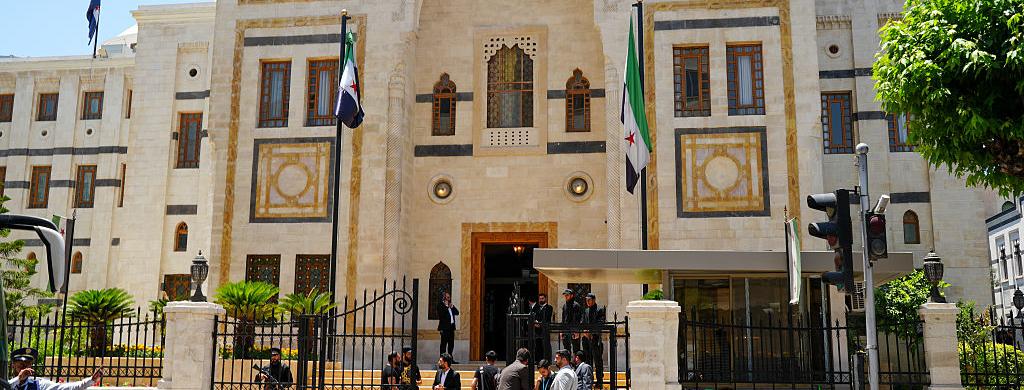
While Amnesty International called for suspension, the Attorney General in Damascus, Judge Husam Khattab, said on Saturday that the Syrian Ministry of Justice is keen on protecting the rights of Syrian citizens and safeguarding their freedoms and dignity.
Khattab said Circular 26 defined the nature of referring complaints to police stations and police units dealing with cybercrime investigations, and he added that detention in these crimes should be “only exceptional” and by decision of the Public Prosecution after the prosecutor reviews the arrest and the complaint.
Amnesty International argued that even with procedural controls, the framework remains insufficient because it does not guarantee investigations and prosecutions in crimes related to online expression, including defamation and slander, in full accordance with freedom of expression guarantees.
The rights organization said it documented the detention of five journalists and activists between January and June 2026 using provisions in the law that criminalize peaceful online expression, and it said the five were later released after periods ranging from 24 hours to seven days.
Amnesty International also said the Ministry of Justice announced the formation of legal and technical committees to reexamine legislations, foremost among them the cybercrime law, with participation of the Ministries of Information, Interior, and Communications.
Reform and risk for critics
Amnesty International said the Electronic Crimes Law criminalizes forms of expression that Syria is obliged to protect under the International Covenant on Civil and Political Rights, and it argued that it also criminalizes forms of expression protected under international human rights law.
“the continued use of the Electronic Crimes Law exposes critics of the authorities to the risk of arrest”
The organization said Articles 24, 25, 27–29, and 31 impose severe penalties for acts that international law does not recognize as crimes, including slander or defamation, crimes against the constitution, undermining the prestige of the state, and offenses against religions.
Amnesty International warned that the continued application of the Electronic Crimes Law exposes critics of the authorities to the risk of arrest and prosecution merely for expressing their opinions online, even as the 2025 Constitutional Declaration guarantees the right to freedom of expression.
Hiba Morayef called for reform of the inherited legislative framework, saying the continued use of the repressive law against critics of the new authorities “undermines the path to building a new Syria.”
Amnesty International urged the Syrian People’s Assembly to prioritize reform of the inherited repressive legal framework to bring it into line with international human rights standards, and it said it informed the National Commission for Transitional Justice and the Syrian Ministry of Justice in 2025 that legislative reform is a priority.