USA01 September, 20263 min read
Agostino Abbatiello And Penn State Fraternity Cocaine Ring Suspects Appear In Bellefonte Court
This article is an automated aggregation of coverage from news outlets. Our editorials offer in-depth analysis curated by the NewsCord team.
Agostino Abbatiello, 24, alleged ringleader charged with possession with intent to deliver and conspiracy. Indicted suspects, including Abbatiello, made first Bellefonte court appearances for preliminary hearings.
6 outlets told this the same way.
Outlets did split on White House Officials Question How Long Katie Zacharia Will Stay Press Secretary After First Briefing →
Penn State cocaine case
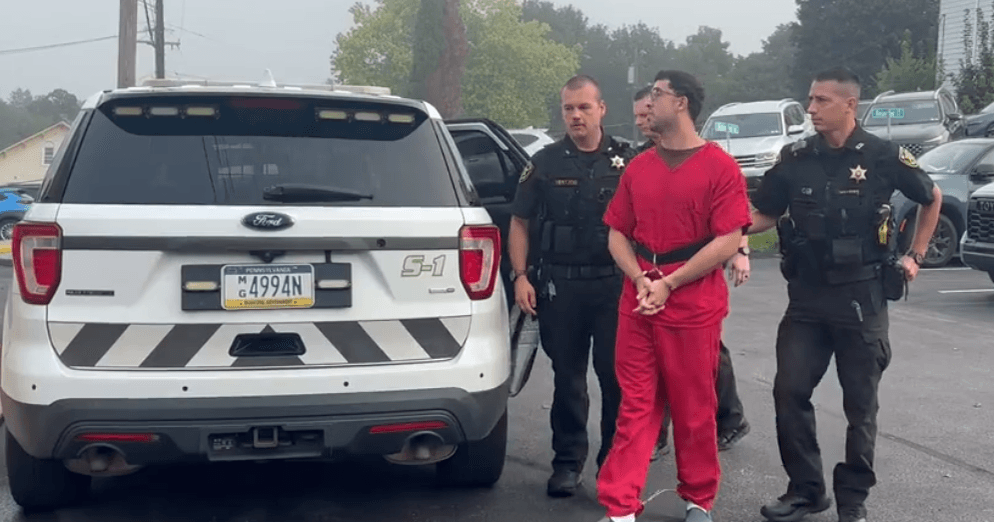
A cocaine distribution ring tied to Penn State fraternities brought multiple suspects to the Centre County Courthouse in Bellefonte, Pennsylvania for preliminary hearings on Wednesday morning, with Agostino Abbatiello, Thomas Robinson, Paul Robinson, Muhammad Huraibi, Robert Zanolla, and Seth Beardsley due in court. Pennsylvania Attorney General Dave Sunday said pledges at the off-campus fraternity homes of Sigma Chi and Delta Upsilon cut and packaged the cocaine, and investigators said the drugs were brought to the university in State College from Philadelphia and New York. Lars Zeepvat, 24, of Mendham, New Jersey testified Wednesday that he was selling cocaine for Abbatiello and later added that Abbatiello called himself "the Godfather" and flaunted his money.
Thomas Robinson, described by investigators as "a rung below" Abbatiello in the operation, testified that he began selling cocaine during the spring of 2023 and admitted he stored it in the Delta Upsilon house. In the wake of his arrest, Robinson was arrested in December 2024 after allegedly selling cocaine to confidential informants six times in the late months of that year, and the case also included allegations that Paul Robinson, a prominent attorney at a Pittsburgh law firm, helped conceal evidence tied to his son’s alleged dealings.

Bail fights and testimony
Agostino Abbatiello, 24, sought release on his own recognizance in a case where he was charged with multiple counts of possession with intent to deliver and conspiracy and had been detained since his arrest in August. CBS News and 6abc Philadelphia both tied the bail dispute to Thomas Robinson, with 6abc Philadelphia reporting that Abbatiello’s attorney argued it was unfair because the judge granted release on bail for another of the alleged ringleaders, Thomas Robinson. 6abc Philadelphia said Magisterial District Judge Kelley Gillette-Walker set Robinson's bail at $150,000 monetary after prosecutors described Robinson as having a loaded 9mm handgun in his vehicle, threatening to '---- up' law enforcement, selling cocaine on five separate occasions to confidential informants, and having a handgun in the safe in close proximity to cocaine and other drugs.
In court testimony, Zeepvat said Abbatiello started selling for money and popularity, and he described Abbatiello’s self-presentation as "the Godfather" while flaunting money. The case also moved toward preliminary hearings, with the alleged operation described as spanning a time period from around 2023 to 2024 and with investigators alleging that Abbatiello and Robinson were the main suppliers for the criminal organization.
Broader U.S. drug war
Beyond the Penn State case, the Trump government said the United States can and will strike “wherever necessary” in the fight against cartels, with statements made on the eve of the one-year mark since the start of a military operation targeting vessels suspected of transporting drugs in the Caribbean and the Eastern Pacific.
A tally by Airwars, cited by Folha de S.Paulo, says at least 227 people have been killed since the campaign began, and it also counted 69 vessels destroyed by the U.S. by the end of August.
The same Folha de S.Paulo report said a DEA (U.S. Drug Enforcement Administration) assessment obtained by The Washington Post concluded that the attacks had no impact on supply or price of cocaine in the U.S., while legal experts criticized the government’s justification that the U.S. is in an armed conflict with drug-trafficking organizations.
The report also described the objective as for the territories of partner countries to be under the control of their respective governments, with an example scenario in which Colombia, Ecuador, and Venezuela control their territories and not the cartels.
As the offensive continues without a set timeline, Folha de S.Paulo cited the Brown University Costs of War study saying U.S. military operations in Venezuela, the Caribbean, and the Eastern Pacific cost at least $4.7 billion between August 2025 and March 2026.