Syria19 July, 20263 min read
Ahmed Al-Sharaa Inaugurates NAS TEX 2026 Textile Exhibition in Damascus to Create Jobs
This article is an automated aggregation of coverage from news outlets. Our editorials offer in-depth analysis curated by the NewsCord team.
President Ahmed al-Sharaa inaugurated the Syria International Textile Exhibition in Damascus. Participants include roughly 20–25 countries and about 300 companies.
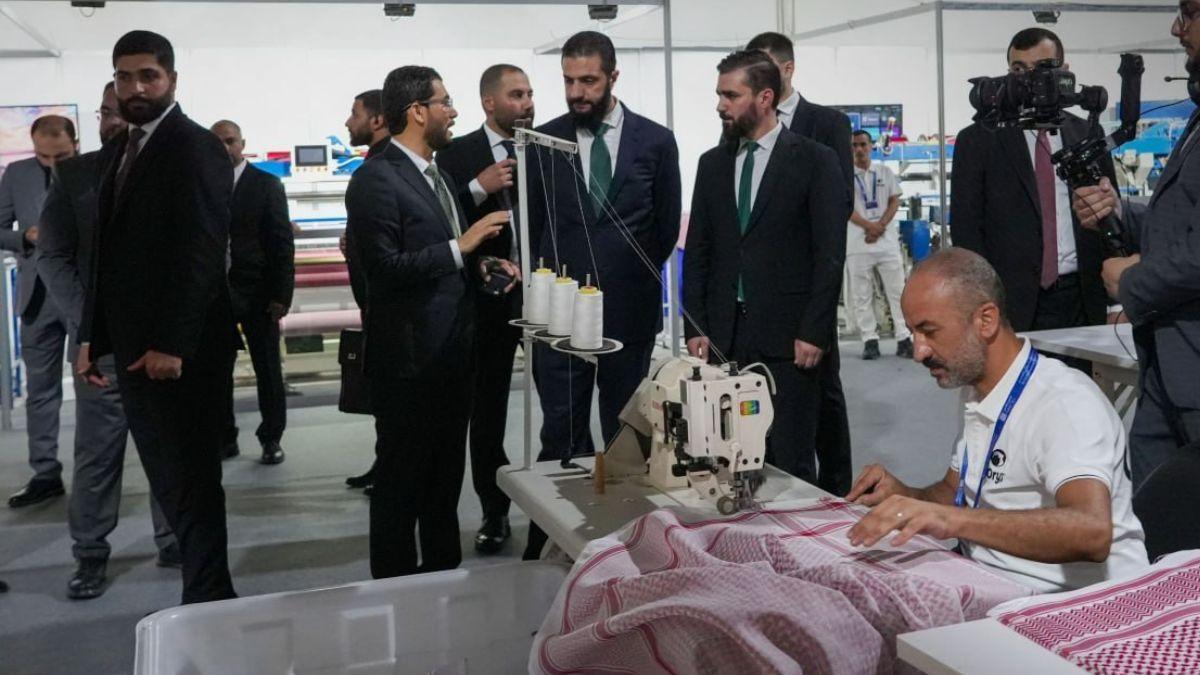
NASTEX 2026 opens
Syrian President Ahmed al-Sharaa inaugurated on Saturday the first Syria International Textile Exhibition, or NAS TEX 2026, describing it as a starting point for reconstruction efforts, combating poverty and creating jobs. The opening ceremony was held at the Conference Palace in Damascus with participation of government officials, international delegations, businesspeople and representatives of the economic sector, according to the Syrian Arab News Agency, SANA. Al-Sharaa said in his speech that the textile industry forms part of Syrian history and its economic and cultural identity, and added that reviving the industry would contribute to rebuilding Syria’s present day by drawing on the industrial and artisanal heritage for which the country has long been known.
The exhibition is being held from July 18 to 21 and aims to revitalize Syria’s textile sector and connect it with technology, financing and export markets, according to SANA. In a separate account, Ain al-Balad said NasTex 2026 began on Saturday, July 18, at the Damascus Countryside Exhibition and Conference City and will run for four days, with Syrian President Ahmed al-Shara' in attendance and more than 300 companies from over 20 countries participating.

Jobs, peace, and cotton
In the opening remarks, Al-Sharaa framed the exhibition as a “creative starting point” for confronting poverty and hardship, supporting reconstruction, and providing thousands of jobs and employment opportunities for Syrians. He also said Syria’s reconstruction process is based on civil peace, national unity, security, stability and economic growth, which would restore its position as a source of creativity, expertise and skilled labor. Syrian Economy Minister Mohammad Nidal al-Shaar said NAS TEX represents more than a specialized exhibition and described it as a message of confidence in Syria’s return to its natural position as a regional center for production, industry and trade.
Al-Shaar said the ministry’s vision is based on creating a more open and competitive investment environment, removing obstacles to production, modernizing industry, encouraging innovation and strengthening exports so that “Made in Syria” becomes a mark of quality and excellence. In a dialogue session after the opening, Nidal al-Shaar said the feasible annual production from Syrian cotton is estimated at between 300,000 and 400,000 tons, adding that this would meet local market needs and support textile industries.

A ten-year textile hub
SANA reported that the Syrian Minister of Economy and Industry, Nidal Al-Chaar, said the government intends to make Syria a major hub of the textile industry over the next ten years, relying on the structural advantages the country possesses. Al-Chaar said the government, in partnership with the private sector, is working to support and modernize the entire textile value chain, and he highlighted qualified human resources, expertise accumulated over decades, and Syria’s strategic geographic position. Al-Jazeera Net said the minister urged representatives of the sector to present a unified vision and a clear framework for the stages of textile production, and it linked the plan to the scale of the sector described as employing about 30% of the total number of workers in the manufacturing sector before 2011.
The same outlet said the number of textile establishments in 2024 exceeded 24,000, representing 18.9% of the total number of Syrian industrial establishments, and it added that the number of operating textile establishments reached 13,833 in 2024 while idle textile establishments reached 10,492. Al-Jazeera Net also described a “Syrian Cotton Route” built through partnerships with cotton-producing countries such as Uzbekistan, Kazakhstan, and Azerbaijan to secure raw materials, boost processing industries, increase added value and re-export, contributing to job creation and supporting the national economy.