Syriaupdated 1h ago3 min read
Benjamin Netanyahu Says He Called Syria’s Ahmed al-Sharaa To Stop Druze Massacre In Suwayda
This article is an automated aggregation of coverage from news outlets. Our editorials offer in-depth analysis curated by the NewsCord team.
Netanyahu disclosed a phone call with Syrian President Ahmed al-Sharaa during the Suwayda Druze massacre. He said the call helped stop the massacre and noted Israeli strikes on Damascus.
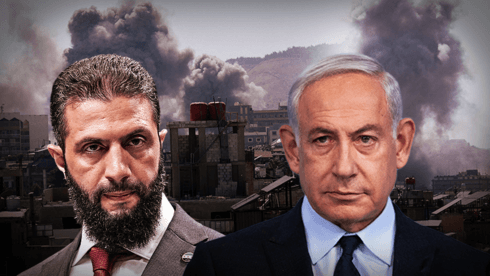
Netanyahu discloses 2025 call
Israeli Prime Minister Benjamin Netanyahu said Thursday that he spoke by phone with Syrian President Ahmed al-Sharaa during the events in Zabadani, which the text also refers to as al-Suwayda, that occurred last year. Netanyahu told a campaign rally with Druze community members in Israel that the Israeli army, during the Suwayda events, destroyed the Syrian Ministry of Defense in Damascus and targeted a site inside the presidential palace complex. Netanyahu said the call was “a very brief and to-the-point conversation” and claimed it contributed to stopping what he described as the “massacre,” without providing further details about the timing or circumstances of the call.
The text says clashes in Suwayda Governorate broke out in July 2025 between Druze gunmen and fighters from Syrian Bedouins, then expanded with intervention by government forces and gunmen from tribes alongside the Bedouins. The text says the events resulted in more than two thousand deaths, including 789 Druze civilians, according to the Syrian Observatory for Human Rights, while an official commission of inquiry formed by the Syrian authorities documented the killing of at least 1,760 people, according to a report presented in March.

Druze rally and competing claims
Netanyahu said during a visit to the Druze village of Yarka in northern Israel that “I called Sharaa. It was a very brief and to-the-point conversation, and the massacre stopped.”
Netanyahu added that “There is still work to be done; I can’t reveal everything. But this commitment comes from the bottom of my heart,” while he described the violence in Suwayda in July 2025 as the violence he sought to stop.

The Jerusalem Post said Netanyahu told a conference with representatives of the Druze community that “It was a very short, very sharp conversation, and the massacre was stopped,” and it also quoted him saying “There is still work to be done; I cannot reveal everything.”
Al-Monitor reported that a Syrian Foreign Ministry spokesperson did not immediately respond to its request for comment, while it also said Syria regularly condemned Israeli operations on its territory.
Al-Monitor reported that Damascus accused Israeli forces of setting fire to a warehouse in the Daraa countryside, as Netanyahu’s disclosure was framed against ongoing accusations and counteraccusations.
What is at stake next
Netanyahu said he would do whatever it takes to protect the Druze and help them return to their homes, while he also stressed that he could not reveal all details. The text says Israel has carried out hundreds of airstrikes in Syria since the ousting of Syrian President Bashar al-Assad in December 2024, and it says Israel sent forces to the demilitarized zone monitored by the United Nations that had separated Israeli and Syrian forces in the Golan Heights since 1974. The text says Israel pledged to keep forces in what is called the “security zone” in southern Syria, where it seeks to expand the scope of the deconflicted area, and it says Syria condemned the Israeli military operations in the southern part of the country but refrained from responding.
The text says Syria and Israel held several rounds of direct talks as part of their efforts to reach a security agreement, and it also says Sharaa’s government began US-mediated talks with Israel in 2025. The text says the UN said in a March report that Druze civilians were especially targeted but noted violations by both sides, and it says Netanyahu’s disclosure came as Israel and Syria continued seeking a security agreement after direct and indirect talks since December 2024.